Free shipping from 1 999 Kč
Fast shipping
Verified store
Thousands of customers




Free shipping from 1 999 Kč
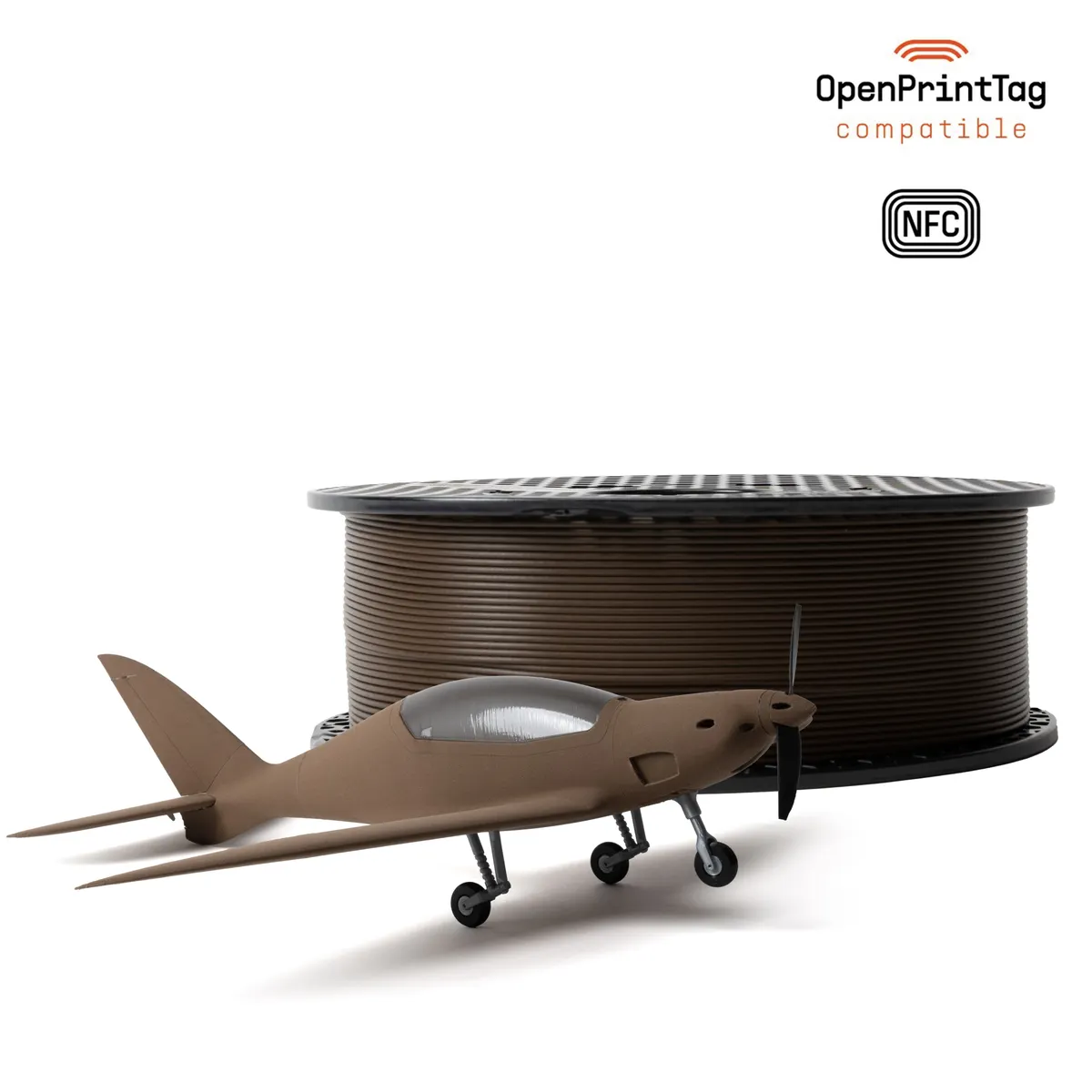
Lightweight PLA filament Chocolate Brown for RC aircraft, cosplay, and decorative models. Active foaming enables prints up to 65% lighter than standard PLA. It offers a matte surface and a spool with a rewritable OpenPrintTag NFC chip. The package contains 1 kg of filament. (prusa3d.com)
We process and ship orders immediately during the business day.
Prusament PLA Lightweight Chocolate Brown is an actively foaming filament for lightweight 3D prints. When heated in the nozzle, the material expands and creates a foam structure. With suitable settings, you can achieve up to 65% lower print weight compared to standard PLA. It is particularly suitable for aircraft models, cosplay, and other projects where low weight is essential. (blog.prusa3d.com)
Foaming gives prints a matte texture that reduces the visibility of layers. The Chocolate Brown shade becomes lighter during printing: the more pronounced the foaming, the lighter the resulting color. Therefore, keep in mind that the print will not have exactly the same shade as the filament on the spool. (blog.prusa3d.com)
The default profile uses 230 °C, a bed temperature of 60 °C, an extrusion multiplier of 0,45, and retractions disabled. We recommend printing a calibration cube before printing; when changing the temperature, also adjust the extrusion multiplier according to the degree of foaming. Foaming begins at approximately 215 °C and reaches its maximum at around 235 °C. Do not exceed 250 °C, as this may cause material degradation and the formation of potentially hazardous fumes. (blog.prusa3d.com)
The rewritable OpenPrintTag NFC chip contains information about the material. It can be read using the Prusa mobile app and also works offline, without relying on the cloud. (prusa3d.com)
Active foaming causes the material to ooze and leads to stringing, so expect to clean the print. The material is hygroscopic: store it in a dry place and dry it as needed for 5 hours at 55 °C. The surface is more prone to scratching, and the material has lower heat resistance. (blog.prusa3d.com)