Free shipping from 1 999 Kč
Fast shipping
Verified store
Thousands of customers




Free shipping from 1 999 Kč
Recycled filament is no longer just a curiosity for enthusiasts who want to print greener at any cost. With PLA and PETG, you can now find materials made from controlled production waste, reusable spools, refill packs without a new plastic spool, and blends that combine recycled content with standard print quality.
For hobbyist makers, however, the practical question is important: when will this really save you material, money, and hassle, and when is it better to buy standard filament on a new spool?
The short answer: recycled filament is worthwhile for prototypes, brackets, workshop tools, technical parts where an exact shade is not required, and prints intended for sanding or painting. Refills are worthwhile mainly when you print regularly, have a compatible reusable spool, and can load the material without tangling.
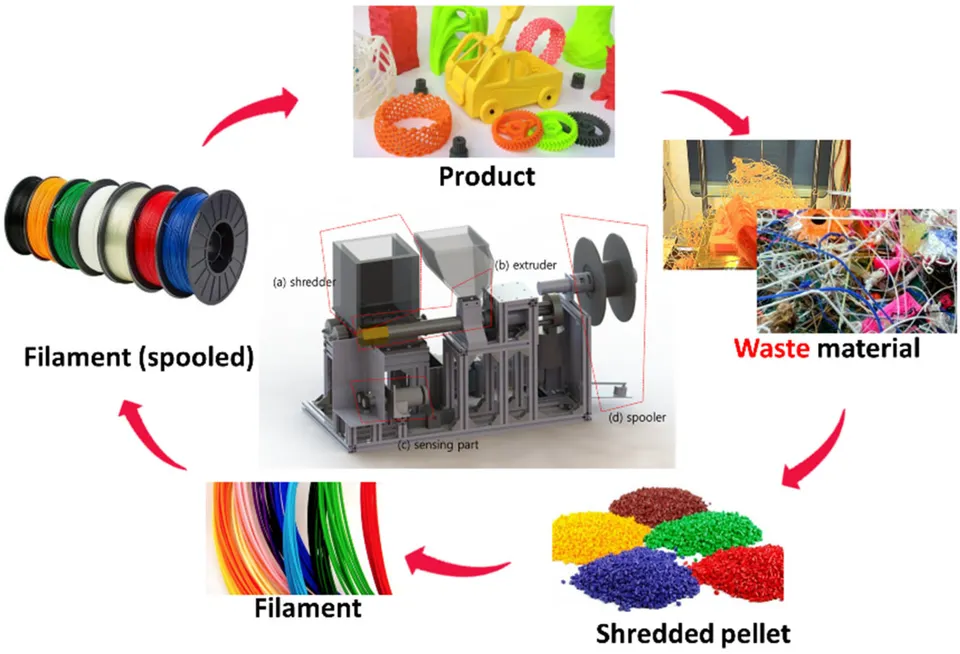
With 3D printing, you will most commonly encounter two types of recycled material.
The first is filament made from industrial or production waste. This is typically material generated during filament production, material that did not pass color inspection, leftover excess, or material that was shredded and reprocessed. The advantage is clear: the manufacturer knows the origin of the plastic, knows whether it is PLA, PETG, or another polymer, and can keep the diameter and printing properties close to those of standard filament.
The second type is filament made from post-consumer waste, such as used plastics or collected prints. This can be environmentally appealing, but it is more demanding to sort and control. Even a small amount of another material can result in lumps, poorer flow, brittleness, or more frequent nozzle clogs.
For home users, it is therefore safer to buy recycled PLA or recycled PETG from a manufacturer that clearly states the material's origin, diameter tolerance, and recommended printing temperatures.
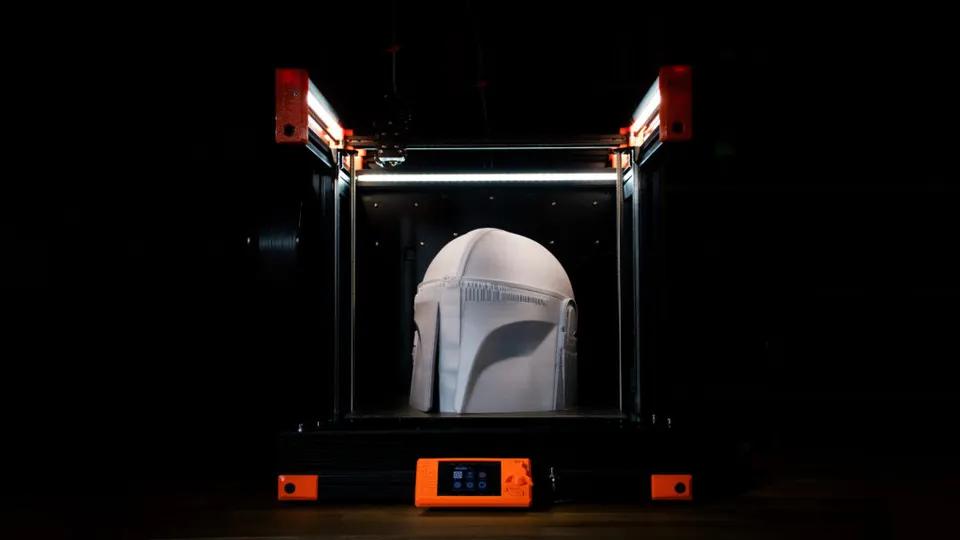

Recycled PLA makes sense if you print figures for subsequent painting, design samples, test assemblies, organizers, templates, or parts where a slight difference in shade between batches is not a problem.
In terms of printing, high-quality recycled PLA behaves very similarly to standard PLA. It usually does not require an enclosed chamber, prints at standard temperatures, and is also suitable for beginners. The main difference is usually the color. Recycled material is often created by mixing multiple shades, so the result may be gray, dark, natural, slightly matte, or a somewhat different color each time.
This is not a problem if the part will be used in a workshop, painted, used in a prototype, or placed somewhere hidden. For visible sets where you want every piece to have exactly the same color even after a month, standard PLA with a consistent shade is a better choice.
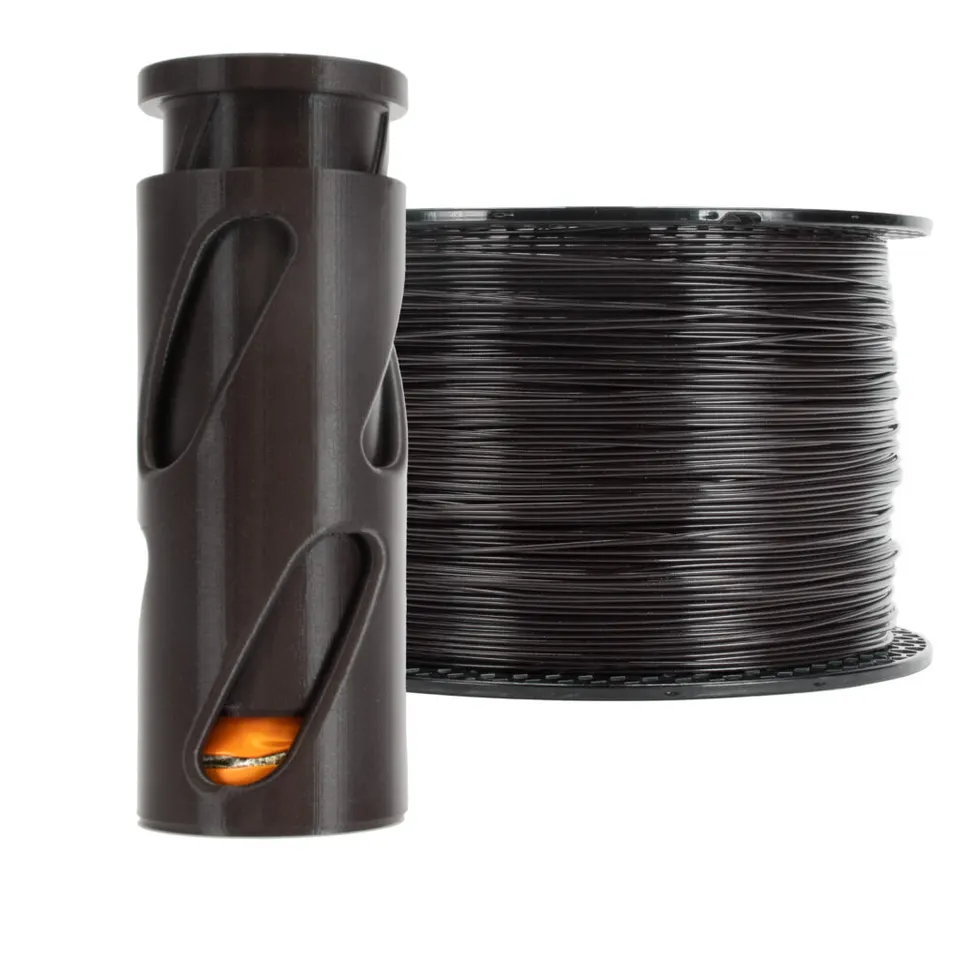
Recycled PETG is particularly interesting for brackets, mounts, covers, fixtures, boxes, workshop parts, and prints subject to greater mechanical stress. PETG generally tolerates heat and impacts better than PLA, is less brittle, and has good layer adhesion.
With high-quality recycled PETG, you can expect settings similar to standard PETG: a higher nozzle temperature, a heated bed, slower cooling, and attention to stringing. If you are switching from standard PETG, start with the same profile, print a temperature tower or a small functional part, and only then start a large print.
Recycled PETG is worthwhile mainly where function matters more than appearance. It is excellent for a technical bracket under a desk. For a visible product in a precise corporate color, I would choose standard filament with a guaranteed shade.
Refill filament is wound without a rigid plastic spool. It is mounted on a reusable spool that you already have at home, buy separately, or print yourself. The idea is simple: you do not throw away a new plastic spool after every kilogram of material.
The actual savings depend on the price of the specific brand. Sometimes a refill is simply more environmentally friendly but costs almost the same. At other times, it costs noticeably less than filament on a new spool. If you print only occasionally and use one spool every few months, you will not feel the difference as much. But if you use several kilograms per month, refills start to make very good sense.
A practical example: if you print brackets, replacement parts, and prototypes in a home workshop and use 12 kg of PLA or PETG per year, refills mean up to 12 plastic spools that you do not have to buy, store, or deal with after they are used up. If the refill is also cheaper by, say, tens of crowns per kilogram, the savings are more than just a feeling.
Compatibility is the most important factor. Not every refill roll fits every spool. Check the inner winding diameter, roll width, securing method, unwinding direction, and dimensions required for the filament holder or AMS system.
Proper loading is also important with refills. The roll must remain secured until you firmly close it inside the spool. If the winding loosens, the strands can easily cross and later cause a jam during printing. Before the first use, prepare a clean table, do not rush, and check that the end of the filament is securely fastened.
A printed reusable spool can work well, but it must be strong, straight, and thermally suitable for storage. If you dry filament in a dryer at a higher temperature, make sure the spool material can withstand the heat. A PLA spool left in a hot dryer or car may deform.
With recycled filaments, color is often the biggest difference compared with standard material. The manufacturer may maintain the diameter, drying, and mechanical properties, but if recycled inputs are used, the shade may vary from batch to batch.
This is fine for prototypes, fixtures, assembly aids, base parts intended for painting, or models where you want an original appearance. However, it can be a problem for a series of covers that need to sit next to each other on the same product. Even two spools with the same label may have a slightly different tone.
A practical rule: if you need an exact color, buy enough material from the same batch. If you only need functional plastic, recycled filament is a sensible option.
Standard filament is a better choice when you are printing a customer part in an agreed color, a long series of visible components, a model without post-processing, transparent or special-effect materials, or parts for which you already have a tuned profile and do not want to change anything before a deadline.
Choose a standard spool also when you are not sure whether the refill is compatible with your printer, holder, or automatic feeder. One tangled roll can waste more time than you save on the price.
For critical functional parts, verified material is more important than whether it is recycled. If the part will bear a load, be exposed to heat, or undergo repeated stress, make a test print and check the layers, ibility, brittleness, and dimensions.
Before buying recycled PLA, recycled PETG, or a refill, ask yourself a few questions:
If you answer yes to most of these questions, recycled filament or a refill makes sense. If not, it is better to buy a standard spool and return to more sustainable printing with your next project.
Start with a smaller print. For PLA, a test cube, bracket, or part of a model with overhangs is enough. With PETG, add a stringing test and check the first layer. Recycled filament can be just as high-quality as standard filament, but every batch deserves a quick check.
Store the material in a dry place. Recycled content does not mean that the filament is immune to moisture. PETG in particular can spit, string, and produce a poorer surface after absorbing moisture. If a spool has been left open for a long time, drying it will often help more than fine-tuning the slicer.
With refills, pay attention to the unwinding mechanism. The spool must rotate easily, the roll must not rub against the sides, and the filament must not pull the feeder at an angle. Many problems that appear to be caused by poor material are actually caused by an improperly mounted refill.
Recycled filament is a practical choice if you expect quality material with a lower environmental impact, not magically perfect plastic without compromises. It provides the greatest savings for parts where exact color is not important: prototypes, fixtures, brackets, workshop organizers, and prints intended for painting.
Refill filament makes the most sense for regular users. It saves plastic spools, storage space, and often part of the price per kilogram. However, it requires a compatible reusable spool and careful loading.
If you want to print more sustainably, start simply: use recycled PLA for prototypes, recycled PETG for functional parts, and refills wherever you already know you will use that material repeatedly. For visible series, precise colors, and deadline-critical orders, stick with proven standard filament.


