Free shipping from 1 999 Kč
Fast shipping
Verified store
Thousands of customers




Free shipping from 1 999 Kč
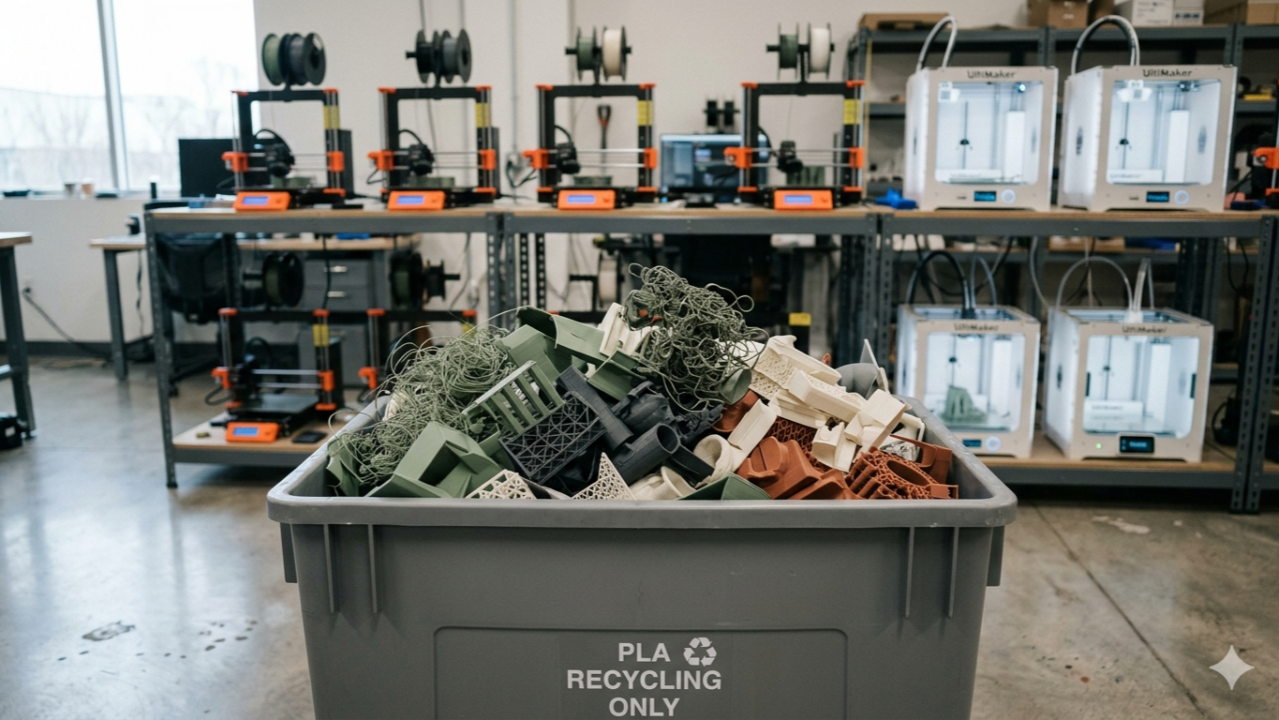
PLA has a good reputation among 3D printing materials. It is easy to print with, is made from renewable raw materials, and is often described as a biodegradable plastic. However, this very shorthand leads to the most common misconception: a finished PLA print will not break down in the garden, in a regular compost bin, or in mixed waste the way most people imagine.
The short answer is: PLA can be compostable under certain conditions, but a regular 3D print made from PLA is not household organic waste. If you put supports, a failed model, or leftover filament in the compost, it will very likely remain there for months or years as a piece of plastic or small fragments.

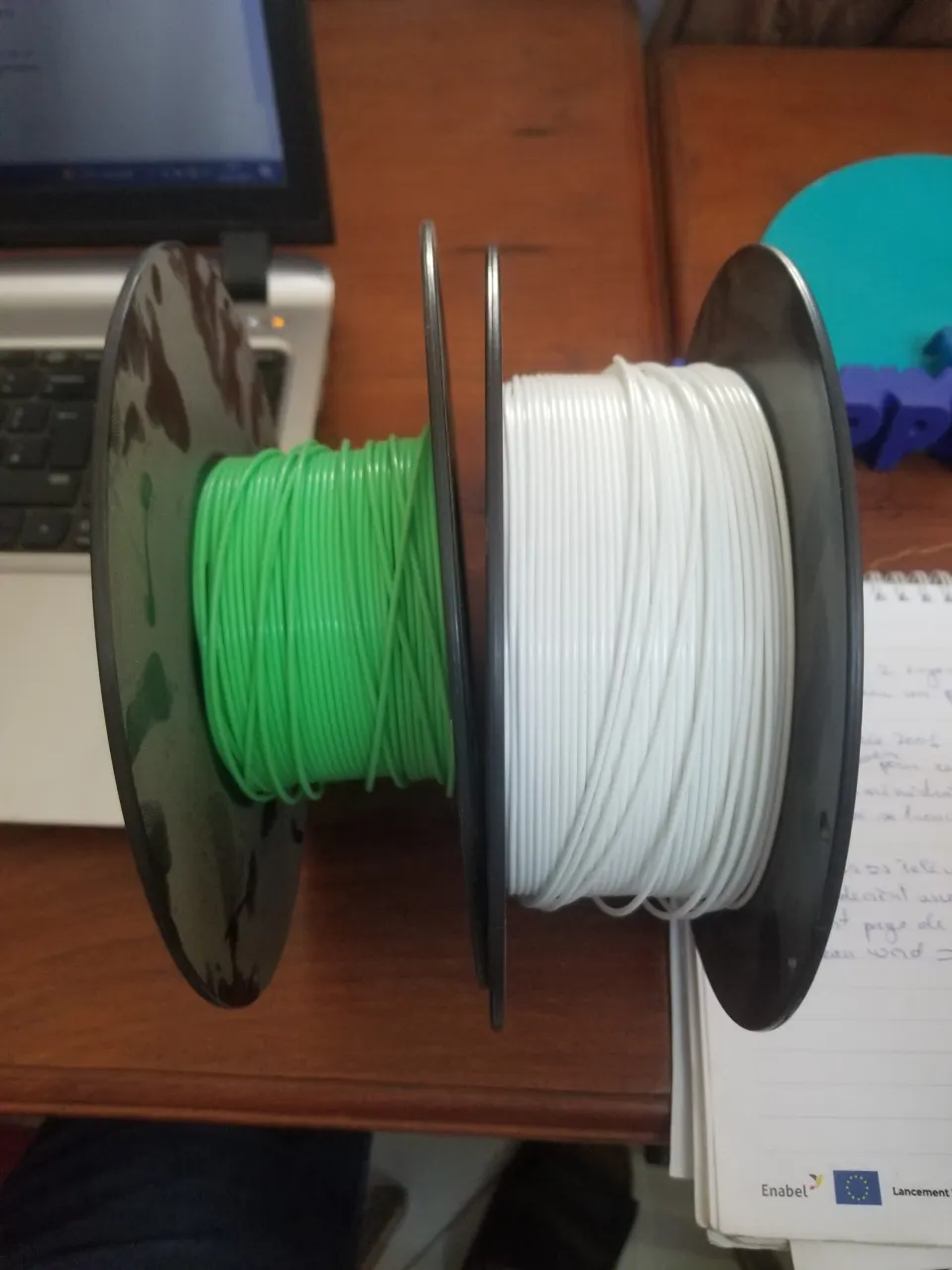
PLA is polylactic acid. It is made from plant starches or sugars, typically from corn, sugarcane, or similar raw materials. This is a difference from ordinary petroleum-based plastics, and it is worth mentioning: when produced responsibly, PLA may have a lower carbon footprint than some petroleum-based plastics.
At the same time, the origin of the raw material is not the same as the easy breakdown of the finished product. Paper, a banana peel, and a PLA print do not behave the same way in compost. PLA is still a plastic polymer. To truly break down into simpler substances, it needs a combination of heat, moisture, time, oxygen, and microbial activity. Under home conditions, these factors are usually not stable enough.
In 3D printing, the form of the material is also important. A thin certified film or cup does not behave in testing the same way as a thick-walled holder, electronics cover, or cube with 100% infill. The more massive the part, the more slowly moisture and heat penetrate it. Add dyes, fillers, glitter, wood-filled blends, or PLA+, and the simple claim that it is compostable is no longer useful.
Home compost is excellent for kitchen and garden waste, but it is generally not intended for technical bioplastics. Its temperature fluctuates, often does not remain high for long periods, and the material is not mixed or aerated as precisely as it is in a controlled facility.
In practice, this means that a PLA print may at most change on the surface, become brittle, or break into smaller pieces. That is not the same as actually being composted. Smaller fragments are harder to remove and may end up in the soil, where you do not want them. Burying a failed print in a garden bed is therefore not an environmentally friendly solution, but merely moving the problem to a place where it is less visible.
A typical example: you print a test cover that failed because of incorrect tolerances. It is made of pure PLA, without supports made from another material. Even so, do not put it in the compost. If you do not have a verified collection or your own recycling route, it is better to set it aside with other PLA scraps, or dispose of it in mixed waste according to local rules.
In mixed waste, PLA does not get the conditions that lead people to describe it as a compostable material. In a landfill, there is little oxygen, moisture fluctuates, and waste is compressed. In such an environment, PLA does not behave like leaves or food scraps. It may persist for a very long time.
This does not mean that PLA is a worse choice than all other materials. It simply means that the environmental impact of PLA is not solved by throwing it away thoughtlessly after printing. The biggest difference comes from preventing waste, properly sorting scraps by material, and using waste where a genuine processing route exists for it.
An industrial composting facility is a completely different environment from a home compost bin. It operates with controlled temperature, moisture, aeration, and time. These are precisely the conditions that make it possible to talk about PLA being compostable at all.
However, even here the answer is not automatic. For it to make sense to send PLA for industrial composting, several conditions must be met:
This is a problem with hobby 3D printing. Failed prints usually do not have certification labels, may come from different spools, and PLA, PETG, supports, leftover rafts, and test prints are often mixed in one box. The composting facility then has no simple way to determine exactly what it has received. That is why many facilities prefer not to accept compostable plastics or remove them during initial sorting.
In practical terms: industrial composting of PLA is a real concept, but it is not a universal solution for waste from a 3D printer. Ask the specific facility first, not the filament packaging.
Usually not. Yellow recycling bins are primarily intended for ordinary packaging plastics, not mixed technical waste from 3D printing. PLA may behave differently during processing than PET or other plastics, and mixed materials reduce the quality of recycling.
The biggest problem is identification. A recycling line cannot tell that a red piece of plastic is PLA from a specific spool. And if it contains a piece of PETG support, a metal nut, paint, epoxy, or an attached magnet, it is no longer a clean material. Therefore, it is better not to put PLA prints in the yellow recycling bin unless your municipality or specific collection point explicitly says otherwise.
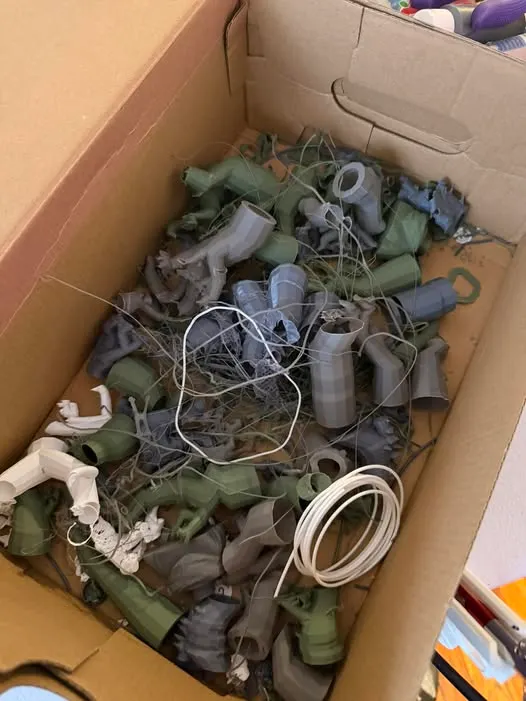
The best waste is waste that is never created. With 3D printing, this may sound like a cliché, but in the workshop it has a very concrete meaning.
Start by sorting scraps by material right at the printer. A separate container for clean PLA, a second for PETG, and a third for mixed or unknown scraps will do more than sorting through one large box later. Label the container with the material and ideally also state what does not belong in it: supports made from another filament, resin, metal inserts, glued parts, and scraps with paint.
It is also useful to distinguish between clean and dirty scraps. Filament cutoffs, failed calibration cubes, and supports made from a single material have a better chance of being recycled in the future than glued, painted, or multi-material models.
If you print a lot, consider a local recycling service, makerspace, or your own shredding and extrusion. Producing filament from waste at home is not for everyone: it requires a shredder, extruder, drying, diameter measurement, and quality testing. For a workshop, school, or company with a larger volume of waste, however, it may make sense. For an individual, it is often more practical to sort scraps over the long term and hand them over where they can be processed in larger batches.
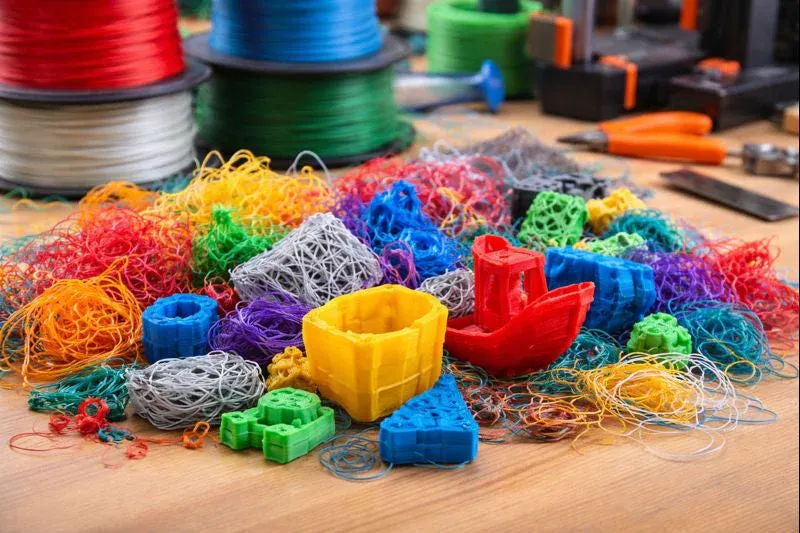
The environmental impact of PLA is not determined at the waste bin, but already in the slicer and during model design.
A specific example: instead of printing a three-hour holder, first print only the section with the holes and latch. You can verify the dimensions in twenty minutes, and any waste will be a few grams, not half a spool.
With PLA, it is best to communicate in measured terms. Instead of the simple phrase biodegradable, it is more accurate to say:
PLA is a bioplastic made from renewable raw materials. Under ordinary home conditions, however, finished prints do not break down like organic waste. Composting requires controlled industrial conditions and acceptance by a specific processor.
Such an explanation is not less effective for sales. It is more credible. Thanks to it, customers understand that PLA is a good choice for easy printing, decorations, prototypes, and many everyday parts, but that it should not be thrown into garden compost or organic waste.
If you have PLA scraps at home or in your workshop, follow this simple rule:
PLA is not a magically disappearing plastic. It is a useful material that may be more environmentally friendly than petroleum-based alternatives in some respects, but only if we handle it responsibly. With 3D printing, it therefore makes the most sense to print thoughtfully, sort waste by material, and use the word compostable only where the right conditions genuinely exist.


