Free shipping from 1 999 Kč
Fast shipping
Verified store
Thousands of customers




Free shipping from 1 999 Kč
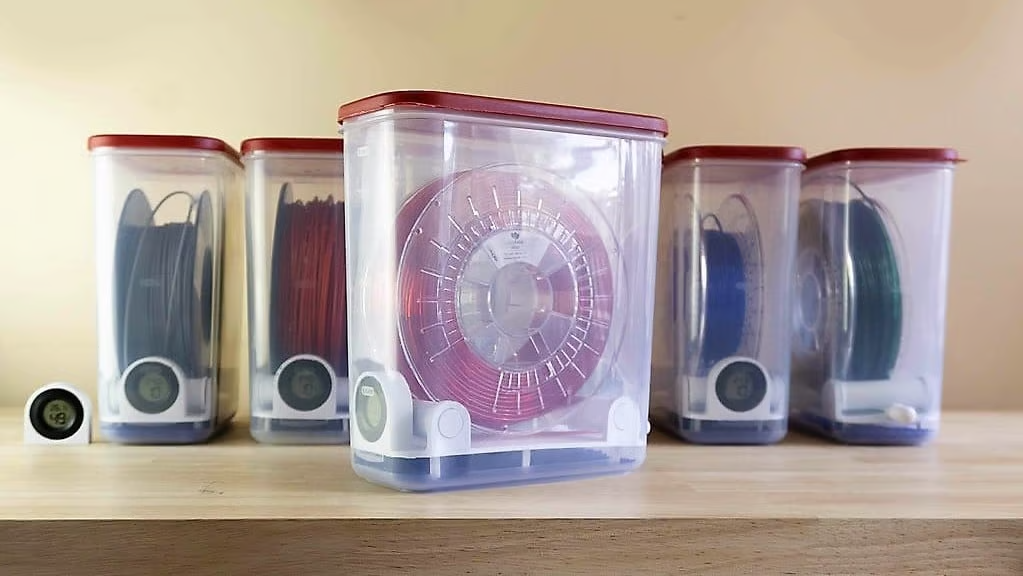
Moisture from the air can easily damage 3D printing filament, which can also affect the quality of your prints. Find out how to dry filament properly!
All filaments used in fused deposition modeling (FDM) 3D printing are hygroscopic. That is a complicated way of saying that the material likes to absorb moisture.
This hygroscopicity can cause problems with filaments. As plastic polymers, they are made up of chains of molecules joined together. Water molecules in moisture break these chains apart, which degrades the plastic and causes a range of printing problems.
But you don't need to worry! “Wet” filament spools can be saved, and proper storage can prevent future problems.
In this article, we'll look at how to identify wet filament, how to dry it, and finally, how to store the resulting moisture-free filament. Let's get started!
Identifying Wet Filament
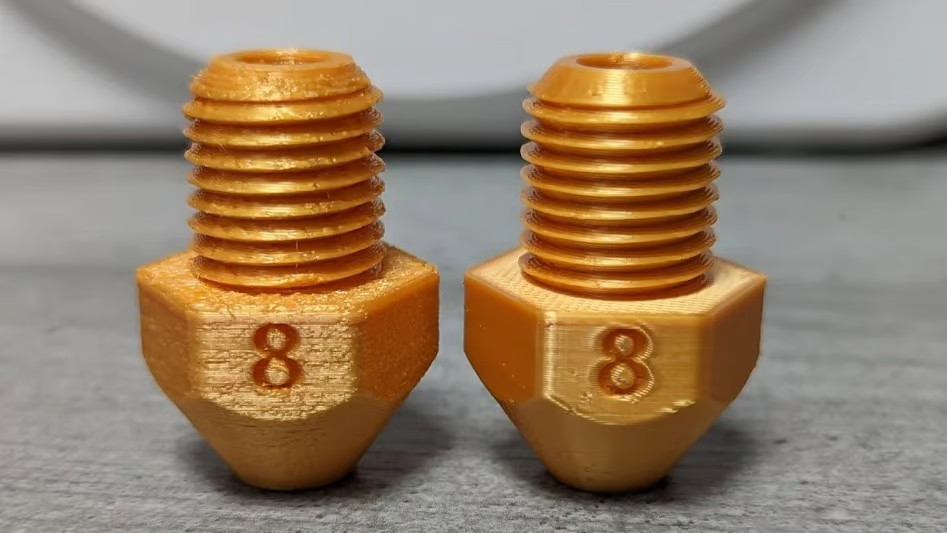
Different types of filament absorb moisture at different rates, but there are several common signs that indicate your filament spool is wet:
If you notice any of the problems mentioned above, it is a good idea to dry the filament. With especially hygroscopic materials such as nylon, PETG, PVA, and ible filaments, problems can occur even after a single night of exposure to the air.
There are dry storage options that can help prevent this problem, which we will look at later. If the filament has already been damaged, it is important to dry it as soon as possible to preserve its strength and print quality.
Fortunately, there are several ways to safely dry filament. These methods vary in cost and complexity. Let's look at the main ways to restore filament to its dry state and keep it dry!
Method No. 1: Filament Dryer
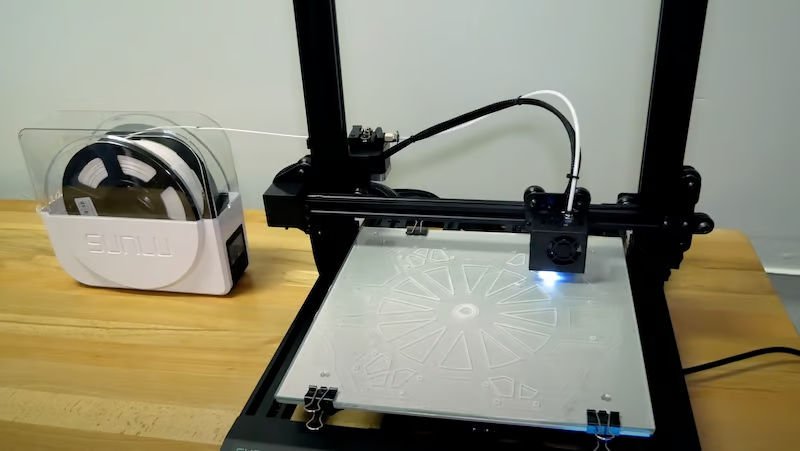
Sunlu FilaDryer S1 is an example of a commercially available filament dryer.
Let's start with a commercially available solution. If you didn't know already, there are specially designed devices intended for drying filament! If you're looking for something designed specifically for 3D printing with added features, this may be your best choice.
There are several types of filament dryers offering different features, but they are all relatively easy to operate. Basically, you place your spool (or spools) inside, select the desired settings, and let the dryer do its work.
In general, filament dryers require a power source and work by using a heating element to create a warm environment. The heat evaporates moisture from the filament and the surrounding air. You often have a choice of different temperatures depending on the filament you want to dry, as well as the option to set a timer to limit the drying time.
When the time is up, you can retrieve your spool, which should be free of moisture. In some cases, the dryer also has a filament feeder that works at the same time as the printer, saving you time and effort by drying and printing simultaneously.
Popular options
Among the biggest names in filament heaters is the Sunlu FilaDryer S1 Plus, which can hold one spool at a time and offers a heating range of 35-55 °C. It has a built-in fan (an improvement over the original model) that improves circulation, and thanks to its two outlet holes, you can use it during 3D printing.
Another option is the Sovol SH01, which stands out not only thanks to its adjustable features, but also because it allows you to dry two filaments simultaneously. This can be useful if you plan to print multicolored models. Like the FilaDryer S1 Plus, the Sovol SH01 can also be used during printing thanks to its outlet holes.
Method No. 2: Oven
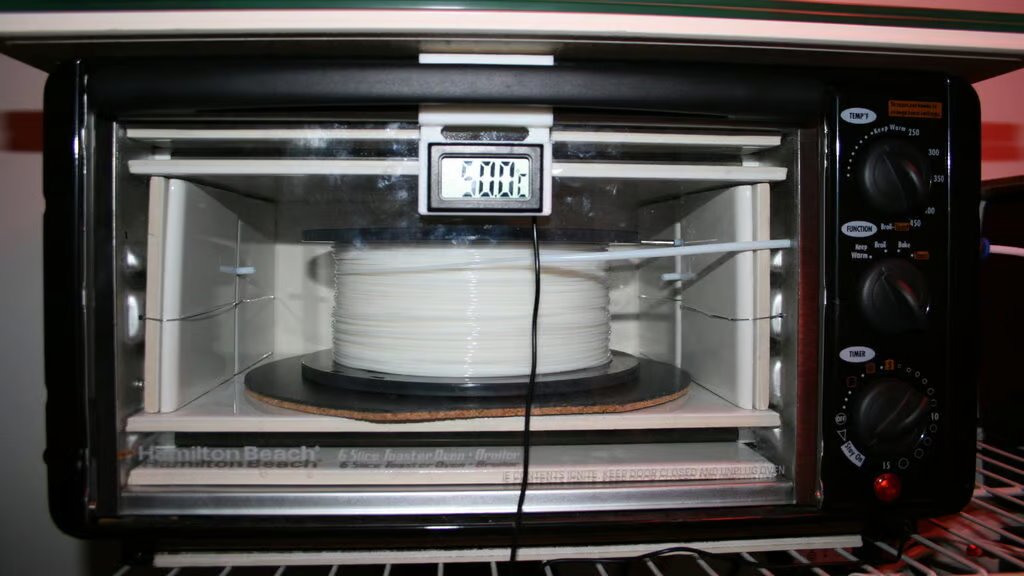
PVB is hygroscopic, so dry it before printing.
Probably the simplest and most common way to dry filament is to use an oven. Set the temperature just below the glass transition temperature of the plastic and leave the filament in the oven for four to six hours, until the moisture evaporates. The longer you leave it there, the drier it will be.
Suitable target temperatures for some of the most common filaments are as follows:
But don't rush! Always remember that you must wait until the oven reaches the target temperature before placing the spool inside. All ovens slightly exceed the target temperature while heating, so if you place the spool inside too early, the plastic may melt!
It is also a good idea to have an oven thermometer for more accurate temperature measurement, as well as to understand exactly how well your oven can maintain the specified temperatures. Too much deviation from the target temperature may mean a risk of melting the plastic and fusing the entire spool together.
Finally, keep in mind that 3D printing materials, especially ABS, can release unpleasant odors and fumes – this is not something you want to create in an appliance you use to prepare food! Always carefully consider which non-food items you put in the oven, and allow time for ventilation after drying the filament.
Method No. 3: Food Dehydrator
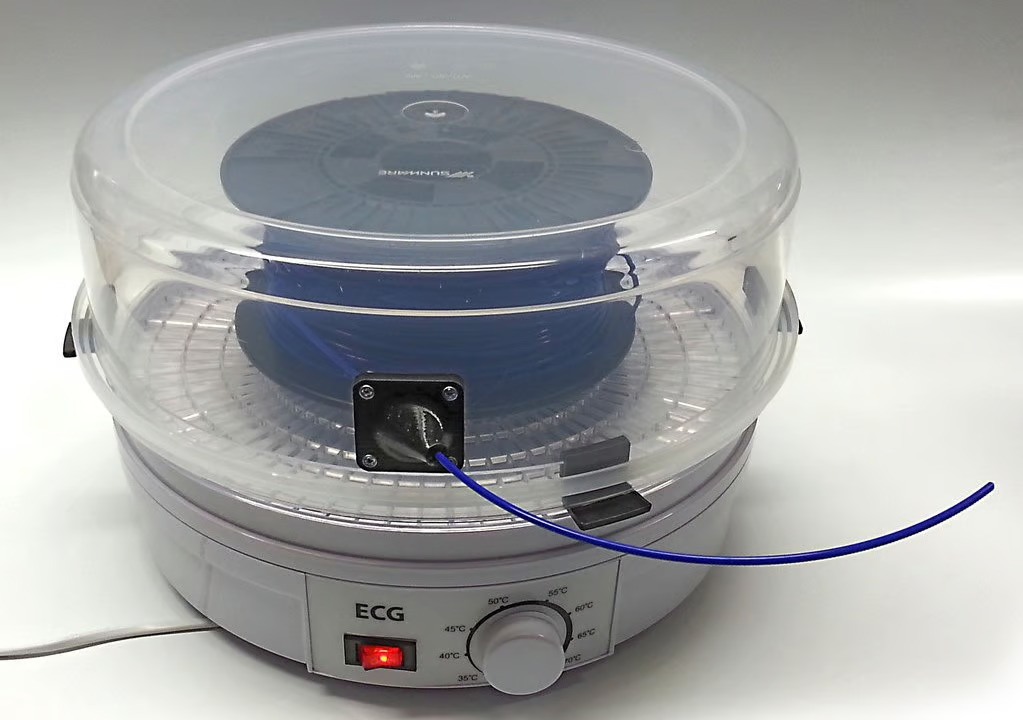
With a 3D-printed modification, you can print directly from a food dehydrator!
Food dehydrators are also a great tool for drying filament, especially if you do not have a suitable oven. Originally designed for drying foods such as fruit and meat, dehydrators operate at lower temperatures than ovens, so they should have better temperature stability in the required range. A limiting factor may be that they do not heat up enough, depending on the material you are working with. Fortunately, dehydrators are often round, which is an ideal shape for temporarily placing your filament spools!
As with oven drying, try to reach a temperature slightly below the glass transition temperature of the material you are drying:
Food dehydrators are available at reasonable prices and can be found all over the internet. They are usually equipped with removable layers and grates that you can add or remove depending on the size of your spools. You can also 3D print accessories to better adapt them to your needs, such as Tinkerman's project on Thingiverse (shown above), which allows you to print directly from the dehydrator.
Proper Storage
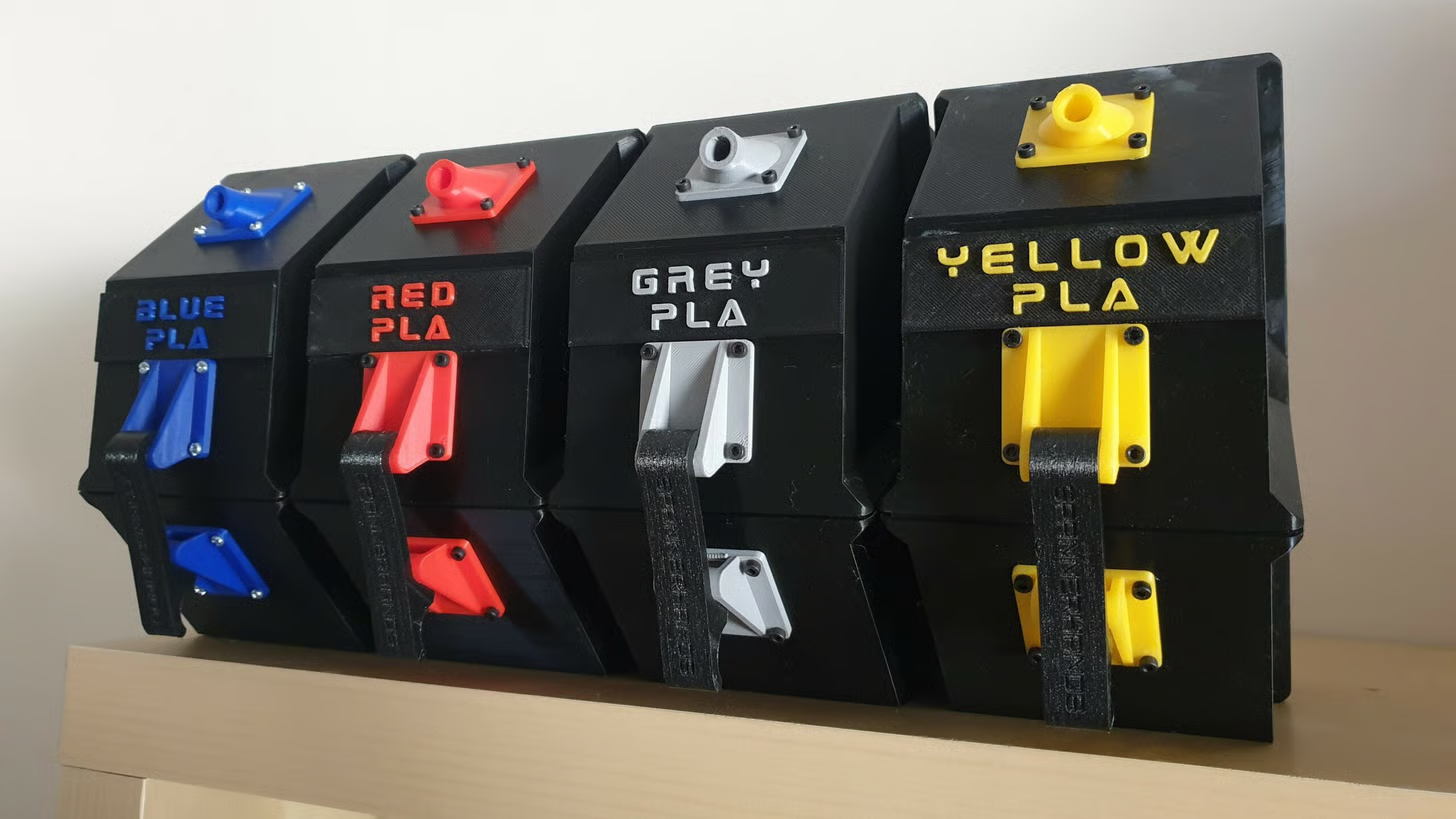
Once your filament is dry, you will want it to stay that way for as long as possible. To achieve this, you need to store dry spools in a humidity-controlled environment. This may include airtight boxes with desiccant bags or specialized commercial solutions. Usually, the former is sufficient, but custom-designed dry boxes offer some additional benefits.
For example, the Polymaker PolyBox connects directly to your printer and displays the internal temperature and humidity, allowing you to monitor the dryness of your filament without any intervention. DIY alternatives include the Rubbermaid container recycling project mentioned at the beginning of this article, and the fully 3D-printed Spannerhands spool system shown above.
Keep in mind that even the best storage solution cannot dry filament for you; it can only prevent it from absorbing more moisture. If your filament becomes damp again (or was not dry to begin with), you will need to use one of the methods listed above to dry it again.


