Free shipping from 1 999 Kč
Fast shipping
Verified store
Thousands of customers




Free shipping from 1 999 Kč
Damp filament for 3D printing can lead to ruined prints. Fortunately, proper storage and drying can help prevent and solve this problem.
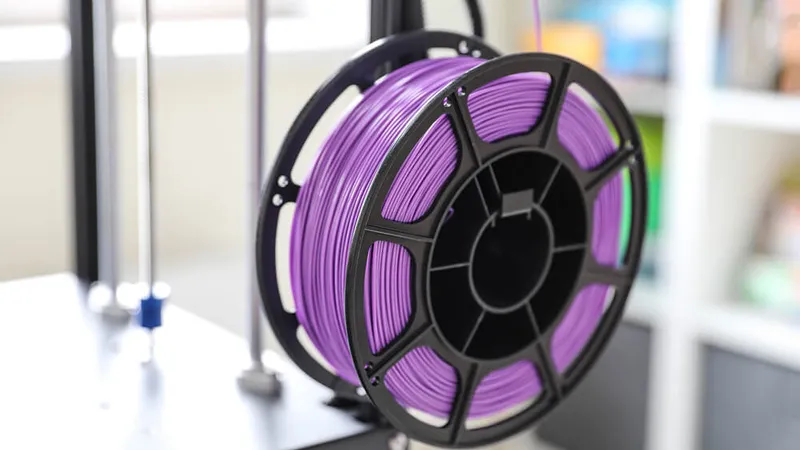
Although it may not be obvious to a beginner, every experienced 3D printing enthusiast knows how important proper filament storage and drying are. Moisture in filament can significantly affect print quality. We will explain why it is important to keep most thermoplastics dry before printing and how to dry filament properly to ensure a successful print.
How to dry filament
Drying filament is an important step in the 3D printing process because it can significantly increase your chances of achieving a successful print. The good news is that this step does not have to be complicated: you have several options available to ensure that your filament is moisture-free. Let’s take a look at them.
Filament dryer
A filament dryer is a device specifically designed to remove moisture from filament. The operating principle is simple: filament dryers hold the filament spool in an enclosed space with controlled heating, causing water molecules to evaporate evenly from the thermoplastic.
There are currently several types of filament dryers on the market, including simple plug-and-play products for hobby users and more advanced systems for professionals. The most basic filament dryers consist of a heated container that can hold at least one filament spool. More sophisticated machines are equipped with additional features, such as spool rotation and airflow for even heat distribution. Some filament dryers are designed to dry an entire filament spool at once, which can then be removed and mounted on a 3D printer. There are also other systems, known as inline filament dryers, designed to dry the filament while simultaneously feeding it directly into the 3D printer, saving time.
It is also possible to make your own DIY filament dryer. If you have a 3D printer with a heated print bed, it is not difficult to convert it into a filament dryer. All you need is a 3D-printed support structure and an inexpensive PC fan.
Oven
The most accessible way to remove moisture from filament before 3D printing is to use an oven. Yes, an ordinary kitchen oven is sufficient. Simply set the oven to a low temperature—the exact temperature depends on the type of filament and its glass transition temperature—let it preheat, and then place the filament spools inside for up to six hours.
Before placing the filament in a heated oven, it is important to check whether your oven has an accurate thermostat. You do not want to set the oven to 80 °C only to discover that it actually reaches 95 °C and your filament has started to melt. To check the oven thermostat, simply place a thermometer in the preheated oven and read the temperature. You can adjust the oven settings based on any discrepancies.
It is also important never to place a filament spool in the oven before it has reached the correct temperature. Many ovens overheat before reaching the correct temperature, which could destroy the filament spool and create a mess of melted plastic.
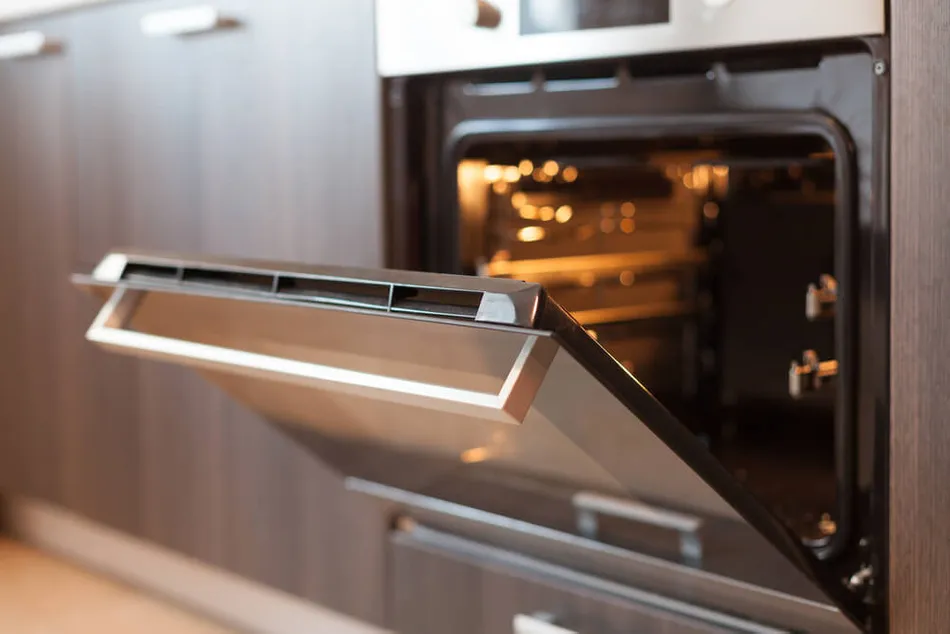
Filament can be dried at home using a kitchen oven preheated to the correct temperature.
Food dehydrator
Another way to dry filament using a kitchen appliance is to use a food dehydrator. Food dehydrators work by circulating hot air in an enclosed space to dry food such as fruit or meat. Because most food dehydrators reach the temperatures required for drying filament, they can also be used for this purpose. Although food dehydrators are usually cheaper than specialized filament dryers, their capacity is generally smaller—after all, they are not designed for filament spools. Nevertheless, they are a popular choice among the maker community due to their affordability.
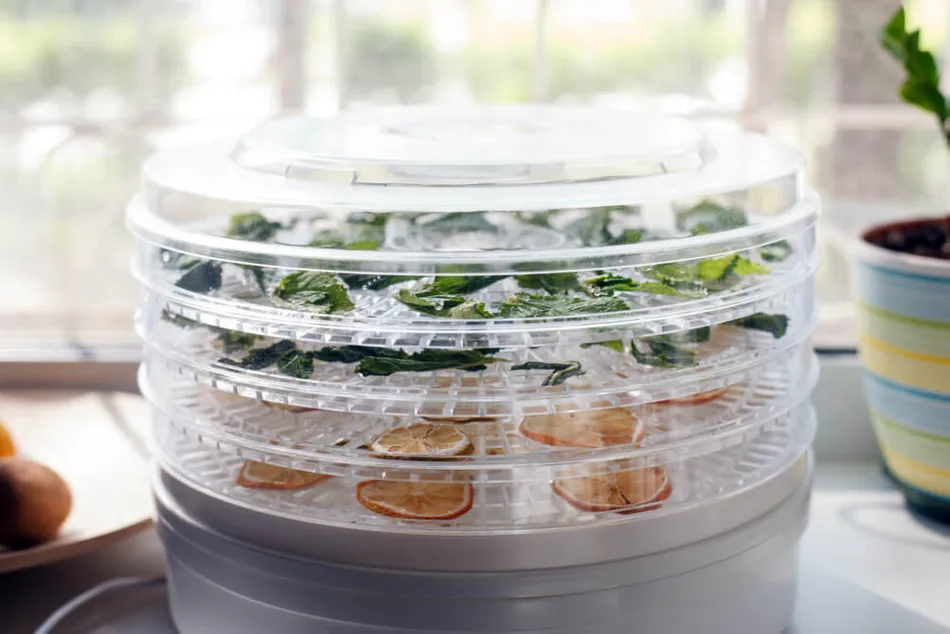
Food dehydrators are also suitable for removing moisture from filament for FDM 3D printers.
Filament drying temperatures
Regardless of whether you dry filament in an oven, food dehydrator, or specialized filament dryer, there are specific settings for different types of filament. A good rule of thumb is to preheat the drying device to a temperature just below the material’s glass transition temperature. The glass transition temperature determines the point at which a thermoplastic changes from a hard state to a soft one. For example, PLA filament has a glass transition temperature of around 60 °C, so a suitable temperature for drying PLA is between 40 °C and 50 °C. ABS, on the other hand, has a higher glass transition temperature (105 °C), and can therefore be dried at a higher temperature. It is also important to consider the material of the spool holder, as you do not want it to melt or burn in the oven.
Common 3D printing filaments and their drying temperatures:
As for drying time, removing moisture from thermoplastic filament can take several hours. Generally, you should dry your spools at the recommended temperatures for approximately 4–6 hours. However, more hygroscopic materials, such as nylon (PA), may require a longer drying time. If you use a specialized filament dryer, the temperatures and drying times may vary.
How to store filament
Filament storage is essential for protecting your FFF 3D printing materials from moisture and minimizing the need to dry them. Proper storage also helps protect materials from moisture, dust, and other contaminants after they have been dried. In addition, proper filament storage can extend its shelf life and maintain its optimal properties.
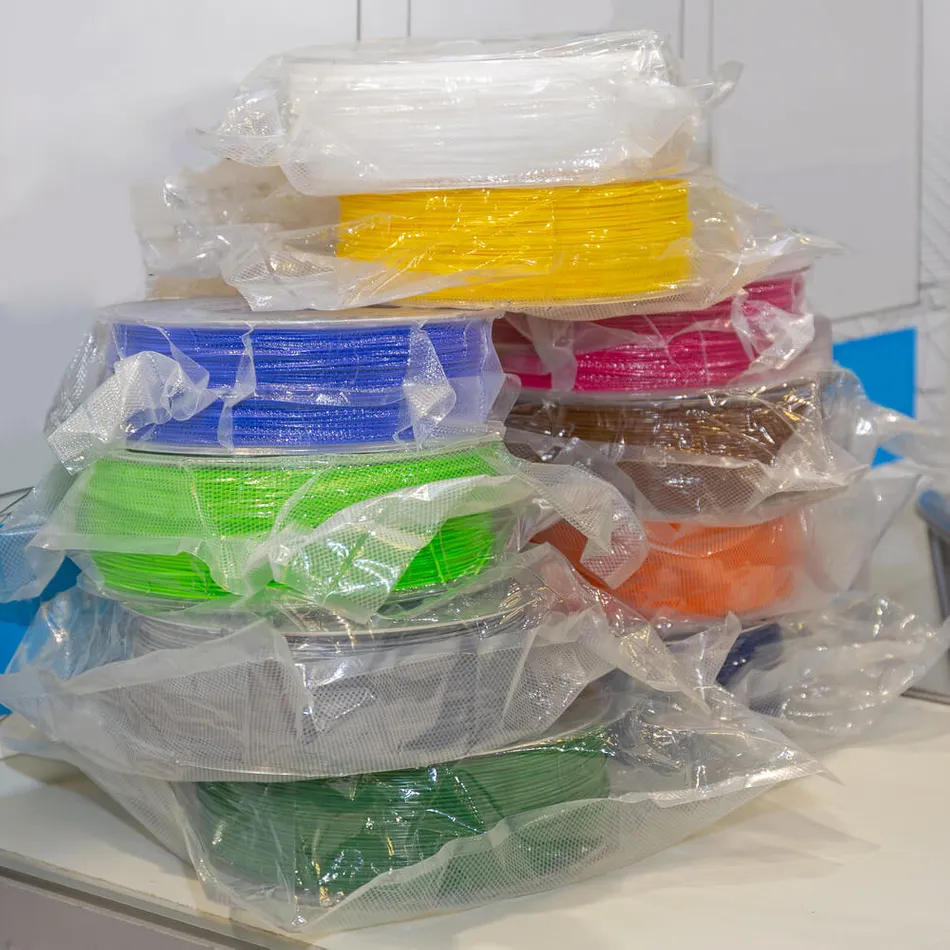
Proper filament storage can protect your materials from moisture and humidity.
The key to keeping filament in optimal condition is to store it in a space with controlled humidity. One reliable solution is to place filament spools in a dry box, an airtight container containing a desiccant material (such as silica gel packets). It is important to note that desiccant packets need to be replaced regularly because the materials absorb moisture. Fortunately, many types of desiccants can be reused: simply remove their moisture using a filament dryer or an oven at a low temperature.
You can also place filaments in vacuum-sealed bags or containers, which provide an airtight seal and prevent moisture from entering. These packages are particularly effective in areas with high humidity. They can be made of plastic or metal and should have a tight-fitting lid with a rubber gasket to ensure a proper seal.
Creating a DIY dry box is a popular choice among makers, as it not only protects filament from moisture but also feeds it into the 3D printer. This project requires an airtight container, desiccant packets, PVC pipes, tubing, and several other components. For optimal filament storage, it is also a good idea to keep it away from direct sunlight or heat sources, as these can cause filament degradation.
The problem with damp filament
In the filament melting process (FFF), thermoplastic filaments are fed through a heated nozzle (called a hotend) until they reach their melting temperature. Once the filaments have melted in the nozzle, they are extruded onto the build platform, where the molten polymer begins to solidify as it cools. This extrusion process is continuous, with material deposited layer by layer until the final object stands on the build platform.
If filament for 3D printing has been exposed to moisture, it can lead to a number of problems, such as material degradation. Absorbed water can disrupt the polymer chains in the filament, resulting in reduced strength and ibility. In addition, damp filament disrupts the printing process because moisture in the thermoplastic evaporates as the material is heated. This causes air bubbles to form in the material, leading to stringing, blobs, and ultimately parts with reduced strength and quality.
The ability of filaments to absorb moisture depends on several factors, including the material type, ambient humidity, and exposure time. For example, nylon is known as a highly hygroscopic material that can quickly absorb moisture from the air. PLA, on the other hand, is up to 10 times less hygroscopic than nylon, but it can still absorb a considerable amount of moisture over time.
Identifying damp filament
Although we refer to “damp filament,” identifying filaments affected by moisture is not as simple as touching them to find out whether they are wet. Many filaments used in 3D printing, including PA, TPU, PLA, PVA, PETG and, to a lesser extent, ABS, are hygroscopic, meaning that they absorb moisture and humidity from the surrounding air. When filament absorbs water from the surrounding environment, the water molecules disrupt the polymer chains inside the thermoplastic in a process called hydrolysis. This process not only increases the likelihood of bubbles forming in the filament during printing, but also makes the filament more brittle and weaker.
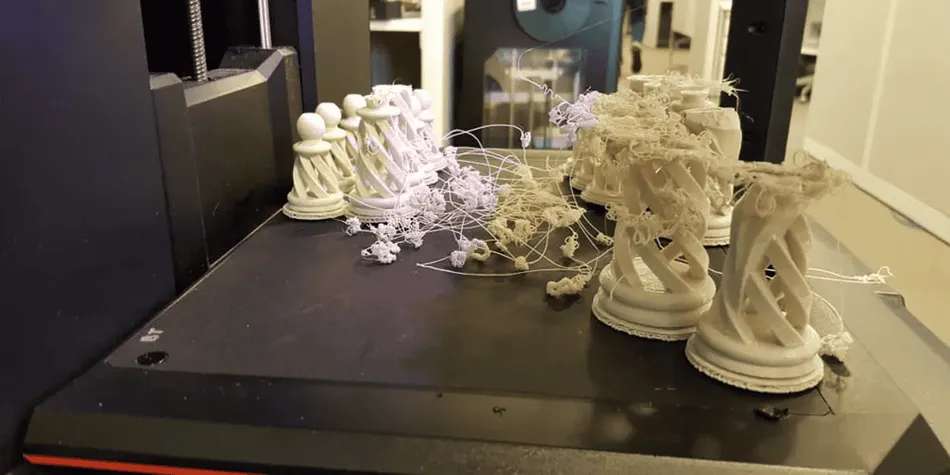
Damp filament can cause stringing during 3D printing.
During 3D printing, some obvious signs that your filament has absorbed moisture include popping sounds coming from the extruder and bubbles in the filament as it heats up. If molten thermoplastic continues to ooze from the 3D printer’s print head even when the machine is turned off, this may also be a sign that the filament is damp. Other signs may appear on the 3D-printed part itself, such as stringing, blobs, and poor layer adhesion.
Filament with a high moisture content may also show color changes or have a cloudy appearance. This is especially noticeable with transparent filaments, which can lose their transparency when they absorb moisture. In general, however, it can be difficult to determine whether filament has absorbed too much moisture before printing. (That means that if you notice your filament spool is less ible than before, it may be a sign of moisture.) Therefore, it is important to store your filaments properly and learn how to dry them.
Conclusion
Investing time in properly drying and storing your 3D printing filaments will pay off in the long run. Filaments are in their best condition when they are dry, which supports smooth printing (without popping or oozing) and ensures high-quality prints (without stringing and with good layer adhesion). If you decide to dry your own filament, remember to follow this guide.
Frequently asked questions (FAQ)
Question: Why is moisture harmful to filament?
Answer: Moisture can damage filament because it causes thermoplastics to degrade. During the 3D printing process, when filament is heated, trapped moisture evaporates, leading to the formation of air bubbles and other problems such as stringing and blobs.
Question: Can I dry filament in an oven?
Answer: Yes, you can dry filament in an oven, but it is important to use a low temperature and carefully monitor the process to avoid overheating the filament. Some ovens may not have accurate temperature control at lower settings, so it is recommended to use an oven thermometer to ensure the correct temperature.
Question: How do I know whether my filament needs drying?
Answer: Damp filament can usually be identified by rough or uneven surfaces on the printed object, stringing, or brittleness. If your filament has been stored in a humid environment or has not been used for a long time, it may also need drying.
Question: Can I reuse desiccants?
Answer: Yes, many types of desiccants, including silica gel, can be reused. You can regenerate silica gel desiccants by placing them in an oven at a low temperature until they change color, indicating that the moisture has been removed.
Question: How long do I need to dry filament?
Answer: There is no fixed rule regarding the drying time for a filament spool. For most filaments, a drying time of between four and six hours is recommended; however, more hygroscopic materials, such as nylon, may sometimes require longer.
Question: How long can I store filament before it goes bad?
Answer: Filament shelf life can vary depending on the type of filament and storage conditions. In general, filament can be stored for several months to a year if kept in a sealed container with desiccants in a cool, dry place. However, it is recommended to use the filament as soon as possible for the best print quality.


