Free shipping from 1 999 Kč
Fast shipping
Verified store
Thousands of customers




Free shipping from 1 999 Kč
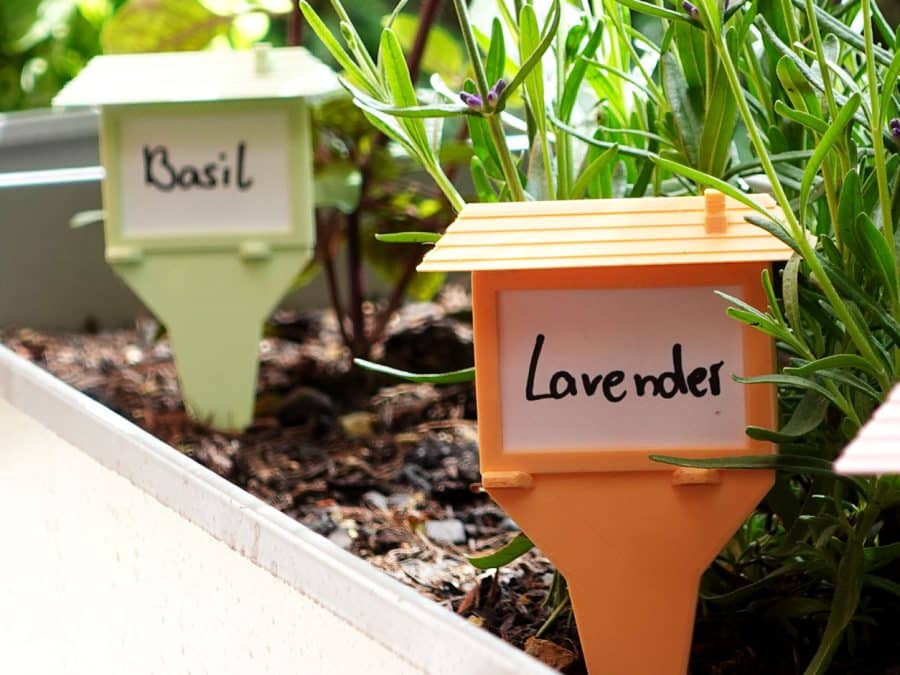
A summer garden and balcony are an ideal zone for 3D printing: small parts print quickly, can be adapted to specific planters, and often solve exactly the problem that standard equipment overlooks. The shape of the model is not the only important factor—the material matters too. Outdoor parts are suddenly exposed to three factors: UV radiation, water, and heat.
For long-term use in direct sunlight, choose ASA above all. It handles UV radiation and higher temperatures better, making it suitable for holders, supports, hangers, and parts that must not soften. PETG is an excellent compromise for balconies, shade, contact with water, and more ible parts. Reserve PLA mainly for short-term labels, test prototypes, or parts kept in the shade. In a car, greenhouse, on a dark windowsill, or on a south-facing wall, PLA can soften surprisingly quickly.
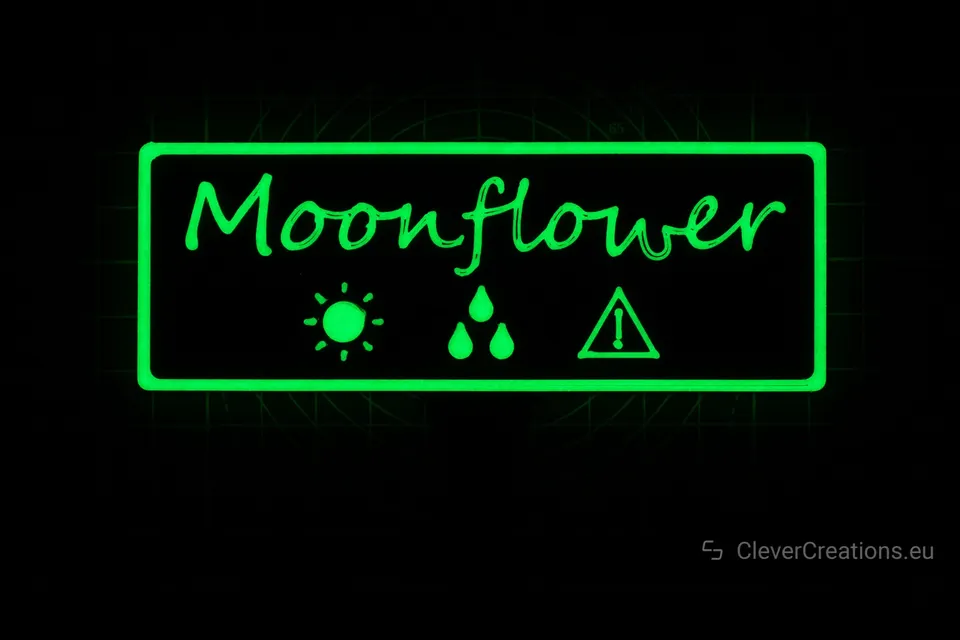
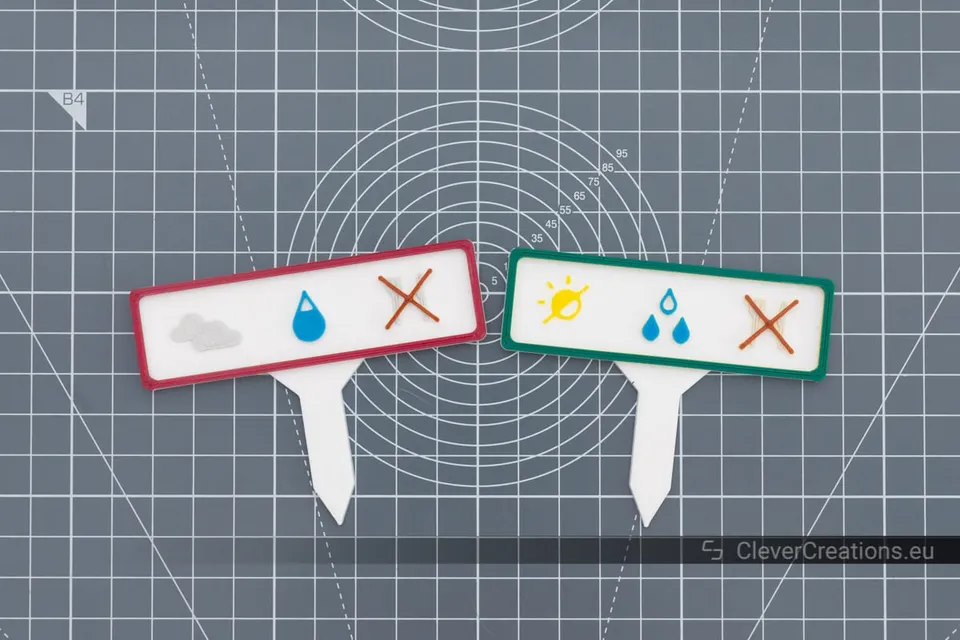
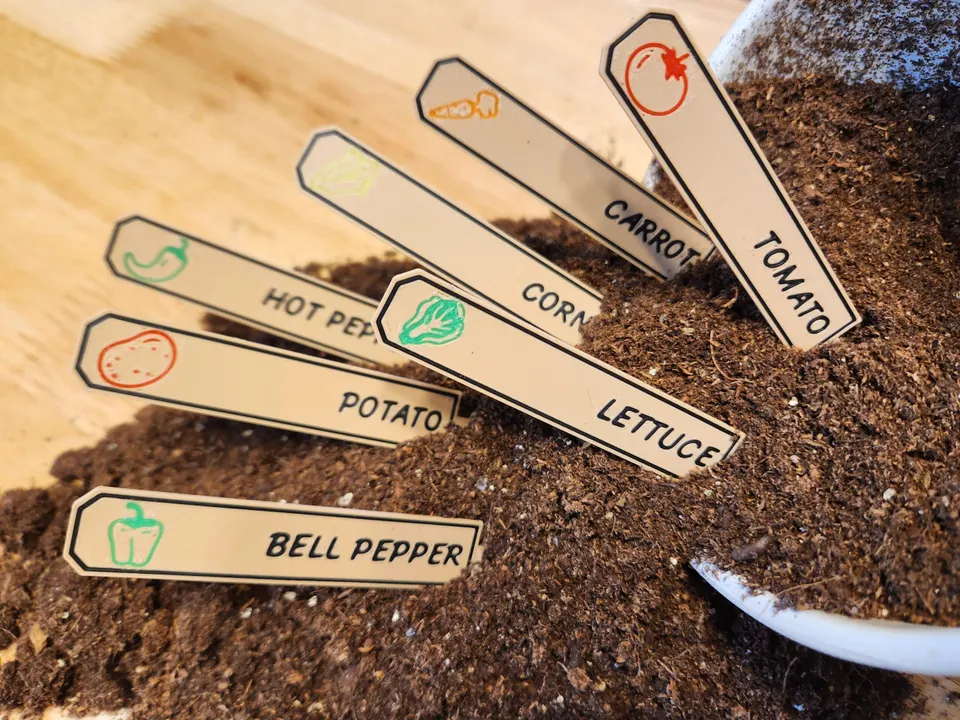
Labels are the simplest print with immediate practical value. Print labels for tomatoes, peppers, herbs, houseplants, and seedlings, adding a larger writing area or raised text that rain will not wash away. Narrow stakes for planter boxes, clip-on labels for the edge of a pot, and wider signs for garden beds are all practical options.
Durability: ASA is best for direct sunlight because both the lettering and shape will last longer without becoming brittle. PETG is good for balconies and damp planter boxes, but expect dark colors to heat up more. Use PLA for just one season or in the shade. For readability, choose a light background and dark text, or use two-color printing.
A planting dibber helps you make holes of the same depth for seeds, bulbs, and seedlings. Add a centimeter scale along the side, a wider ergonomic handle, and a conical tip suited to the type of soil. A smaller version for seed trays and planter boxes is also useful on balconies.
Durability: The dibber is not constantly exposed to sunlight, so PETG is often sufficient. If you leave it outdoors by the garden bed, ASA will handle UV and heat better. Water is usually not a problem, but print it with a higher number of perimeters so the tip does not break in compact soil. PLA can work as a low-cost option, but do not leave it in a hot greenhouse.
A seed spacing tool is a flat template with holes at regular intervals. It speeds up sowing radishes, lettuce, carrots, or herbs and helps avoid overcrowded rows. For balcony growing, a template sized precisely to the planter box is useful.
Durability: PETG is the most practical choice here: it is water-resistant, easy to rinse, and reasonably ible. Choose ASA if the template will remain outdoors in the garden bed. PLA can become brittle over time and break at thin ribs. To reduce heat-related deformation, do not make the template black; a lighter color will deform less.
Plant clips replace strings and knots. They attach a stem to a stick, net, or string, but must not constrict the plant. Different diameters for young seedlings and thicker stems are useful, as are rounded edges that will not damage the plant tissue.
Durability: PETG is very good for clips because it offers some ibility and withstands moisture during watering. Choose ASA for clips in full sun, especially on structures by a south-facing wall. PLA is too brittle for repeated opening and may loosen in the heat. If you want a softer contact surface, add a TPU insert or design a larger contact area.
There is never enough space on a balcony. 3D printing can produce hooks made precisely for a railing, holders for small watering cans, hangers for hand tools, a garden hose clip, or a clip for attaching a lightweight planter box. For load-bearing parts, however, allow a safety margin and do not print them as thin decorations.
Durability: For loaded hooks in sunlight, choose ASA and orient the layers so that tension does not pull the individual layers apart. PETG is suitable for lighter hangers in the shade because it handles moisture well. Heat is critical for black parts: on a metal railing, they can become significantly hotter than the surrounding air. Use thick walls, a high number of perimeters, and preferably several smaller hooks rather than one overloaded hook.
Instead of buying universal connectors, you can print connectors made precisely for bamboo sticks, metal rods, or wooden slats. This allows you to create low supports for peppers, circular supports for peonies, trellises for peas, or modular frames for climbing plants along a wall.
Durability: ASA is best for long-term supports because the connectors remain under tension and are often exposed to sunlight. PETG can be used for smaller structures where some ibility is acceptable. Water is not a major problem as long as it does not collect in pockets inside the part. Design drainage holes and rounded corners. PLA can deform at the connectors in summer, causing the structure to lose rigidity.
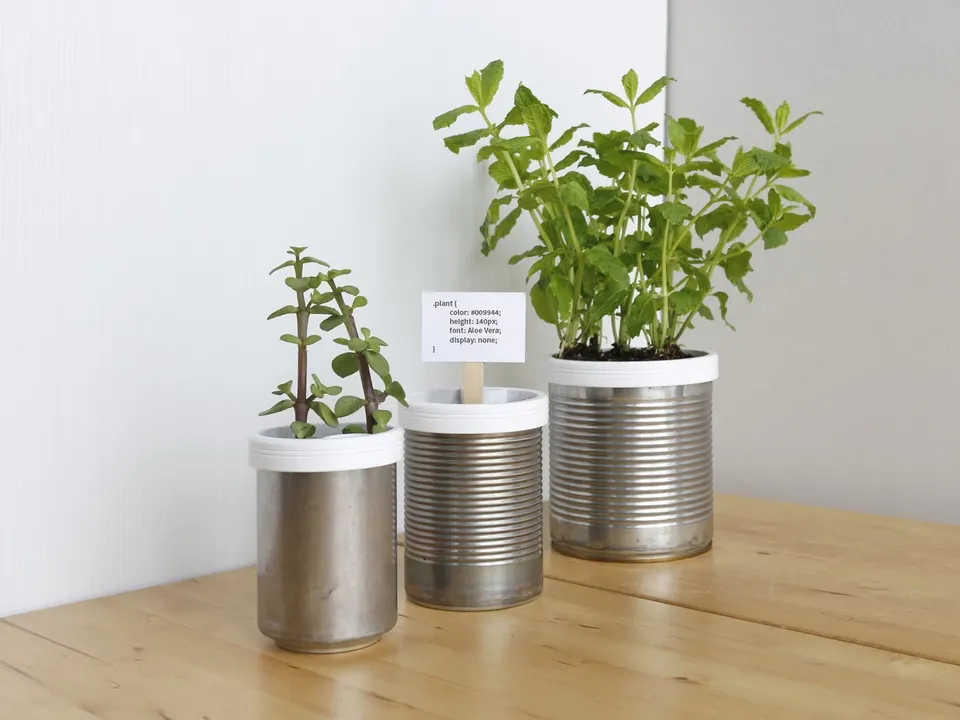
Self-watering does not have to mean buying an entirely new planter. You can print an internal divider, wick holder, spacer feet, a float-based water-level gauge, or an attachment that converts a standard PET bottle into a water reservoir. The main benefit is more stable substrate moisture, which herbs, tomatoes in planter boxes, and houseplants during holidays will all appreciate.
Durability: PETG is suitable for contact with water because it prints well and is less prone to cracking than PLA. ASA is better if the reservoir is exposed to sunlight and heats up. For parts that remain submerged in water, remember that the layers are not perfectly watertight. Print with more perimeters, at a higher temperature within the recommended range, and seal critical joints if necessary. For edible plants, choose the material and surface finish carefully, since biofilm and fertilizer residue can collect between the layers.
Drip irrigation saves time and water only when the water flows precisely to the roots. Printed stakes hold a tube, micro-dripper, or nozzle in the desired position. You can design different heights for planter boxes, garden beds, and raised containers.
Durability: PETG is a good choice because the parts often get wet and need to slightly when the tube is attached. Choose ASA for irrigation systems that remain in direct sunlight all summer. Heat can soften inexpensive tubes and plastic connectors, so design the holder with a gentle grip rather than as a sharp clamp. PLA quickly suffers from the combination of water, sunlight, and mechanical stress in irrigation applications.
3D printing is especially useful where a standard planter does not fit: a narrow windowsill, corner holder, small shelves, unusual railing, or vertical herb growing. It often makes more sense not to print an entire large planter, but only an insert, feet, drainage grid, spacer, or connector between multiple containers.
Durability: PETG is a sensible base material for planters thanks to its water resistance and easier printing. ASA is suitable for outdoor covers and parts exposed to sunlight. With large containers, consider thermal expansion, drainage, and water runoff: standing water in cavities shortens service life and can split the part in winter. Use PLA only for an indoor decorative cover or a short-term test of the dimensions.
A modular hydroponic tower or wall is a larger project, but it is very appealing for balcony growing. Individual modules can be printed in sections, the number of levels can be customized, and baskets can be added for lettuce, herbs, or strawberries. The advantage is space savings; the disadvantage is the need to address watertightness, cleaning, the pump, access to the roots, and the stability of the entire structure.
Durability: PETG is often chosen for hydroponics because it handles water well and is easier to print than ASA. For an outdoor tower in direct sunlight, ASA is more resistant to UV and heat, but it is more demanding to print and the parts must be well ventilated during production. With nutrient-rich water, smooth surfaces, regular cleaning, and minimizing areas where deposits can collect are important. If a part must support several levels containing water and plants, design a wider base, mechanical securing, and the option to disassemble it.
For outdoor parts, more walls usually help more than extremely high infill. Start with 4 to 6 perimeters, thicker top and bottom layers, and reasonable infill based on the load. Print load-bearing hooks and connectors so that the main force does not act perpendicular to the layers. For water-related parts, increase the number of perimeters and avoid unnecessary cavities.
Color also matters. Black and dark parts heat up the most in sunlight, bringing them closer to the material's softening temperature. For labels, planters, and holders on the south side, white, light gray, green, or natural colors are more practical. If you want a longer service life, a UV-resistant coating can help, but choose the finish carefully for parts that come into contact with substrate or water.
If you are just starting, print labels, clips, and a planting gauge first. You will quickly find out how the material reacts to your balcony or garden. Then add irrigation holders, support connectors, and self-watering parts. Treat a hydroponic tower as a project requiring several iterations: first print one module, test its watertightness, cleanability, and stability, and only then scale up.
A well-designed garden print does not have to be complicated. Simply choose the right material, consider sunlight, water, and heat, and design the part so it can be cleaned, repaired, or replaced. That is where 3D printing is strongest for the garden and balcony: you can adapt small practical items precisely to your plants, space, and season.


