Free shipping from 1 999 Kč
Fast shipping
Verified store
Thousands of customers




Free shipping from 1 999 Kč
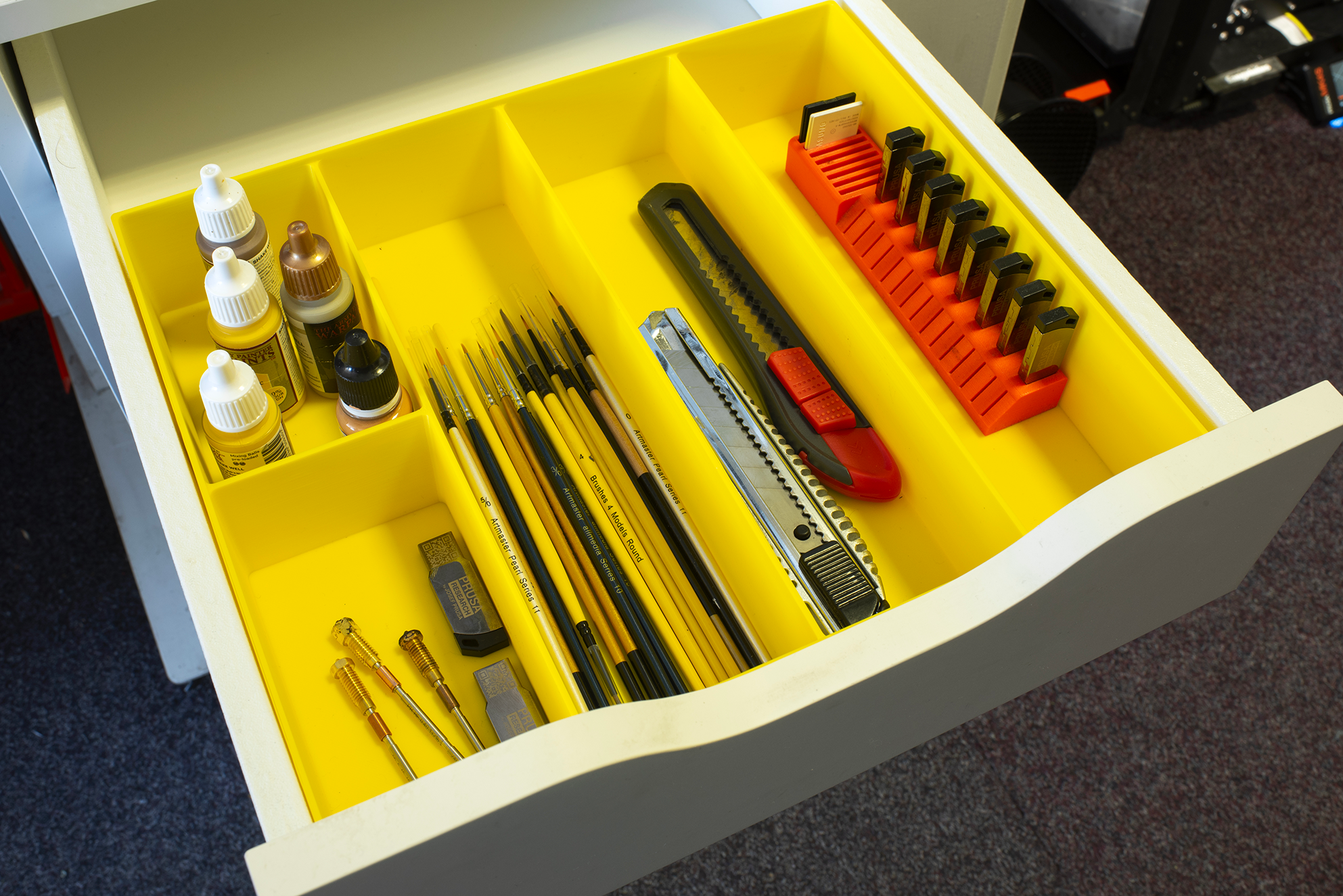
When someone asks what to print on a 3D printer, the simplest answer is usually: something you would otherwise have to buy, repair temporarily, or search for a long time in the right size. The best practical prints are not necessarily the largest or most complex. They are often a small holder, cover, organizer, or replacement part that fits your space, cable, shelf, drawer, or tool exactly.
3D printing makes the most sense where a standard universal product does not fit. Do you need a holder for a specific charger? An insert for a drawer with an exact width? A cap for older furniture? A spacer that is not available in stores? These are exactly the situations where a home printer saves time and frustration.

A good practical print meets at least one of these conditions:
On the other hand, it is worth thinking twice about parts that bear heavy loads, are near a high-heat source, come into contact with food, or have a safety function. 3D printing is a great tool, but it is not an automatic replacement for a metal holder, a certified electrical enclosure, or a car part.
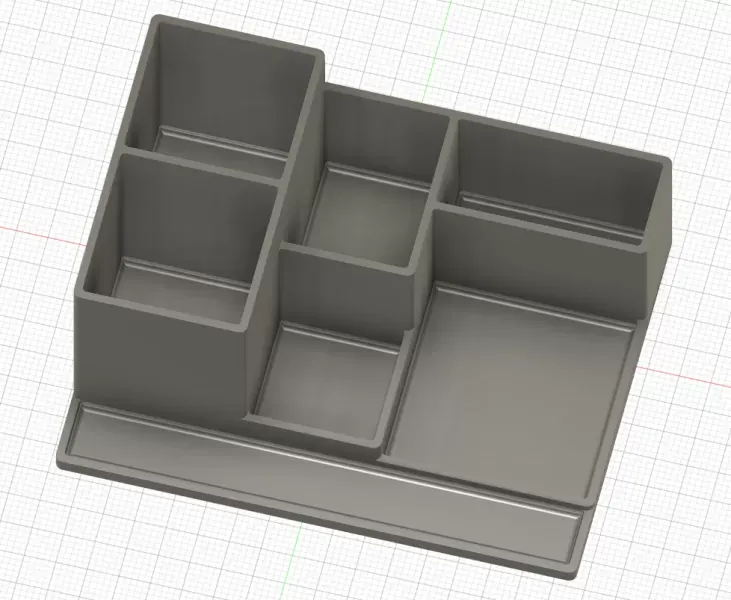
Organizers are among the most rewarding categories. They print quickly, use little material, and you can see the difference immediately.
Modular boxes for batteries, screws, medicines, sewing supplies, charging cables, or vacuum cleaner attachments are useful in drawers. The advantage of printing is that you can adapt the dimensions to the actual drawer. You do not have to settle for a store-bought organizer that leaves three centimeters of empty space along the side.
In the entryway, key hooks, a holder for a building access chip, a dish for loose coins, a glasses holder, or a simple wall organizer for a leash, bag, and umbrella make sense. With hooks, keep in mind that strength is determined not only by the material, but also by layer orientation, the number of perimeters, and how the hook is attached to the wall.
At a desk, cable holders, a phone stand, a headphone holder, an SD card tray, a laptop stand for better airflow, a tablet stand for recipes, or a small compartment for flash drives quickly pay for themselves. The more specific your problem, the better: a holder designed for one particular cable is often more practical than a universal box for everything.
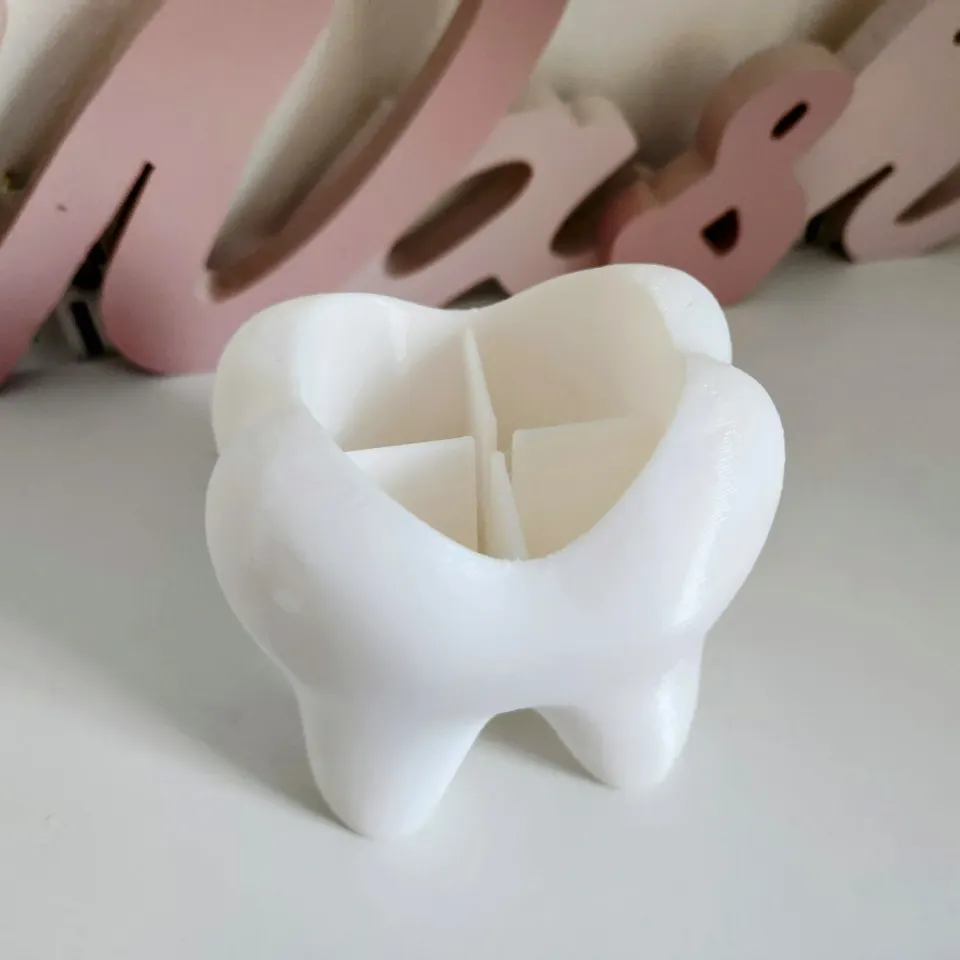
Useful kitchen items include bag clips, coffee clips, a sponge holder, a dish towel hook, a pet food scoop, a lid stand, a simple funnel for technical use, or a spice holder for a drawer. In the bathroom, toothbrush holders, towel hooks, spacers, screw caps, or a hair dryer holder work well.
Important limitation: a standard FDM print is not ideal for long-term direct contact with food. Dirt can accumulate between the layers, and the material, dye, or nozzle may not be food-safe. If you print a kitchen aid, it is better to use it for packaging, bags, containers, and dry indirect use. Only put parts in the dishwasher if the materials and settings used can withstand the heat; PLA can deform in hot water.
A workshop is a natural setting for 3D printing. Holders for bits, attachments, drills, pliers, Allen keys, tapes, measuring tools, nozzles, adhesives, and service wrenches are useful. Labeled drawer inserts also work well: one slot for each tool means you can immediately see what is missing.
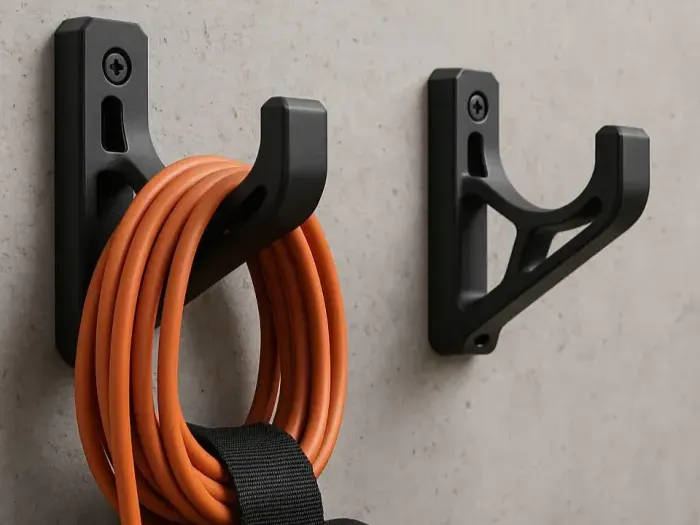
For the garage and basement, you can print holders for cordless tool chargers, hangers for extension cables, hose clips, profile caps, pipe plugs, stops, spacers, or simple drilling templates. For wall-mounted holders, it is often better to print the plastic shape and use a metal screw, wall plug, or insert wherever the actual load occurs.
Here, PETG or ASA is more worthwhile than PLA in many cases. Workshops tend to be warmer, parts are subjected to greater stress, and they occasionally come into contact with moisture. PLA is excellent for lightweight organizers and prototypes, but PETG is a more practical choice for functional holders.
One of the biggest advantages of 3D printing is the ability to repair something that would otherwise end up in the trash. Typical examples include a chair leg cap, shelf holder, box latch, button, battery cover, roller blind wheel, drawer handle, spacer ring, or plastic washer.
The process is simple: first measure the original part with calipers, then print a test version at a lower height or with only the critical section. Account for tolerances around holes. A round hole with a diameter of 5 mm may come out a few tenths of a millimeter smaller after printing, so it is better to make a test sample than to immediately print a final part that takes several hours.
Print replacement parts with the direction of stress in mind. Layers are weaker when pulled apart, so a hook or latch will usually last longer when the force does not pull directly between the layers. More walls, a higher temperature within the recommended range, proper cooling for the material, and rounding sharp corners can help.
The first useful prints often serve the printer itself. These include a bed scraper, tool holder, nozzle tray, PTFE tube clip, filament guide, spool label, flush cutter holder, box for filament scraps, or a simple organizer for spare parts.
A filament storage system is also very practical: spool holders, material labels, a sample box, clips for the end of the filament, and space for silica gel bags. Moist filament causes bubbling, stringing, a poorer surface, and weaker layers. Although drying itself is handled by a dryer or dry box, printed accessories help keep the material stored in an organized way.
Do not automatically print items for a balcony, garden, or car from PLA. In direct sunlight, behind a window, or in a hot car, it can deform. PETG is usually better for outdoor holders, flower pots, signs, caps, clamps, and organizers; for long-term exposure to UV radiation and higher temperatures, choose ASA.
Practical outdoor prints include plant labels, irrigation tube holders, net clips, LED strip mounts, spacers for outdoor boxes, screw caps, a thermometer holder, or simple service templates. For outdoor parts, add more walls, do not overdo the infill instead of using a solid outer structure, and think about water drainage. A pocket where water remains will shorten the lifespan even of a well-chosen material.
A practical 3D-printed gift works best when it is personalized and useful at the same time. It could be a cable holder with a name, an insert for a board game, a phone stand for a specific model, a jewelry organizer, a remote control holder, labeled workshop boxes, a bookmark, a door nameplate, or a set of bag clips in kitchen colors.
Decorations have their place, but with gifts it is worth thinking about everyday use. A beautiful print will bring joy once. A useful print will be remembered every time it makes someone's work easier.
PLA is sufficient for most first practical prints. It is easy to print, has an attractive surface, and is suitable for organizers, stands, prototypes, templates, decorative mounts, and lightweight indoor holders.
Choose PETG for items that need to be tougher, have some ibility, withstand moisture, or operate at higher temperatures. It is suitable for holders, technical parts, caps, larger boxes, workshop fixtures, and most everyday functional prints.
ASA makes sense outdoors, in cars, in sunlight, and anywhere higher temperature and UV resistance are important. However, expect more demanding printing, the need for a more stable environment, and good ventilation.
TPU is a ible material for feet, dampers, protective caps, non-slip pads, sealing elements, and soft grips. It does not print as quickly as PLA, but for ible parts it can solve problems that rigid plastic cannot.
Before starting a print that will take several hours, answer these five questions:
For functional parts, first print a small test of the critical section. For holders, add walls rather than just infill. Use tolerances for holes. For parts with screws, design enough material around the hole. And if the part should look good, think about the orientation of the visible layers already when slicing.
The things that make the most sense are those that fit your space exactly and solve a specific problem. A universal plastic product from a store may be cheaper, but it will not have the exact width of your drawer, the shape of your tool, or the opening for the cable you use every day.
Start with small prints: a clip, holder, insert, cap, or organizer. You will learn to measure, work with tolerances, and choose the material according to its use. Once you master these basics, the 3D printer will stop being just a machine for figurines and become a normal tool for the home, workshop, and repairs.


