Free shipping from 1 999 Kč
Fast shipping
Verified store
Thousands of customers




Free shipping from 1 999 Kč
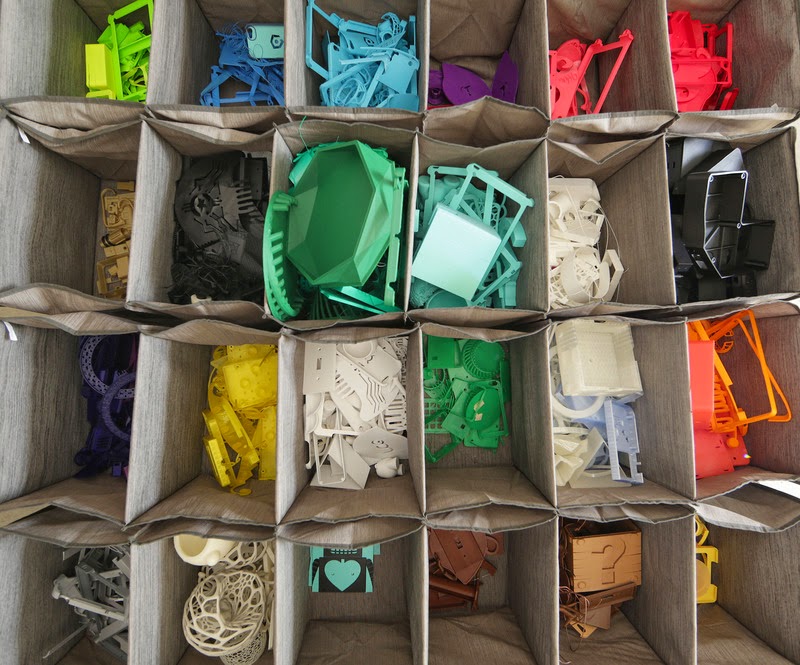
The bucket under your printer fills up faster than you expect. A few failed first layers, supports from a larger model, filament scraps, and, with multicolor printing, a purge tower or purged material from color changes are all it takes. The worst solution is to throw everything into one box assuming it will somehow be recycled someday.
Recycling 3D printing waste starts at the printer itself: separate materials, keep them clean, and do not pretend that every plastic automatically belongs in the yellow recycling container.
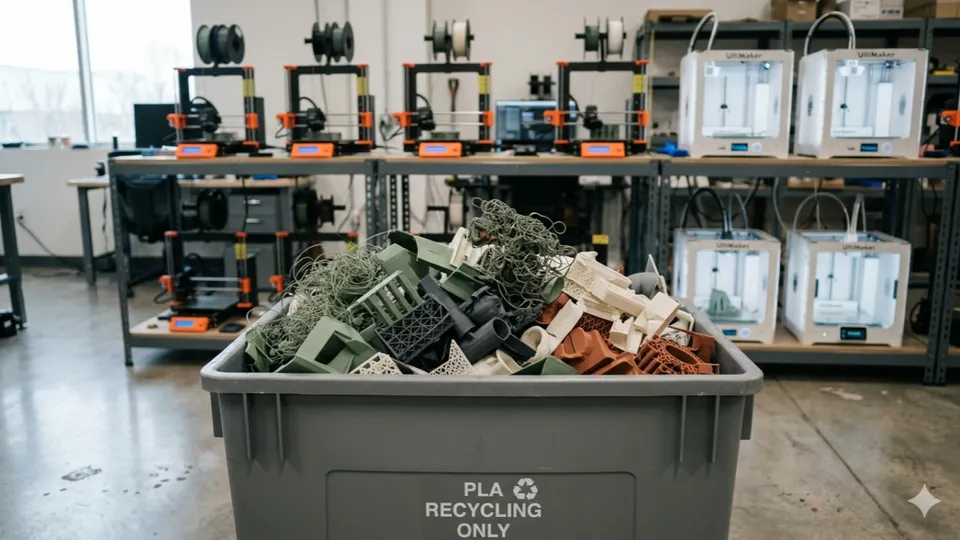
If you take away just one thing from this article, follow this rule: sort PLA, PETG, and PS separately and never mix them. PLA and PETG do not belong in the same bag, nor does PETG belong with PET bottles, and unmarked spools should not be treated as PS.
The practical minimum for a home workshop:
In a small operation, it is also worth sorting by color. This is not always necessary, but clean black PETG, clear PETG, or white PLA is easier to process than a mixture of all colors. If you do not know who will take the waste, start mainly with the material. Deal with color only when you have more waste and know that the collection project or processor will value it.
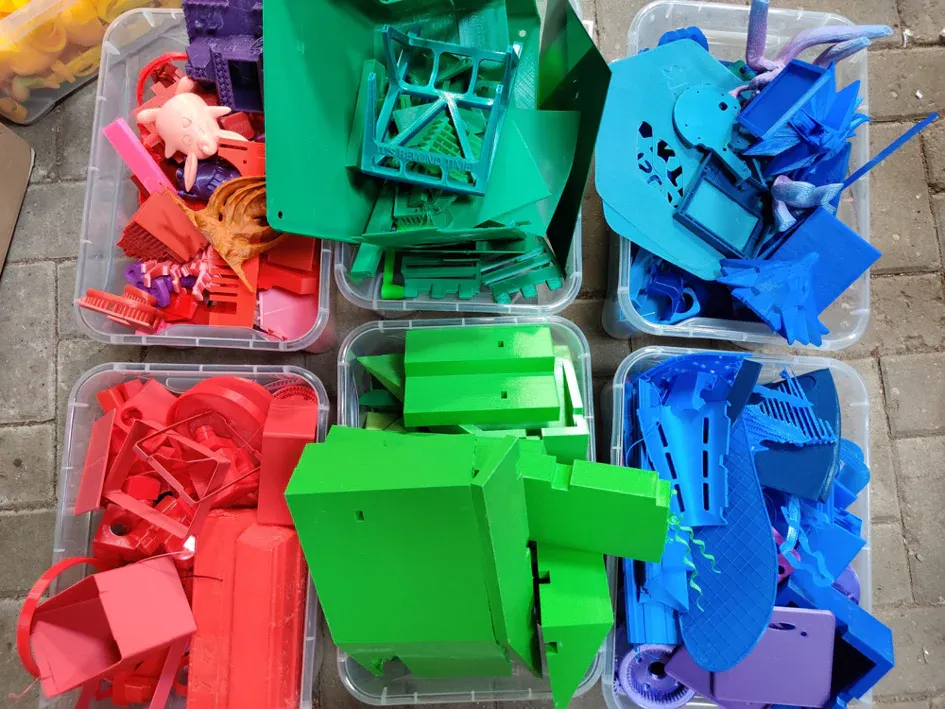
Put failed PLA prints, PLA supports, filament scraps, and clean calibration waste in the PLA container. If you print PLA with PETG supports or an interface, the resulting waste is mixed. Separate anything that can be easily removed by hand or with pliers. Put anything that is firmly bonded into the mixed-waste container.
PETG supports, failed PETG parts, PETG purge towers, and short filament ends that can no longer be fed into the printer conveniently belong in the PETG container. Do not mix PETG with PET bottles. Chemically, the materials are similar, but for the collection and processing of 3D printing waste, they are not the same.
In a home 3D workshop, PS typically means polystyrene filament spools. Not every spool is PS. Look for a molded or printed material marking. If the marking is missing, do not put it in PS collection based on appearance alone.
The mixed-waste container is for models with embedded magnets, screws, bearings, electronics, glue, paint, filler, or epoxy if they cannot be reasonably cleaned. It is also for material whose origin you are unsure of. A single handful of unknown plastic can contaminate an entire bag of sorted material.
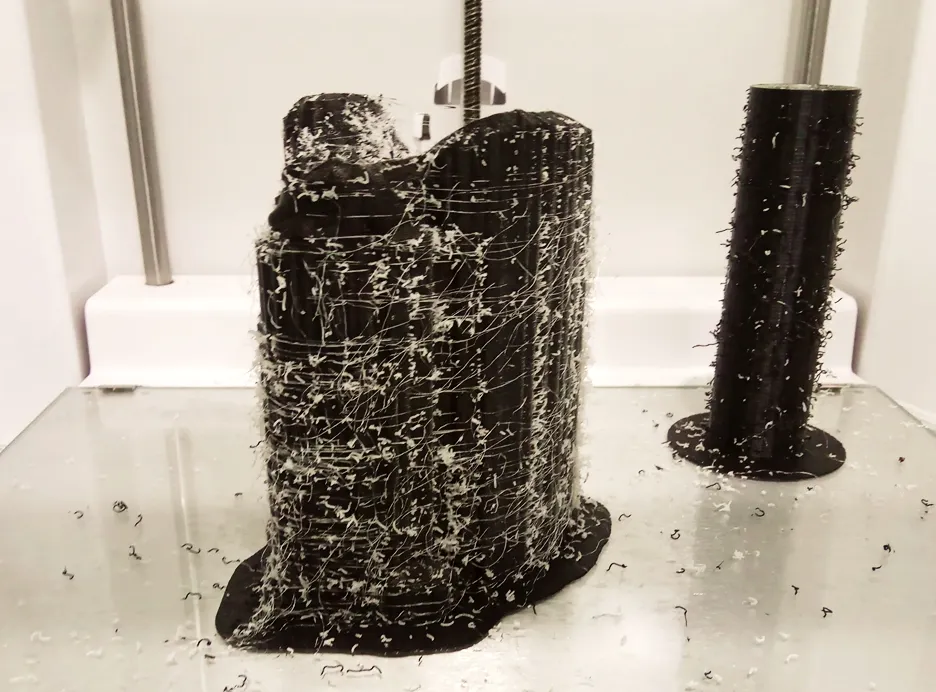
Multicolor printing creates a lot of waste, but its recyclability depends on what is being switched between. If you print several colors of the same PLA, the purge tower is still PLA. The colors are mixed, but in terms of material it is one . The same rule applies to multiple colors of PETG.
The problem arises when different materials are combined. A PLA model with PETG supports, a PETG model with a PLA separation layer, or experiments with ible materials create waste that is difficult to use for standard recycling. Do not sort this material according to the main model. Label it as mixed.
With multimaterial printing, it makes sense to reduce waste in the slicer itself. Useful measures include setting a sensible purge volume, printing multiple parts at once, using wipe into infill, wiping into a secondary technical part, or limiting color changes where they will not be visible. For jobs, consider in advance whether the color effect is worth several hundred grams of additional waste.
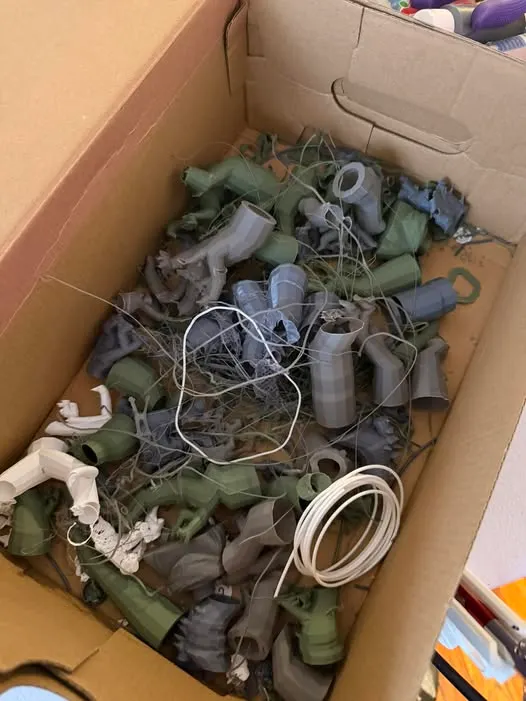
Recyclable waste must be clean. Remnants of paper tape, glue, dust, metal, wood, paint, or grease are not minor details. During shredding and melting, they become a problem for the entire batch of material.
Before putting anything into a container, perform a quick check:
In an operation with multiple printers, a simple rule helps: sort waste right next to the printer, not at the end of the week. Once supports from ten jobs have been dumped into one pile, the material can usually no longer be reliably separated.
Usually, this is not a good default plan. Standard municipal sorting is designed mainly for packaging plastics, and collection rules vary by municipality. Home 3D prints also often lack clear material markings, so the sorting facility may not be able to classify them safely. A mixture of unmarked plastics may end up as contamination in the stream rather than as quality recycled material.
This does not mean that 3D printing plastic cannot be processed. It means that it needs a different route: local collection, a community recycling workshop, a school project, a makerspace, or a company that states in advance which material it accepts and in what condition.
PLA also does not belong in home compost. The fact that PLA is described as biodegradable does not mean that a typical print will break down in a garden composter. In practice, treat PLA prints as technical plastic, not biowaste.
Collection projects make sense when you have cleanly sorted material in an amount worth transporting. For a household, this might mean a box you drop off while passing by. For a school, print farm, or small operation, it could be a regular bag of clean PLA or PETG.
Always check the current conditions before handing over waste. Collection programs are often time-limited, change the materials they accept, and sometimes take only PETG, only PLA, only PS spools, or only larger quantities. Do not send material blindly. Unnecessary transport and a rejected package make neither ecological nor economic sense.
A good collection package is simple: one material, dry, free of metal and other plastics, and ideally labeled. A bad package is a mixture of supports, spools, packaging, PET bottles, painted parts, and unknown filaments.
For most home users, no. Producing usable filament is not just a matter of shredding plastic and pushing it through a nozzle. You need a shredder, drying, extrusion, cooling, winding, and, above all, a stable diameter. Small variations in diameter quickly show up during printing as under-extrusion, over-extrusion, clogging, or weak layers.
Another problem is the quality of the input. Recycled material may contain residual moisture, dust, paint, various additives, and thermal history from previous printing. Each additional melting cycle can degrade the material. In practice, recycled material is therefore often mixed with virgin pellets or used to make less demanding products rather than precise filament for long customer prints.
A home recycling line can make sense in a makerspace, school, development workshop, or print farm where kilograms of the same material are generated each month and someone has time to fine-tune the process. If you print a few spools a year, it will be cheaper and more reliable to sort waste properly, reduce its quantity, and use a collection program when one is available.
The best recycling is waste that never gets created. With FDM printing, a few habits often help:
In a small operation, it is worth measuring waste by material. Weigh the containers once a week and record the numbers. You will quickly see whether supports, calibration, multicolor prints, or specific jobs generate the most waste. This lets you address the cause instead of simply buying more bags.
Start simply. Place three labeled containers by the workbench: PLA, PETG, and unknown. Store clearly marked PS spools separately. When printing with another material, temporarily add another labeled box. After each print, put the supports straight into the appropriate container, and with combined prints, separate whatever can be separated.
Go through the containers once a month. Compress or cut clean material into smaller pieces, but do not shred it unless the collection program explicitly requests this. Keep mixed and dirty waste out of the clean collection. Once you have a reasonable amount, check the current handover options in your area.
In a small operation, add internal rules: who is responsible for the containers, where waste is weighed, how bags are labeled, and how unknown material is handled. Discipline at the source makes the biggest difference. Once material has been mixed, sorting it later is slow, inaccurate, and often pointless.
Failed prints, supports, and multicolor waste are not worthless, but only if you do not ruin their value at the very beginning. Keep PLA, PETG, and PS separate, do not put unknown materials into clean collection, and keep waste free of metal, glue, dust, and other plastics. Use collection projects when you have clean material and verified conditions. Treat home filament production as a technical project for large volumes rather than a simple way to process a few failed prints.


