Livraison gratuite à partir de 1 999 Kč
Expédition rapide
Boutique vérifiée
Des milliers de clients




Livraison gratuite à partir de 1 999 Kč
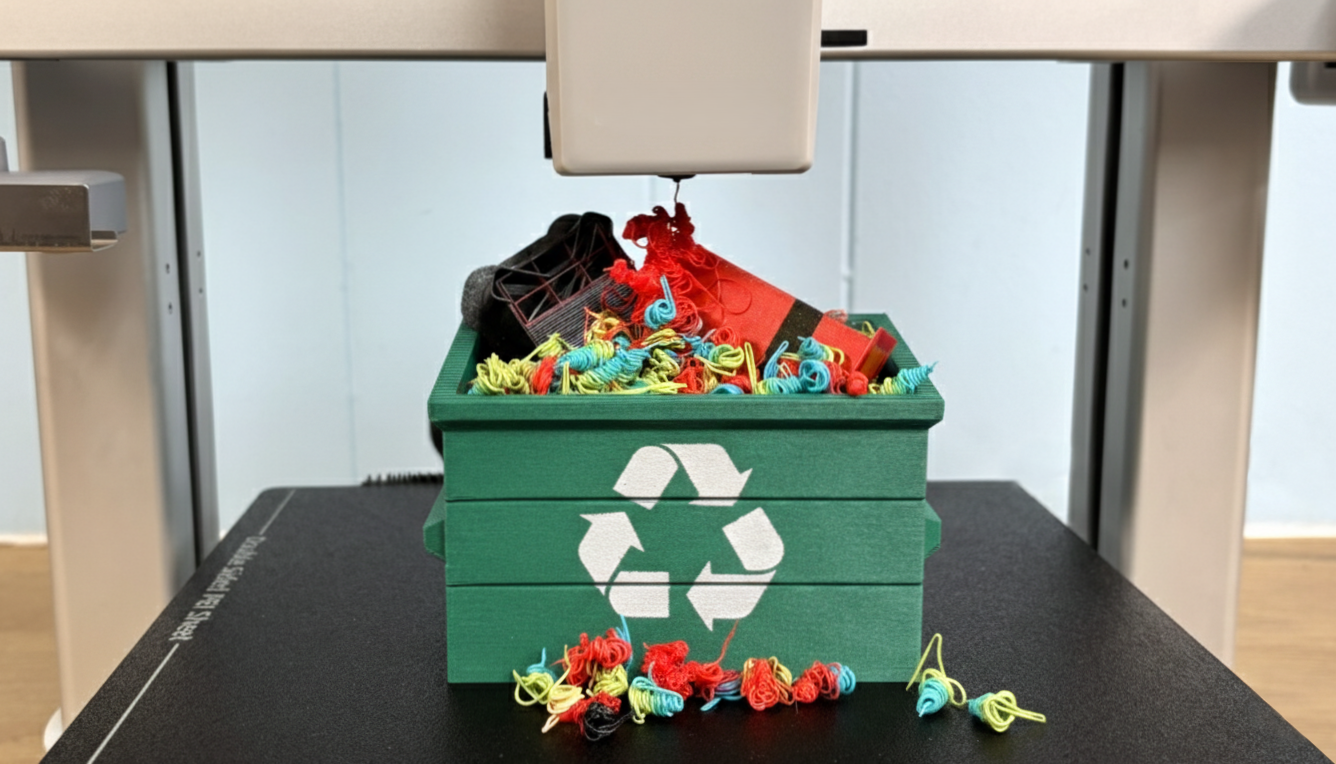
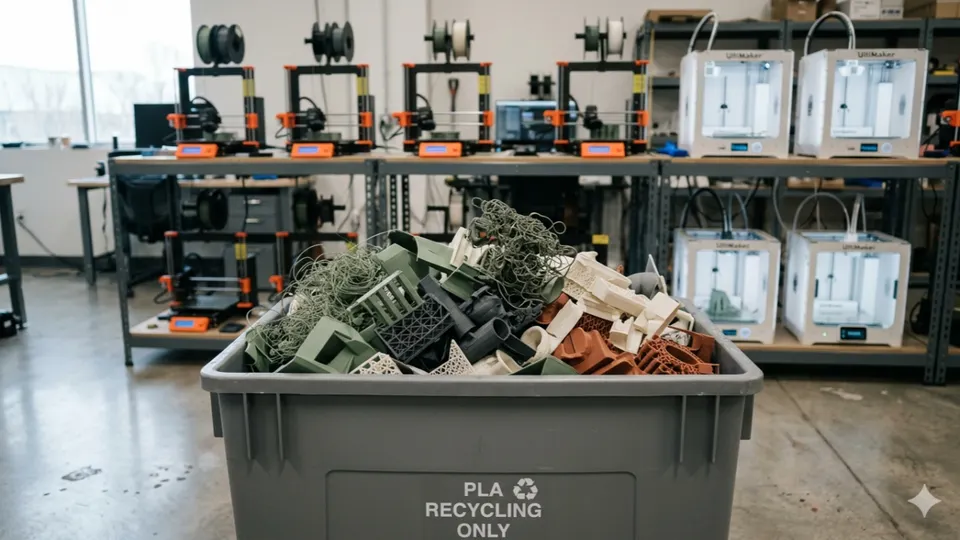
Multicolor and multimaterial 3D printing is great until a box full of plastic starts growing next to the printer. Purge towers, small piles left after color changes, supports, brims, calibration lines, failed prototypes and leftover filament rolls can fill an entire box within a few months. With PLA and PETG, it is also easy to feel that this must be recyclable or biodegradable material. In practice, it is more complicated.
The good news is that 3D printing waste does not automatically have to end up in general waste. The bad news is that home filament recycling is not a magic machine into which you pour a colorful mix and start printing like from a new roll an hour later. The biggest difference comes from sorting waste right next to the printer, reducing waste in the slicer and making a realistic decision about what is worth reusing.
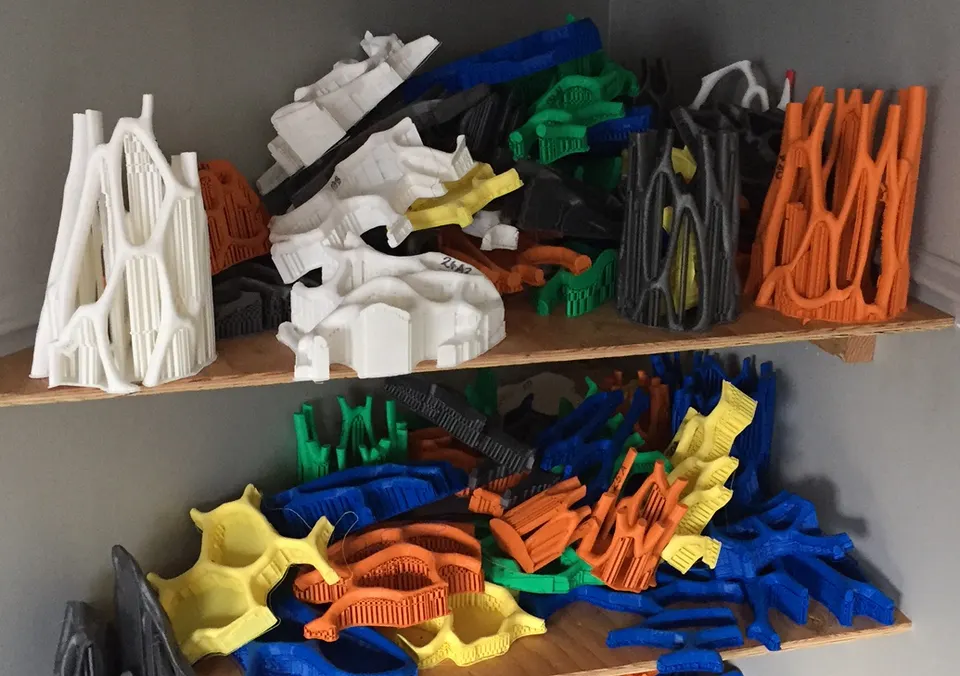
Several types of waste most commonly accumulate at home:
For recycling, it is essential to understand that these items are not the same. Clean, single-color PLA waste has completely different value from a bonded part made of PLA, PETG and TPU. A single incorrectly sorted handful of PETG in a larger batch of PLA can cause lumps, unstable flow and nozzle clogging during remelting, because the materials soften and flow at different temperatures.
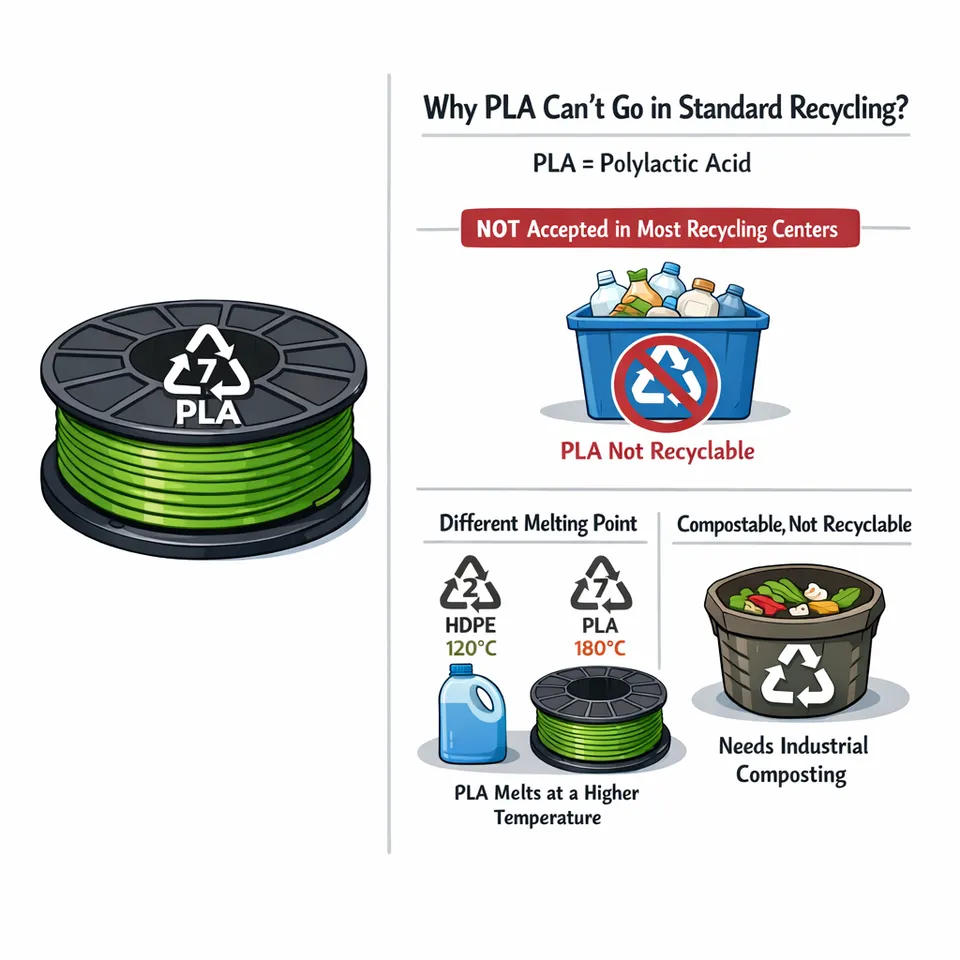
PLA and PETG are both thermoplastics, so it is technically possible to melt them again. That does not mean that regular municipal recycling can process them. A sorting line needs to quickly identify, separate and sell the material on as a usable raw material. A home print usually has no material marking and may contain additives, dyes, impurities, adhesive residue or a combination of multiple filaments.
PLA is often classified as a type 7 plastic, meaning it belongs to the of other plastics. PETG is related to the PET used for bottles, but it is not the same as standard bottle PET. Mixed-in PETG can reduce the quality of a batch intended for PET. It is therefore safer not to automatically put prints, purge waste or supports in the yellow recycling bin unless the local collection service or recycling facility explicitly confirms that it accepts this material.
Be similarly cautious with claims that PLA is compostable. Under suitable conditions, PLA mainly breaks down in industrial composting with controlled temperature, humidity and processing. Home compost or regular bio-waste is generally not the right route for 3D prints, especially when the composition of the filament and its additives is unclear.
The simplest and cheapest step is to place several labeled containers next to the printer. There is no need to start expensively. Boxes, zip bags or sealable containers are enough.
Practical minimum:
If you print in multiple colors, do not prioritize color. The material is more important. Red PLA and black PLA are more suitable for most home experiments than a beautifully color-sorted mix containing PLA, PETG and TPU together. It makes sense to sort by color only when you plan to produce your own filament or want to make decorative sheets and small items from scraps.
Write the material, approximate date and, if applicable, the filament brand on the container. For large parts, feel free to mark PLA or PETG directly on the underside with a permanent marker. It sounds excessive, but in six months you will not remember what each prototype was made of.
Recycling is only the second step. The cheapest plastic is the plastic you never throw away. With 3D printing, this does not mean stopping printing, but printing more intelligently.
In the slicer, check especially:
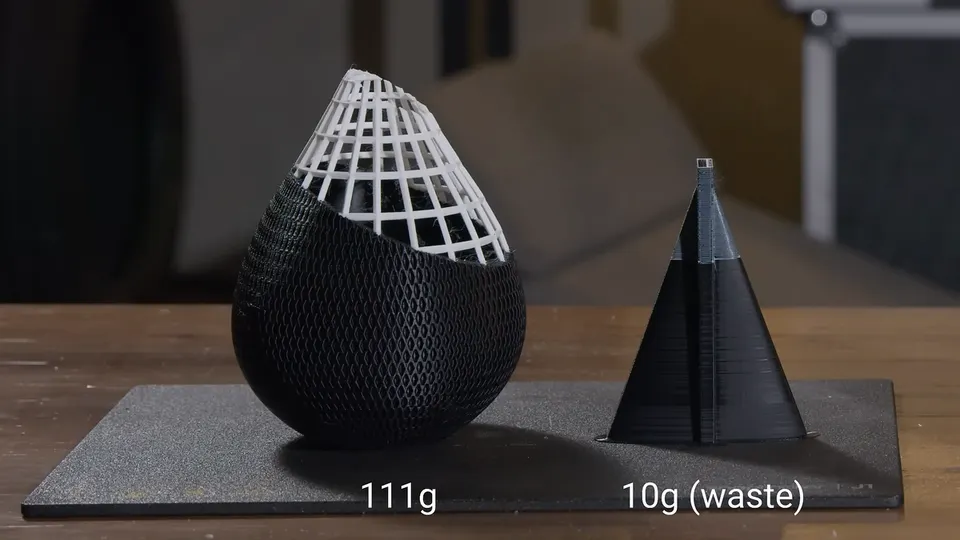
Purge waste can be surprising when printing in color. A small model with many color changes can produce more waste than the print itself. If you are printing a decoration, consider whether the same result would make sense as separate colored parts that are glued together. With a functional model, it is often enough to print the colored detail separately instead of changing color across dozens of layers because of it.
The choice of technology also makes a big difference. Systems with a single nozzle have to extrude the remnants of the previous color when changing material. A toolchanger or multiple separate print heads can significantly reduce waste because they do not change material inside the same nozzle as often. This is not necessarily a reason to buy a new printer, but it is an important parameter when choosing a machine for frequent color printing.
Not every leftover needs to go back into filament. For a typical user, simple ways of reusing it often make more sense.
Short filament leftovers can be joined and used to finish printing small items if you have a filament runout sensor or are printing parts where a color change does not matter. Leftovers from spools are suitable for test cubes, holders, spacers, clips, labels, washers for screws or small workshop organizers.
Larger failed PLA prints can be broken up or cut into pieces and used in silicone molds. After heating, they can become colorful plates, coasters, handles, pendants or filler for simple molds. The result will not have the precision of a printed part, and ventilation, temperature and safety need to be considered, but for workshop accessories this is more accessible than producing your own filament.
Do not throw away empty spools immediately. They are useful for winding cables, filament samples, LED strips or string. If you have several spools of the same type, you can offer them to the local maker community. Some manufacturers and sellers also use returnable or reusable spools, which is a better option for regular printing than dealing with each spool only after it has been used up.
A home extruder sounds appealing: shred the waste, melt it and wind a new spool. It can work, but it requires more than just an extruder. You need to sort, clean and dry the material properly, shred it into relatively uniform pieces, maintain stable feeding, monitor the temperature, cool the filament and keep its diameter within a reasonable tolerance.
For an occasional user who throws away a few handfuls of PLA per month, home recycling is not economically worthwhile. The time, equipment, energy, failed batches and tuning can easily exceed the price of several new spools. It makes more sense to focus on using fewer supports, reducing purge and preparing prints better.
Home or community recycling starts to make sense when you have a regular, clean stream of a single material. This typically applies to a school, makerspace, print farm, prototyping workshop or enthusiast who prints a lot and can collect PLA and PETG separately. Even then, it is sensible to expect the first results to be more experimental filament for prototypes than material for precise and mechanically stressed parts.
Some systems recommend mixing recycled flakes with new pellets. This improves flow, stability and repeatability, but it means you are not producing filament from 100% waste. You can still reduce the amount of new plastic and make use of some leftovers.
If you do not want to deal with your own shredder and extrusion, look for services or local projects that collect cleanly sorted 3D printing waste. Conditions vary, but the same rules almost always apply: separate PLA from PETG, do not add unknown materials, do not mix in resin, do not include dirty parts, and remove metal inserts, magnets, nuts and adhesive residue.
Ask a service three things. Which materials it accepts. What is actually made from them. And whether transporting the waste is environmentally and economically worthwhile. Sending a small box of lightweight plastic halfway across Europe just to feel good about it may not make sense. On the other hand, a larger, cleanly sorted batch from a workshop or school may already be useful.
A local maker community is often more practical than anonymous recycling. Someone may be looking for PLA for pressing into molds, another person may be experimenting with extrusion, and someone else may use empty spools. Material that is clean, labeled and separated by type has the best chance of being reused.
Resin from SLA and MSLA printers does not belong in the same category as PLA and PETG. Handle liquid resin, contaminated wipes, gloves, supports and washing residue as chemical waste according to the manufacturer's instructions and local regulations. Cured resin is not suitable for melting into filament at home. Do not mix it with FDM waste or put it in containers intended for PLA or PETG.
If you want to start without a major investment, set up a simple routine:
3D printing waste is not a simple problem, but it can be significantly reduced. Prevention has the greatest effect: better model orientation, sensible supports, fewer color changes and print planning. The second biggest impact comes from sorting by material right from the start. Without it, PLA and PETG quickly become a mixture that almost nobody wants to process.
Home filament recycling is interesting for schools, workshops, print farms and highly active users. For regular home printing, it is currently more practical to minimize waste, reuse clean leftovers, pass empty spools on and send larger batches only to services that clearly state what they accept and what will be made from the material. The best system is not the most expensive one. It is the one you will actually use for every print.