Kostenloser Versand ab 1 999 Kč
Schneller Versand
Verifizierter Shop
Tausende Kunden




Kostenloser Versand ab 1 999 Kč
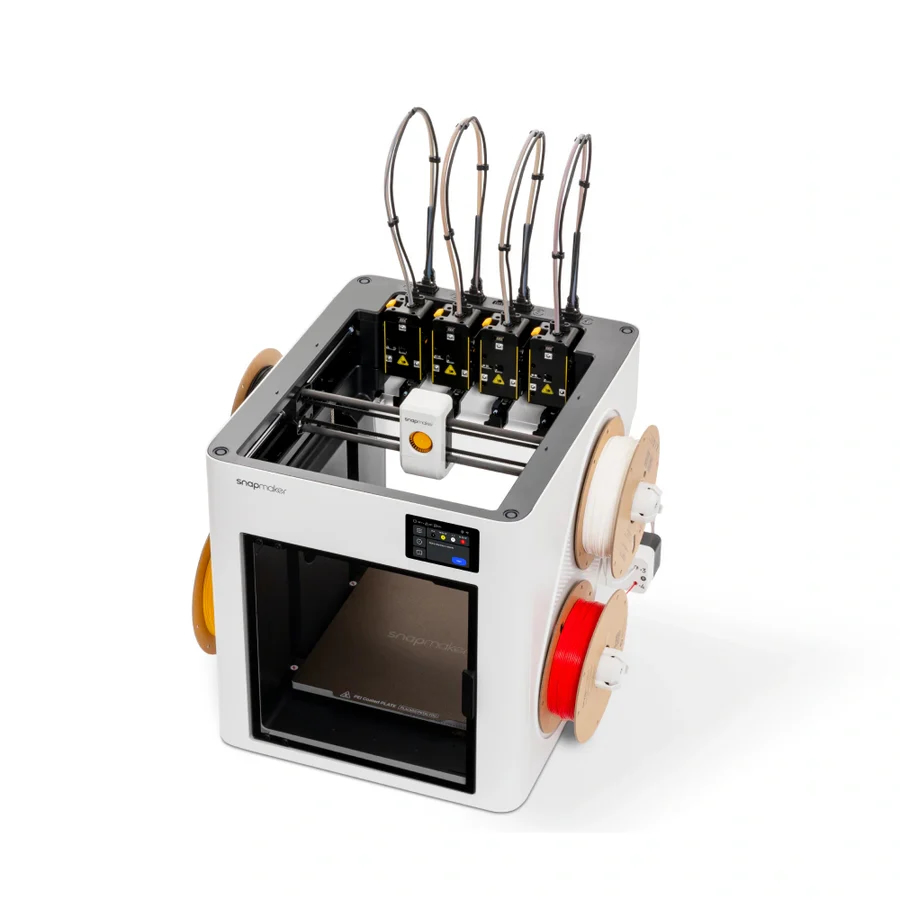
Short answer: yes, the Snapmaker U1 is a real alternative to Bambu Lab if your main concern is multi-material printing with four colors and you dislike the waste produced by frequent filament changes. However, it is not a universal replacement for the entire Bambu Lab ecosystem. The U1 targets a specific weakness of conventional single-nozzle systems: every color or material change usually means extra time, a purge tower, and a pile of discarded plastic.
Snapmaker takes a different approach. Instead of having one nozzle gradually extrude the old filament with the new one, the U1 has four separate tool heads. Each has its own hotend and extruder, so the printer physically changes the head when changing colors. In practice, this means much shorter changeovers and significantly less waste. This is where the U1 is most interesting.
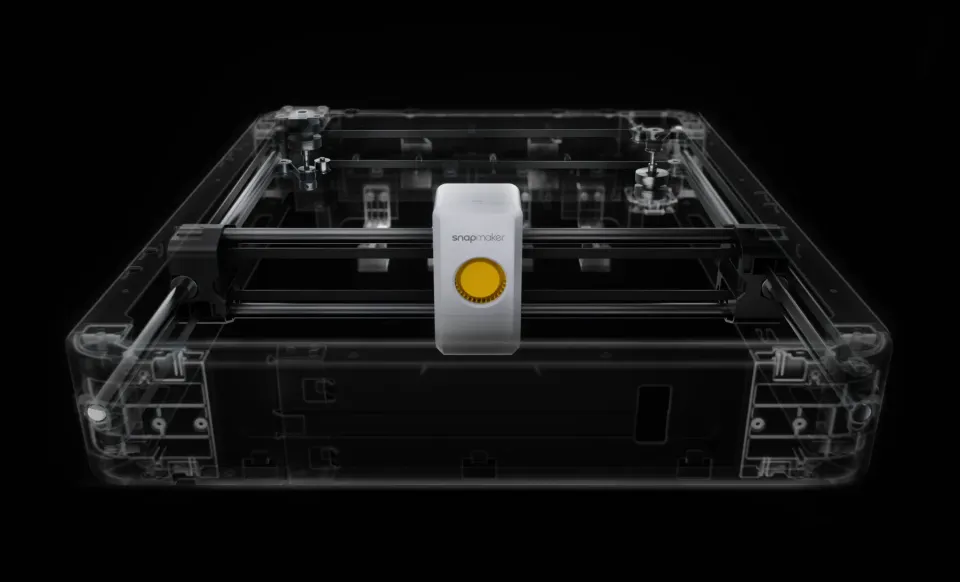
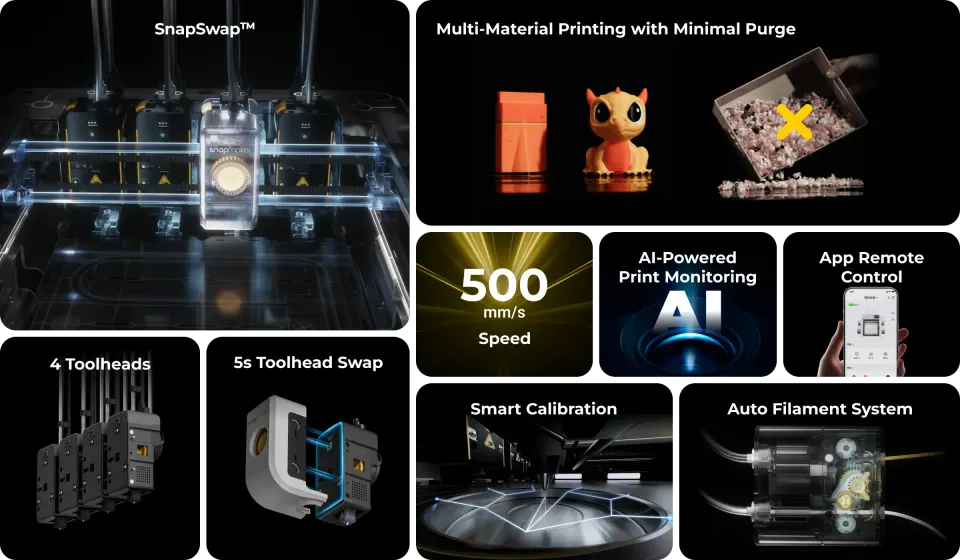
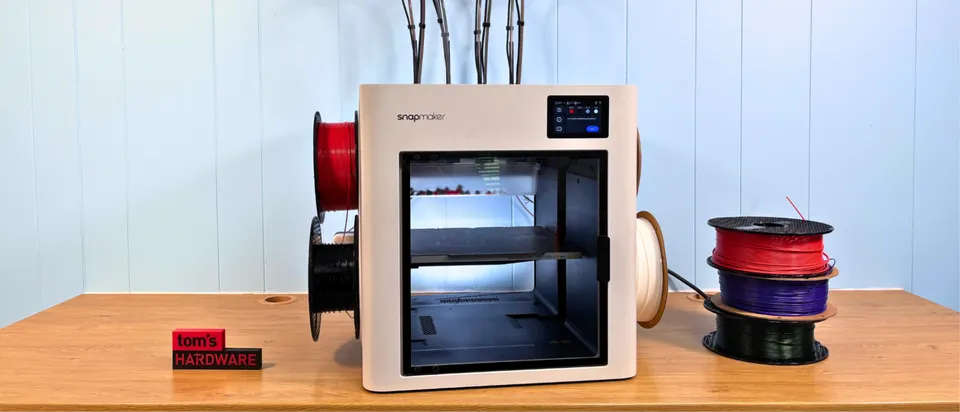
The U1 is an FDM printer with CoreXY mechanics, a 270 x 270 x 270 mm build volume, four tool heads, a maximum head speed of 500 mm/s, and a stated acceleration of up to 20 000 mm/s2. The nozzle has a standard diameter of 0.4 mm, the nozzle temperature reaches 300 °C, and the heated bed targets the usual range for PLA, PETG, and support materials. At its core, it is a machine for fast multi-color and multi-material printing, not an enclosed industrial box for engineering polymers.
The most important feature is the head-swapping system. Four colors are prepared simultaneously, preheated, and assigned in the slicer. If you are printing a figurine with a red body, white eyes, black details, and a transparent element, the U1 does not need to flush one nozzle through all the colors at every transition. It swaps the head and continues.
This is most noticeable with models where the color changes across many layers. With a simple two-color sign on the top surface, the difference may not be dramatic. With a small mascot featuring dozens of color changes, the difference in time and waste can already be substantial.
Bambu Lab is not just one printer. It is an entire ecosystem of printers, material units, a mobile app, a slicer, profiles, and automation. Models such as the P1S or X1 Carbon with AMS are popular because they print very well with minimal setup. For many users, this predictability is more important than achieving the lowest possible waste on multi-color models.
AMS also has a practical advantage as a filament storage system. The spools are organized in one place, the system can automatically change materials, continue from another spool of the same filament, and, in some configurations, also help keep the material in better conditions. A user who frequently prints with PLA, PETG, and support material but only occasionally makes full-color models may value convenience more than absolute waste savings.
Bambu Lab also has a broader and more mature product range. Higher-end models with newer nozzle- or multi-material-changing systems target users who want more than four colors, greater automation, or better integration with existing equipment. If you already own a Bambu Lab printer and material system, switching to the U1 may not make economic sense.
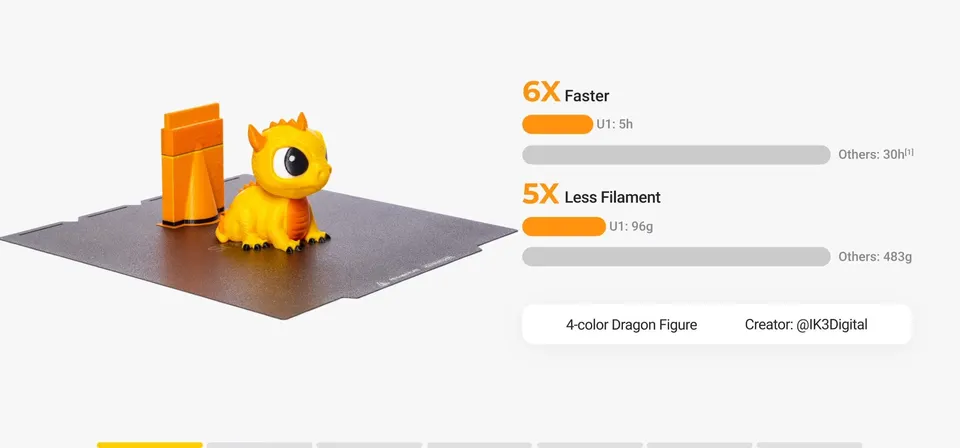
For decorative multi-color prints, the Snapmaker U1 makes a lot of sense. Typical examples include a company logo, figurine, colorful label, cosplay detail, or a small series of personalized gifts. The more color changes there are per layer, the more the advantage of separate heads becomes apparent. With a traditional single-nozzle system, you may end up using a surprisingly large amount of filament on a small model just to clean the nozzle.
For functional parts made from a single material, the difference is smaller. If you mainly print brackets, boxes, workshop fixtures, and technical prototypes from a single spool of PETG, the Bambu Lab P1S or a similar fast CoreXY printer will still be a very strong choice. The U1 offers less of an advantage here because its main strength remains unused.
The U1 is interesting for soluble or breakaway supports. Having one head for the main material and another for the support material is cleaner than constantly flushing one nozzle between two different materials. For models with complicated geometry, such as mechanical parts with internal channels or design objects with overhangs, this advantage can be practical and financially beneficial.
I would be more cautious with demanding materials. If you regularly print ASA, nylon, or carbon-fiber composites, focus primarily on the enclosure, nozzle type, available profiles, and long-term experience. The U1 has interesting hardware, but its more open design and initial nozzle selection mean it may not be the first choice for technical materials.
The first question is the number of colors. The U1 works with four heads. For many models, this is ideal. However, if you want six, eight, or sixteen colors, you need to think differently. Bambu Lab with expanded material units or higher-end models may offer greater color ibility, albeit at the cost of a more complex configuration, a higher investment, or a different type of waste.
The second question is software maturity. Bambu Lab benefits from years of profile refinement, community experience, and an integrated workflow. The Snapmaker U1 uses a slicer based on a proven foundation and aims for simple setup, but with a new platform it is reasonable to expect profiles, firmware, and small workflows to continue maturing.
The third question is service and parts availability. Maintaining four separate heads is different from maintaining a single nozzle with a material feeder. The advantage is that the heads can be modular, and replacing one problematic part can be quick. The disadvantage is that you have more mechanics, more calibrations, and more parts that must continue to work precisely over the long term.
The Snapmaker U1 is a real alternative to Bambu Lab in a specific and highly important scenario: you want fast four-color or four-material printing with minimal waste. For an e-shop, small workshop, or creator who prints colorful orders and keeps an eye on filament costs, the U1 can be exceptionally attractive.
However, Bambu Lab remains the stronger choice for users who want the most refined ecosystem possible, a more enclosed design, a wide range of models and accessories, or who already have an AMS at home. If you mainly print with a single material and only use multi-color printing occasionally, the benefits of the U1 may not outweigh the convenience of an established system.
The best decision is therefore simple: do not choose based on the brand, but on what you actually print. If waste and time spent on color models are your biggest concerns, the Snapmaker U1 is well worth serious consideration. If you want the smoothest day-to-day operation and a broader ecosystem, Bambu Lab still has very strong arguments in its favor.


