Doprava zdarma od 1 999 Kč
Rychlá expedice
Ověřený obchod
Tisíce zákazníků




Doprava zdarma od 1 999 Kč
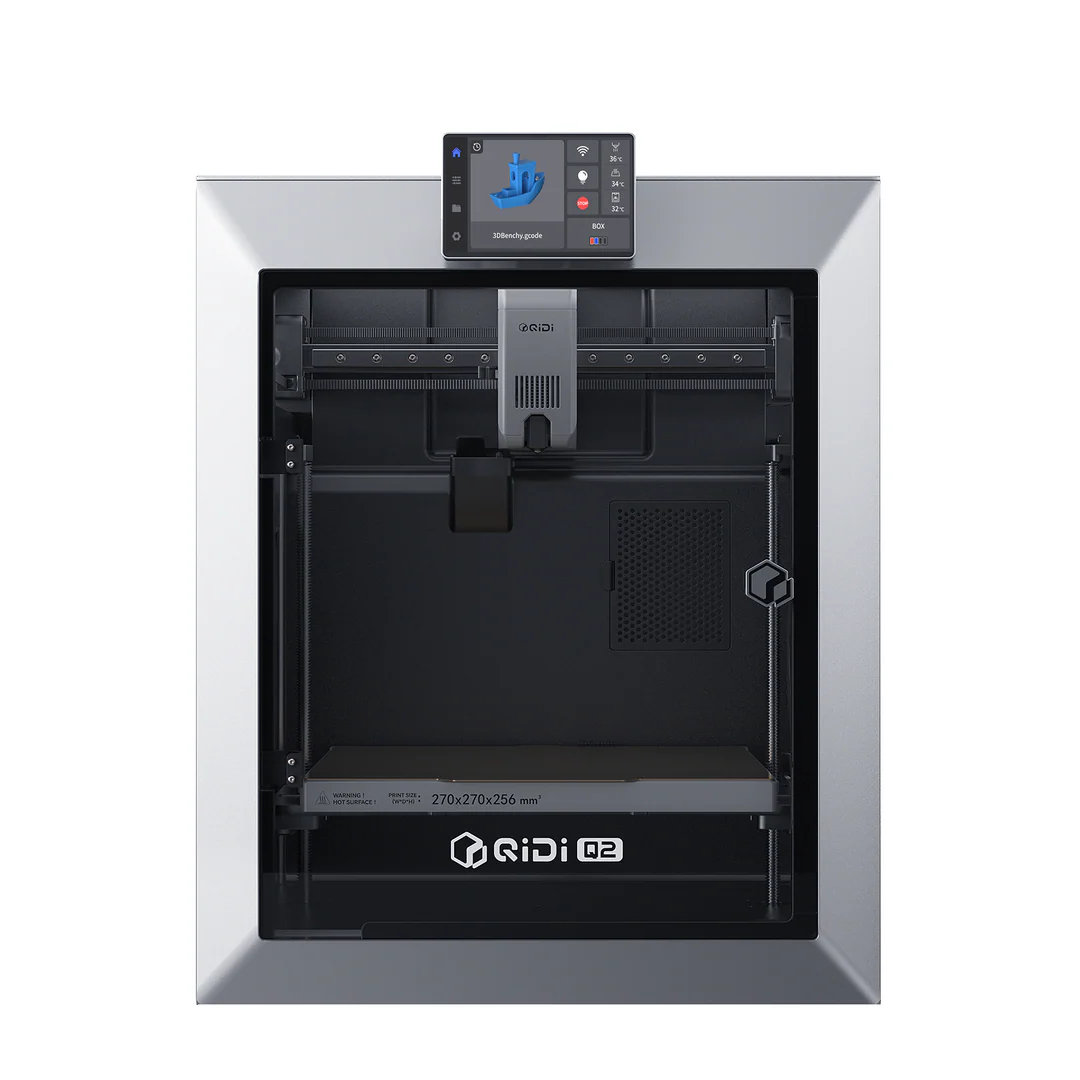
Compact CoreXY printers from QIDI make the most sense when you want higher speed, an enclosed design and the ability to print technical materials, but do not want to occupy half your workshop with a large-format machine. The QIDI Q2, Q2C and Q1 Pro models look similar at first glance: all are aimed at fast FDM printing and have a direct-drive extruder, automatic bed leveling and an enclosed chamber. However, the differences are quite significant.
The Q2 is the best-equipped current choice of the three. The Q2C is a cheaper variant with the same build volume, but without an actively heated chamber. The Q1 Pro is an older model that still makes sense at a good price, especially if you want a heated chamber but do not mind a smaller build space and older design.
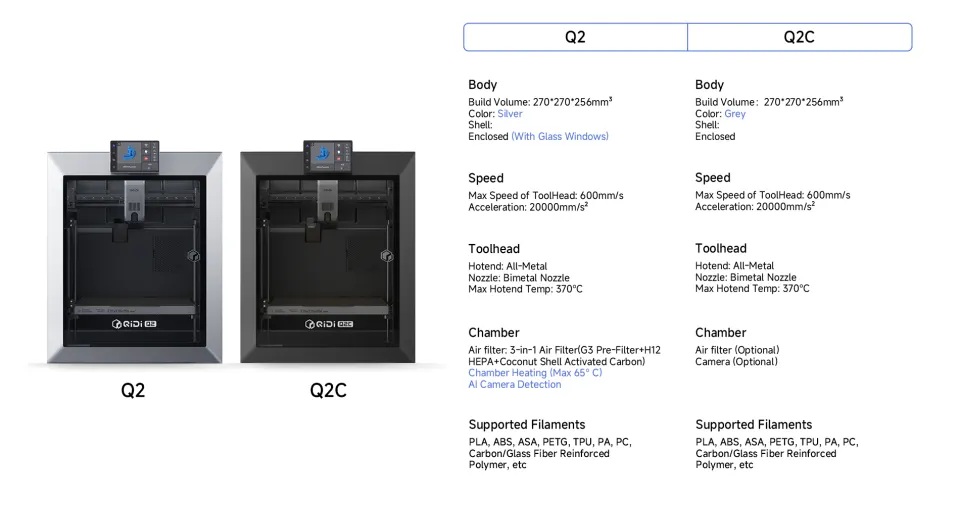
| Parameter | QIDI Q2 | QIDI Q2C | QIDI Q1 Pro |
|---|---|---|---|
| Kinematics | CoreXY | CoreXY | CoreXY |
| Build volume | 270 x 270 x 256 mm | 270 x 270 x 256 mm | 245 x 245 x 240 mm |
| Maximum hotend temperature | up to 370 °C | up to 370 °C | up to 350 °C |
| Maximum bed temperature | up to 120 °C | up to 120 °C | up to 120 °C |
| Actively heated chamber | up to 65 °C | no | up to 60 °C |
| Automatic leveling | yes, sensing via the hotend | yes, sensing via the hotend | yes |
| Camera | integrated, version-dependent detection | optional | integrated low-frame-rate camera |
| Air filtration | 3-in-1 filter | optional | not the model's main advantage |
| Multimaterial | QIDI Box compatibility | QIDI Box compatibility | without the same new integration |
The stated speeds of all three models look very high, but for regular printing, consider them the maximum of the motion system rather than an automatic guarantee of a high-quality print with every profile. With technical materials, stable temperature, dry filament, correct flow and cooling are usually more important than the speed figure itself.
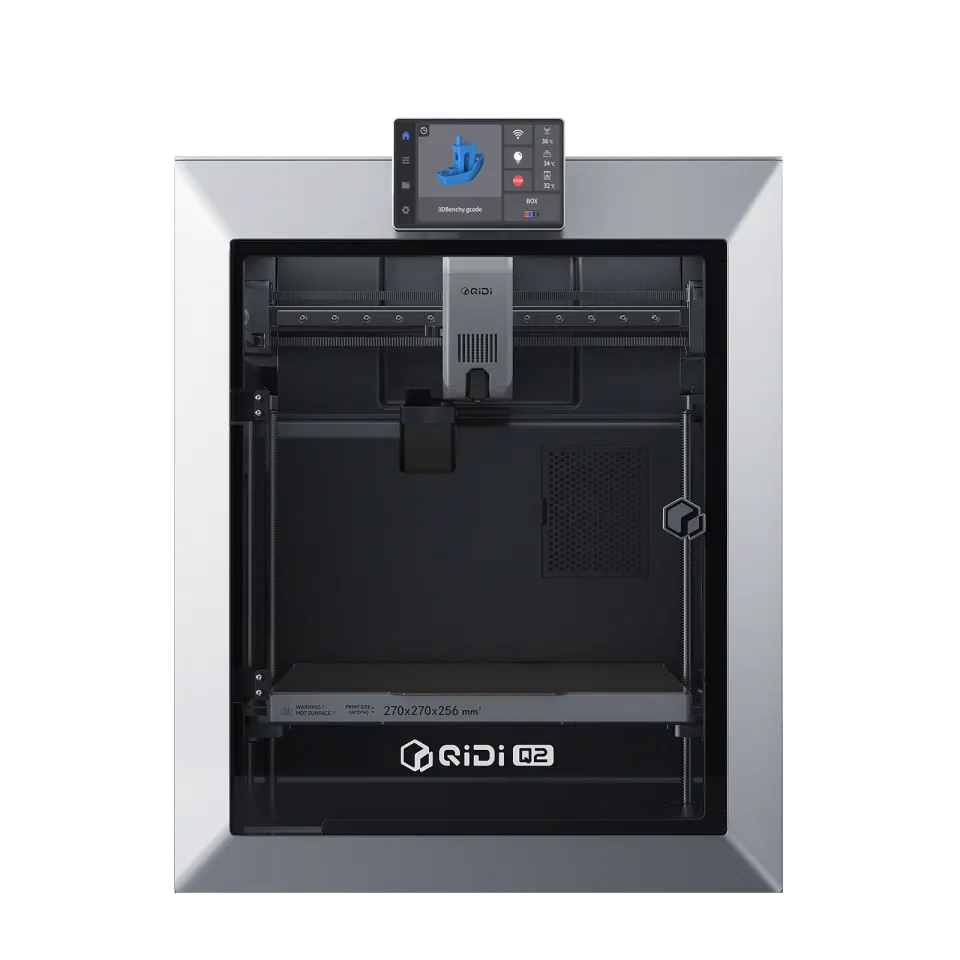
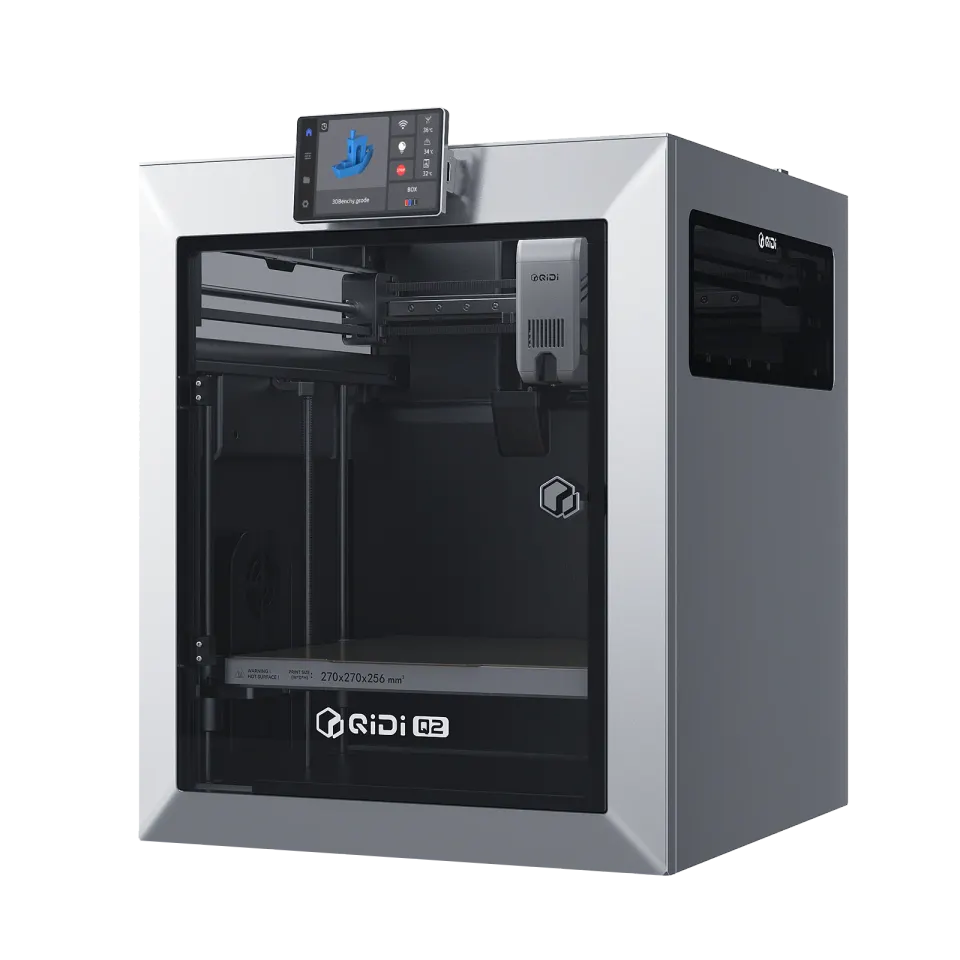
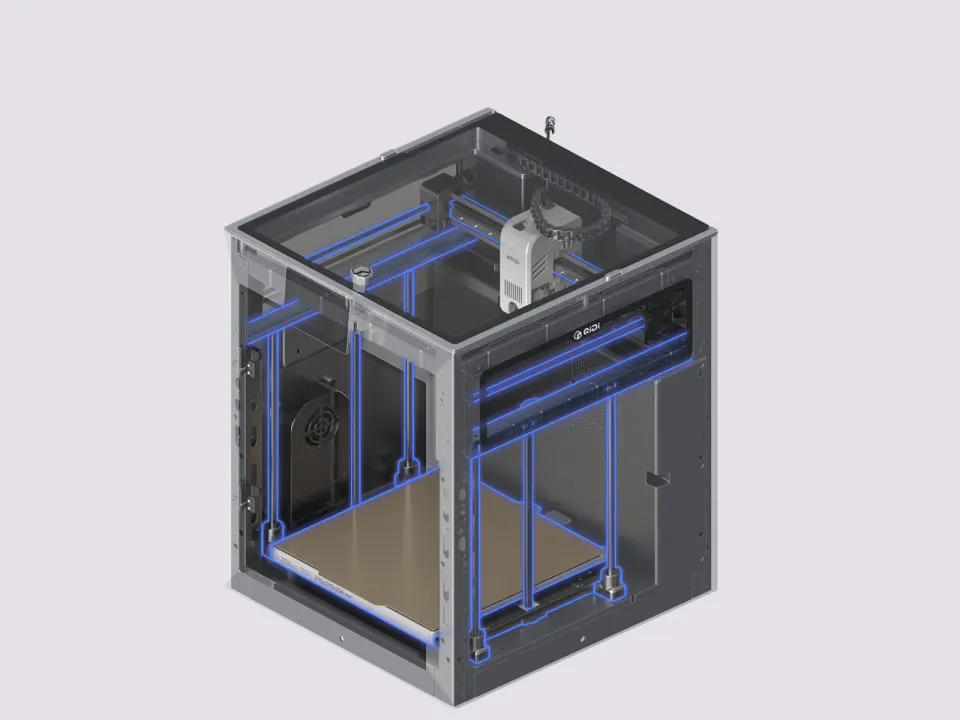
The QIDI Q2 is the best-equipped model for users who want one smaller printer for a wide range of materials. The 270 x 270 x 256 mm build space is highly practical for a compact enclosed printer. It accommodates most brackets, covers, fixtures, spare parts, small batches and larger decorative models.
The biggest difference compared with the Q2C is the actively heated chamber, reaching up to 65 °C. This is what makes the difference with materials that warp or crack as they cool. With ABS, ASA, PC, PA and composites containing carbon or glass fiber, the chamber helps keep the print at a more even temperature. The result is better layer adhesion, less corner deformation and a lower risk of a large part lifting off the bed during printing.
The hotend temperature of up to 370 °C gives the Q2 more headroom for technical filaments. This does not mean that you will print every material at the maximum. It means rather that the printer is not limited to standard PLA and PETG. If you plan to use PA-CF, PET-CF, PC or more demanding blends, the Q2 is the strongest candidate of the three.
Air filtration and an integrated camera are also practical advantages. The filter is not a substitute for proper ventilation, but in an enclosed printer in a home workshop or office, it is a welcome safety and comfort feature. The camera is useful for monitoring longer prints, especially when the printer runs for several hours without direct supervision.
The QIDI Q2C is interesting because it retains the large 270 x 270 x 256 mm build space, CoreXY design, automatic leveling and a hotend of up to 370 °C, while leaving out more expensive features. The main difference is the absence of an actively heated chamber. The chamber is enclosed, so it naturally warms up during printing, but the printer does not actively maintain it at a set temperature.
For PLA, PETG and TPU, this is usually not a problem. With PLA, an overly warm environment can actually be an issue because it increases the risk of filament softening in the feed section and worsens detail cooling. The average Q2C user will often be satisfied when printing prototypes, brackets, organizers, figurines, PETG boxes or interior parts.
With ABS and ASA, you need to be realistic. Smaller parts may work well, especially with a brim, a clean PEI bed and careful cooling. With large flat covers, long parts or sharp corners, however, the Q2 with its active chamber will be the safer choice. The Q2C is therefore not a bad technical printer, but it is not the best tool for large parts made from shrinkage-sensitive materials.
The Q2C also makes sense if you are interested in later multimaterial printing via the QIDI Box. However, with multicolor printing, think in advance about what you will actually print. For functional parts, a combination of base material and support material is often more useful than decorative multicolor printing with a large amount of waste from nozzle purging.
When it was launched, the QIDI Q1 Pro was particularly attractive thanks to its actively heated chamber at a more accessible price point. It has a CoreXY design, a hotend of up to 350 °C, a bed of up to 120 °C, automatic leveling, a camera and a 245 x 245 x 240 mm build space.
Compared with the Q2, its biggest disadvantages are the smaller build volume and lower maximum hotend temperature. The difference between 245 mm and 270 mm may not sound dramatic, but with boxes, covers, brackets or larger fixtures, every centimeter counts. The Q2 also has a newer design approach, more chamber headroom and more modern accessory integration.
The Q1 Pro is not worthless, however. If you can get it significantly cheaper than the Q2, it can be good for ABS, ASA, nylon blends and smaller technical parts. With larger parts made from high-shrinkage materials, you should expect to test settings and monitor adhesion. With an older printer, also check the availability of spare parts, the condition of the bed, play in the axes and the condition of the fans.
For PLA, extreme temperature is not the main advantage of any of these models. A stable first layer, good cooling and correct profiles are more important. With enclosed printers, it often helps to leave the door or top lid slightly open so that the chamber does not overheat unnecessarily.
For PETG, all three models are sufficiently capable. PETG benefits from a stable bed, a clean surface and a reasonable speed. If you print boxes, brackets, fixtures or car parts away from direct sunlight, PETG will be the most common practical choice.
For ABS and ASA, the difference between the Q2, Q2C and Q1 Pro is more significant. The Q2 and Q1 Pro have active chambers, which helps with larger parts. The Q2C can handle smaller parts, but warping may appear on large surfaces. ASA is good for outdoor use, but when printing, address ventilation and do not leave the printer in a living space without monitoring air quality.
For PA, PC and composites, ideally choose the Q2. Its greater hotend headroom, active chamber and filtration make it the most sensible choice. With abrasive filaments, use a suitable nozzle, dry the filament and consider a 0.6 mm nozzle for fiber-filled blends. A smaller 0.4 mm nozzle can produce detail, but with composites you are more likely to encounter flow limitations and clogging.
First, clarify which materials you will print over the next six months, rather than what you might theoretically try someday. If 90% of your prints will be PLA and PETG, the Q2C may be more financially sensible. If you already know that you will be making functional parts from ASA, PA-CF or PC, the active chamber in the Q2 is not a luxury but practical headroom.
The second question is space. The Q2 and Q2C have smaller external dimensions than the Q1 Pro, but they still need space around them for the spool, access to the doors, ventilation and servicing. With multimaterial accessories, allow for additional space.
The third question is operating comfort. A heated chamber consumes more energy, and printing technical materials is noisier and more demanding on the environment. If you want a printer in a study next to your desk, PLA and PETG will be much more pleasant than overnight ABS printing.
For a beginner who wants a fast, enclosed printer mainly for PLA and PETG, I would recommend the Q2C. It is cheaper, has a large build space and will not make you wait for slow Cartesian mechanics.
For a hobbyist who prints brackets, covers, adapters, workshop parts and occasionally needs higher temperature resistance, the Q2 makes the most sense. It offers the best combination of volume, temperature headroom, chamber and features.
A user who comes across a good deal on the Q1 Pro should not automatically reject it. It is still a capable enclosed CoreXY printer with a heated chamber. You just need to bear in mind that the Q2 is a newer and more practical successor.
The QIDI Q2 is the best overall choice of the three. It has the widest practical range of materials, an actively heated chamber reaching up to 65 °C, a large build space and more modern features. The QIDI Q2C is a sensible cheaper option for users who want CoreXY speed and a larger volume but do not need to regularly print large parts from ABS, ASA or nylon. Today, consider the QIDI Q1 Pro mainly as an interesting option when discounted or available second-hand.
If the printer is intended only for decorations and prototypes, the Q2C will be sufficient. If it is meant to save time in the workshop and handle technical materials without constantly fighting warping, choose the Q2.


