Doprava zdarma od 1 999 Kč
Rychlá expedice
Ověřený obchod
Tisíce zákazníků




Doprava zdarma od 1 999 Kč
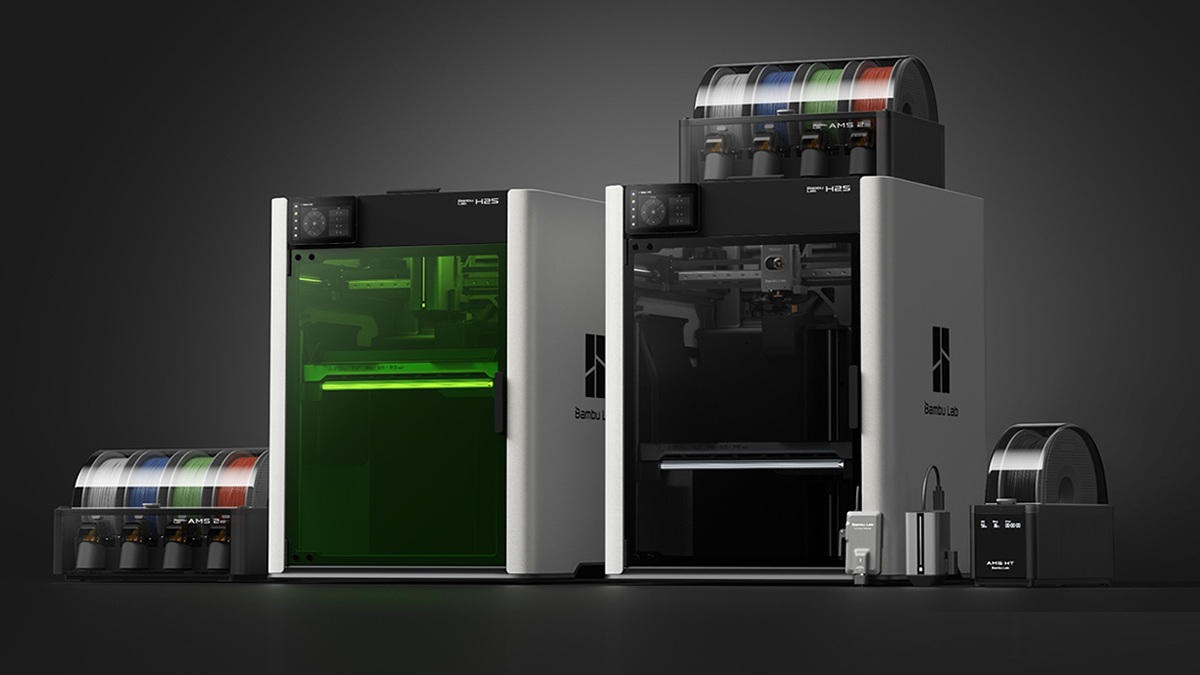
Prusa Core One L and Bambu Lab H2S target a very similar customer: someone who wants an enclosed CoreXY printer, a large build volume, fast printing, and reliable results with technical materials. Nevertheless, they are not simply two versions of the same choice. Prusa bets on a more open ecosystem, repairability, offline operation, and long-term serviceability. Bambu Lab offers a larger build space, highly automated operation, extensive sensors, and a ready-made solution for multiple colors through AMS.
The short answer is: if you already have a Prusa workflow, mainly print functional parts from a single material, and value control over the machine, the Core One L makes a great deal of sense. If you want as much automation as possible, a larger build volume, greater hotend temperature headroom, and multicolor printing right out of the box, the H2S will be more practical.
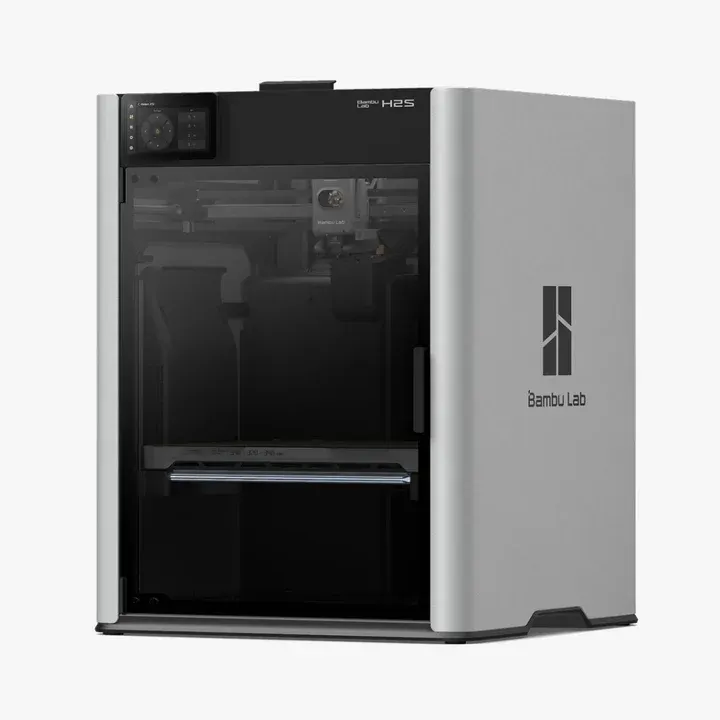
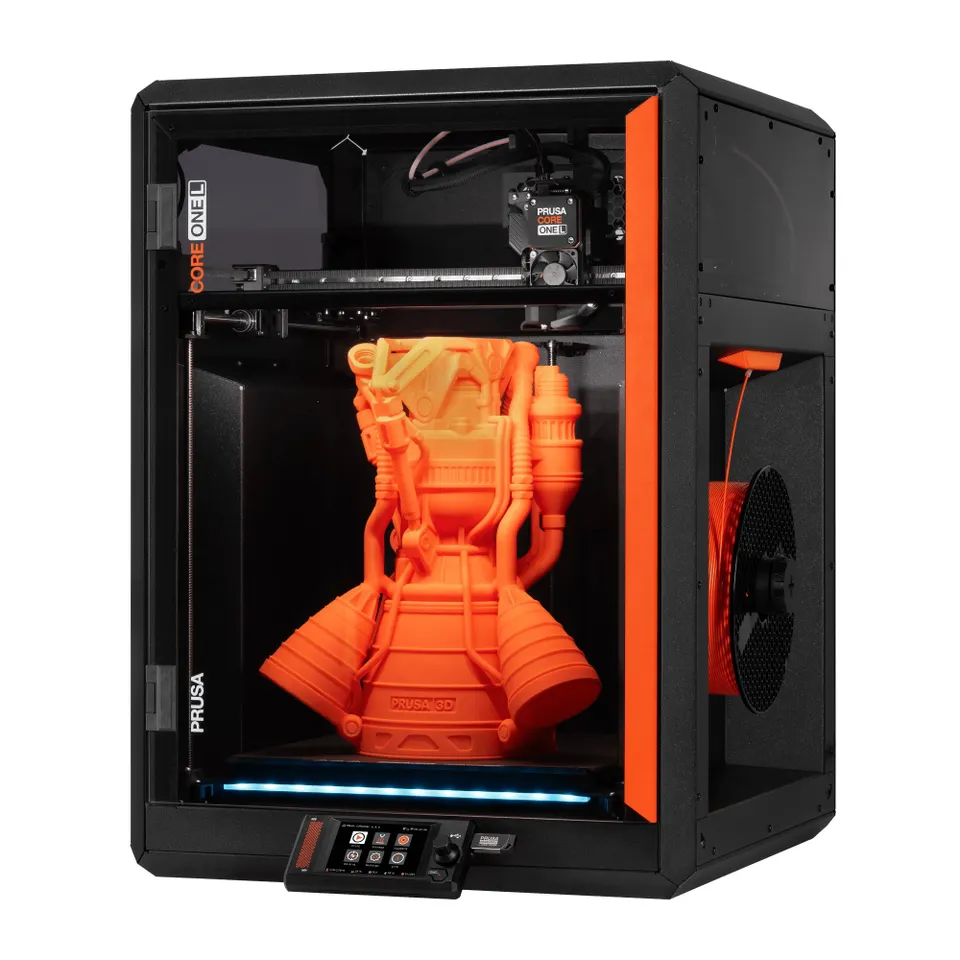
| Feature | Prusa Core One L | Bambu Lab H2S |
|---|---|---|
| Build volume | 300 x 300 x 330 mm | 340 x 320 x 340 mm |
| Construction | enclosed CoreXY | enclosed CoreXY |
| Chamber | up to 60 °C | up to 65 °C |
| Hotend | designed for standard and technical FFF materials | up to 350 °C |
| Multiple materials | no native multi-material support by default, upgrade is on the roadmap | AMS ecosystem available immediately |
| Ecosystem | more open, with an emphasis on service and offline operation | more closed, highly automated |
| Typical buyer | workshop, school, company, print farm in the Prusa environment | designer, prototyping workshop, maker focused on convenience and colors |
The table does not say which printer is better. It shows that each one optimizes a different part of the work. With large enclosed printers, it is no longer just about the quality of a Benchy. What matters is how often you deal with servicing, which slicer you use, whether you print sensitive company data, how much filament-change waste bothers you, and whether you need the larger volume once a month or every day.
Stick with Prusa if you already have Prusa machines at your company or workshop. Consistent profiles in PrusaSlicer, the same operating habits, and similar maintenance are worth more in practice than a few extra centimeters. With a print farm, you are not only paying for the printer, but also for the time of the person who changes nozzles, handles first layers, orders spare parts, and trains colleagues.
The Core One L is also a strong choice for schools, development departments, and workshops where repairs are part of the plan. When a printer is used for years, things such as access to parts, documentation, the ability to disassemble it, and clear service procedures become important. For users who want to understand their machine and do not want to depend solely on one closed workflow, this is a major argument.
Another reason is offline operation. If you print prototypes, fixtures, or models that you do not want to send through cloud services, Prusa is the safer and simpler choice. This is not just paranoia. In custom manufacturing, product development, or internal company fixtures, local operation may be part of the rules.
The Core One L also makes sense when most of your jobs use a single material: PETG, ASA, ABS, PC blends, nylon blends, or ible filaments. For brackets, covers, fixtures, spare parts, and small batches, a stable chamber, reasonable repeatability, and easy maintenance matter more than a colorful logo on the side of the part.
A practical example: you are printing a larger electronics cover from ASA that must retain its shape, be free of visible warping, and be used outdoors. The Core One L offers an enclosed space, an evenly heated bed, and access that is suitable for repeated production. If you do not need four colors and do not want to deal with waste from material changes, Prusa is a very rational choice.

Choose the H2S if you want more build space and convenience right now. The difference between 300 x 300 x 330 mm and 340 x 320 x 340 mm may not look dramatic on paper, but with helmets, covers, architectural models, or large prototypes, those last few centimeters often make the difference. Fewer cuts mean less gluing, less sanding, and a lower risk that the part will not fit precisely.
Bambu is also strong when it comes to automation. Sensors, cameras, calibration, and slicer integration are a major advantage for users who do not want to tune a printer like a project. This does not mean that the H2S will never fail. It means that everyday operation is designed so that the operator has fewer manual steps to handle.
If you want multicolor or multi-material printing immediately after purchase, the H2S with AMS is more practical than waiting for a future upgrade. For figurines, presentation models, labels, colorful prototypes, and customer samples, the ready-made AMS workflow is a strong argument. However, it is fair to consider that single-nozzle filament changes create waste and extend print times. This often does not matter for decorative models. For low-cost serial production, it can change the calculation.
The H2S also has greater hotend temperature headroom. If you want to print more demanding technical filaments, carbon-filled blends, or materials requiring higher temperatures, Bambu is stronger on paper. Always verify the specific filament profile, recommended chamber, nozzle type, and material drying requirements. With technical polymers, it is not just the maximum temperature that matters, but the entire process.
A practical example: you are creating large design prototypes for a client, alternating between a black body, colored labels, and occasional support material. The H2S with AMS saves manual work, allows larger models to be printed in one piece, and offers modern print monitoring. If rapid presentation is more important to you than minimizing waste, Bambu will be more pleasant to use.
Both printers make sense for materials that cause problems for open-frame printers. An enclosed chamber helps with warping, especially with larger parts made from ASA, ABS, and nylon. The Core One L focuses on stable printing of larger technical parts in a more open ecosystem. The H2S adds a higher hotend temperature and a somewhat warmer chamber, expanding the possibilities for more demanding filaments.
In practice, however, I recommend making your decision based on the specific materials you actually use. If you mainly print PETG, ASA, and standard nylon blends, both printers will be capable enough, and the ecosystem will be the deciding factor. If you want to regularly experiment with high-temperature or abrasive composites, the H2S has better temperature headroom by default. With Prusa, keep an eye on the availability of high-temperature hotends and multi-material upgrades, but do not buy a machine solely because of a promised future feature.
Here, Bambu has a clear advantage in what can be done immediately. AMS is proven, convenient, and sufficient for many users. It is ideal for colored labels, visual prototypes, customer models, and simple material combinations.
The disadvantage is waste. In prints where the color changes every few layers, a single-nozzle system can waste a surprisingly large amount of filament. If you print with expensive technical material, supports made from another polymer, or small batches, calculate the costs in advance.
The Prusa Core One L is simpler by default: one material, fewer concerns, and less temptation to print in color at all costs. The planned toolchanger sounds very interesting, mainly because of the lower waste, but until it is commonly available and proven in operation, treat it as a future option, not a feature available today.
This is where the difference between the brands is most apparent. Prusa is suitable for users who want to keep control of their machine, deal with spare parts, modify their workflow, and print without an online account. This is appreciated by companies with sensitive data, schools, development workshops, and people planning to keep their printer for a long time.
Bambu excels in convenience. You turn it on, go through calibration, use the prepared profiles, and let the system monitor many things for you. The price for this is a more closed environment. For a home user or studio that mainly wants to produce, this may not be a problem. For a company with strict data and service rules, it can be.
For a home enthusiast who wants a large volume, colors, and as little setup as possible, I would more often choose the Bambu Lab H2S with AMS. It offers a larger build area, convenient monitoring, and a fast start.
For a technical workshop that prints brackets, fixtures, covers, and functional prototypes, I would base the choice on materials and service. If repairability, offline operation, and the PrusaSlicer workflow are important, the Core One L is the better long-term tool. If greater temperature headroom and a larger volume are important, the H2S has the advantage.
For a school or makerspace, Prusa is often the more natural choice. Students learn more about the machine, operation is not as tied to a single account, and service documentation is highly valuable. However, if the school mainly wants simple operation and colorful outputs for quick projects, the H2S may be more appealing.
For small-scale custom production, do not choose based on the brand, but on recurring jobs. Print or have a typical part printed: a large ASA cover, a colorful presentation model, a nylon bracket, or a long overnight print. Monitor dimensional accuracy, waste, operator time, noise, consumption, and post-processing. After three real parts, the decision is usually clearer than after watching ten video reviews.
The Prusa Core One L is the choice for those who want a large enclosed printer as a long-term working tool. It is a sensible option for companies, schools, workshops, and users who appreciate a more open ecosystem, repairability, offline mode, and stable single-material printing.
The Bambu Lab H2S is the choice for those who want maximum convenience, a larger volume, strong automation, and multicolor printing without waiting for a future upgrade. It is highly appealing for designers, cosplay, visual prototypes, and users who want a large modern machine with minimal manual setup.
The shortest decision rule: stick with Prusa if the printer is part of a controlled workshop system for you. Go with Bambu if the printer is primarily a fast production tool that should do as much of the work as possible by itself.


