Prusa Core One + Bondtech INDX: next-generation automatic tool changing
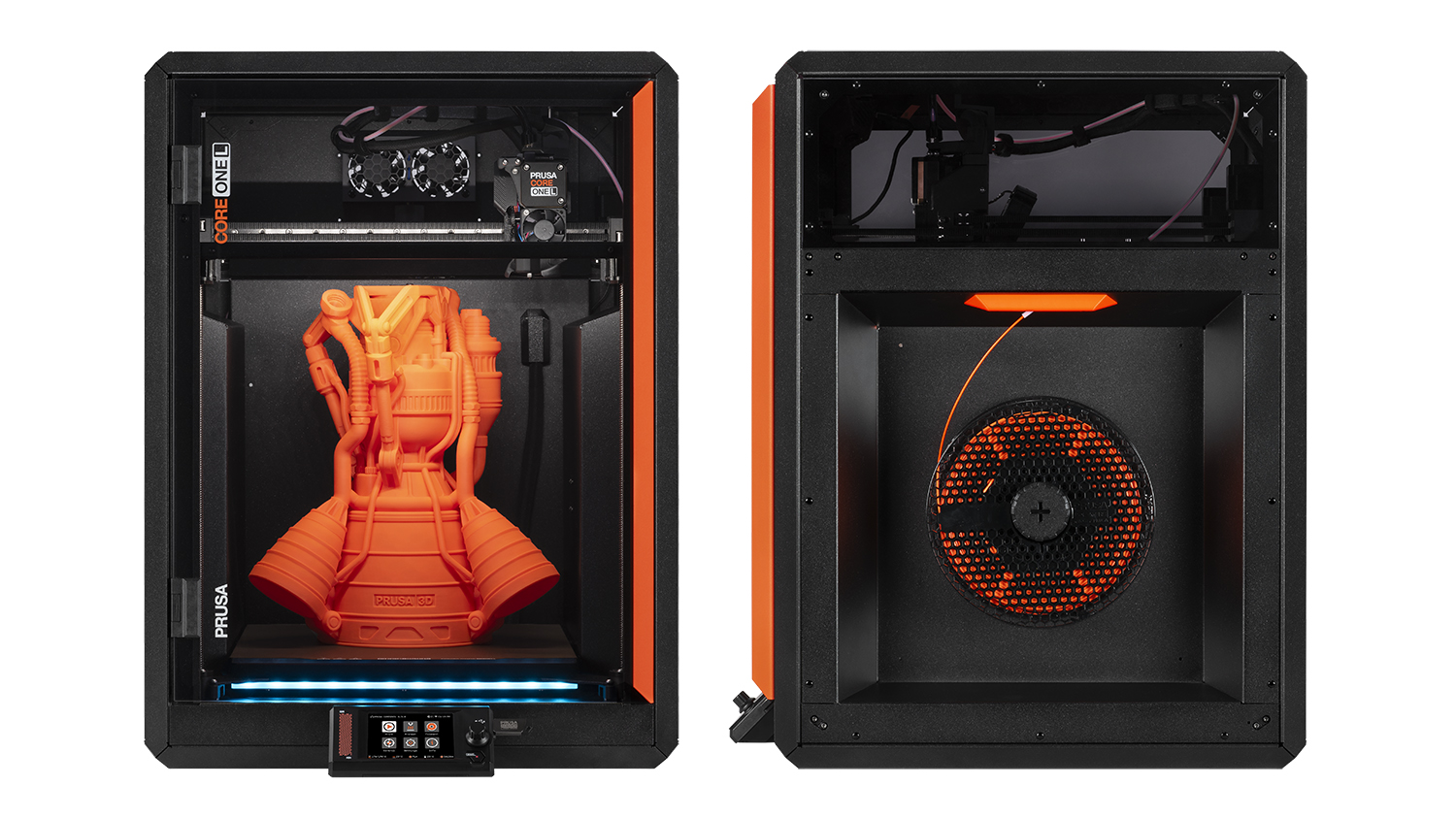
When Prusa introduced the enclosed CoreXY Core One printer, it was clear from the start that it was targeting not only hobby users, but also small production operations and professional workshops. However, one key piece of the puzzle was missing: a smart, reliable, and practical solution for multi-material printing.
That piece is Bondtech INDX – an automatic toolchanger developed specifically for the Prusa Core One (and Core One+), enabling printing with up to eight materials without the usual drawbacks of multi-material systems.
In this article, we will look at:
- what Bondtech INDX is exactly and how it works,
- what advantages it has over MMU and conventional toolchangers,
- who the Prusa Core One + Bondtech INDX combination is really worth it for,
- practical tips for project and workflow planning.
What is Bondtech INDX and why is it a major step forward
Bondtech INDX (INduction Dynamic eXtruder) is a modular automatic tool-changing system that turns the Core One into a full-fledged multi-material production platform.
Key features of INDX
Based on the information currently available, INDX introduces several major innovations: (prusa3d.com)
-
Up to 8 tools / materials simultaneously
- the base configuration can include four tools, with the option to expand to up to eight tools,
- each tool has its own nozzle and filament path.
-
Smart Toolhead
- an aluminum body with an integrated induction (INDX) rapid-heating zone, which can heat the nozzle from room temperature to printing temperature within a few seconds,
- a dynamic dual-drive feeder, which automatically adapts to both hard and soft materials (PLA, PETG, nylon, TPU, etc.),
- contact sensors for precise temperature and position detection.
-
Passive tools (Thin Passive Tools)
- the individual tools are extremely thin – a spacing of around 35 mm allows up to 8 tools to be placed in a relatively compact space, (prusa3d.com)
- the passive tool contains only the filament path, nozzle, and cooling – no electronics of its own.
-
Automatic changing without a massive moving head
- The Core One uses a single active extrusion core (Smart Toolhead), which automatically docks with the selected passive tool,
- thereby minimizing the weight of the moving part, which is essential for print speed and quality.
The result is a system that behaves like a toolchanger while remaining relatively compact, fast, and economical.
Core One, MMU3, and INDX: what are the differences
Even before INDX, there was a multi-material solution for Prusa printers called MMU3 (Multi Material Upgrade 3), which can feed up to 5 filaments into a single nozzle. It is also planned for the Core One, but its operating principle differs from INDX. (3druck.com)
MMU vs. INDX – two approaches to multi-material printing
MMU3:
- 1 nozzle, up to 5 filaments,
- material switching takes place by changing filaments into a single nozzle,
- a certain length of filament always needs to be extruded and pulled back (purge),
- particularly suitable for color printing with similar materials.
Bondtech INDX on the Core One:
- up to 8 independent tools with their own nozzles,
- practically no need for purge towers, because each material has its own nozzle,
- rapid nozzle heating / cooling using induction heating,
- ideal not only for colors, but especially for combining different materials.
When MMU makes sense and when INDX does
- If you mainly want more colors within a single material (e.g. PLA figurines, logos, and lettering) and are concerned about the upgrade price, MMU3 is still a very sensible option.
- However, if you plan to combine technical materials, want to minimize waste and shorten changeover times, or want to scale up to semi-professional production, investing in Core One + INDX makes more sense.
How tool changing works in practice
Although the detailed implementation in PrusaSlicer and the firmware may still evolve, the principle can be summarized as follows based on the available materials: (prusa3d.com)
-
Parking the active tool
- the print head moves to the docking position,
- the active tool (nozzle) mechanically disconnects from the Smart Toolhead.
-
Selecting a new tool
- the head moves to another docking slot,
- the Smart Toolhead aligns precisely and mechanically connects to the next passive tool.
-
Rapid heating and material control
- induction heating heats the nozzle to the required temperature within a few seconds,
- the extruder automatically adjusts its pressure according to the type of filament.
-
Continuing the print
- printing continues from where the previous tool stopped,
- the system can use calibration lines at the edge of the print bed instead of a purge tower.
This makes it possible to switch between materials and colors with virtually no downtime and without tens of grams of waste on every print.
Why INDX is interesting for small batches and custom manufacturing
The combination of Core One + INDX is not just a toy for enthusiasts; it is aimed especially at professionals, prototyping workshops, and small manufacturers.
Main benefits for professional use
-
Less waste, lower material costs
- Conventional multi-material systems (including AMS and MMU) generate waste in the form of purge material with every color/material change.
- Thanks to a separate nozzle for each material, INDX practically eliminates this problem.
-
Greater repeatability and less manual operation
- The ability to load up to 8 spools at once and let the printer work without operator intervention, (prusa3d.com)
- is ideal for custom manufacturing of small batches with frequent color or material changes.
-
Combining materials in a single print
- hard + ible material (e.g. PETG + TPU) in a single part,
- a structural component + dissolvable support,
- an aesthetic shell + technical core.
-
Better use of the Core One's enclosed chamber
- Thanks to chamber temperature control and its fully enclosed design, the Core One handles technical materials well,
- with INDX, you can work with materials simultaneously that would otherwise require frequent spool changes.
Specific use cases
1. Functional parts with soft inserts
For example:
- tool handles with a soft grip,
- damping elements,
- hinges and joints with ible parts.
Core One + INDX allows you to print the load-bearing part from PETG or ASA and the ible elements from TPU in a single pass without manually pausing and changing the filament.
2. Mechanisms with dissolvable supports
Printing complex internal channels or cavities often requires supports that are not easy to remove.
With INDX, you can:
- print the main part from PETG or nylon,
- print the supports from a dissolvable material,
- after printing, simply place the part in a bath and let the supports dissolve.
3. Products with branding and colored layers
For custom manufacturing:
- logos and text in a contrasting color,
- multicolor controls,
- colored inserts in technical parts.
Thanks to fast tool changes and the absence of purge towers, such parts can be produced more economically than with conventional multi-material systems.
Several toolchanger concepts already exist on the market (e.g. from other CoreXY printer brands), as well as combinations of multiple extruders and feeders. What makes INDX different? (pu-magazine.com)
-
One active extruder, multiple passive tools
- instead of eight full-fledged heads, you have one smart core and up to eight lightweight modules with nozzles,
- which reduces the cost and weight of the system.
-
Induction heating and rapid switching
- minimizes "dead time" during tool changes,
- increasing efficiency, especially when frequently switching between colors/materials.
-
Focused on practical use, not just demonstrating possibilities
- the design aims to make the system expandable (4 → 8 tools),
- so that it works well both in a home workshop and in small-scale production.
What to consider before purchasing Core One + INDX
Before committing to this combination, it is worth considering several practical aspects.
1. Placement and space
- The system takes up somewhat more space inside the printer (the front tool docking rail),
- so it is advisable to ensure good access for nozzle changes and maintenance.
2. Material portfolio
Consider which projects you print most often:
- If single-color technical parts predominate, the Core One alone may be enough for you.
- If you frequently switch between multiple colors or combinations of hard/ible/dissolvable materials, INDX starts to make a great deal of sense.
3. Slicer and workflow
- You need to bear in mind that preparing G-code for 8 materials is more complex than for conventional single-material printing.
- It is worth creating:
- a library of material profiles (temperatures, speeds, retraction),
- project templates for typical combinations (e.g. structural part + TPU seal),
- a clear naming structure for filaments and slots (so you always know what is loaded where).
4. Service and maintenance
- More tools mean more nozzles and filament paths to maintain,
- on the other hand, degradation of one nozzle will not stop the entire system, only that particular tool.
Tips for getting the most out of INDX
-
Start with 2–4 tools
- although it is tempting to use all 8 right away, it is sensible to start with fewer materials and verify reliability and settings.
-
Assign tools according to task type
- e.g.:
- Tool 1–2: primary structural materials (PETG, ASA),
- Tool 3: supports (the same material with different settings or a different material),
- Tool 4: ible material (TPU),
- Tools 5–8: colors / special materials for specific orders.
-
Use different nozzles for different materials
- abrasive materials (CF- and GF-filled filaments) should always be used with hardened / ruby nozzles,
- common materials with brass nozzles for the best possible surface quality.
-
Test adhesion between materials
- not all material combinations bond well to each other,
- before starting a series, it is a good idea to print simple joining samples (e.g. a "sandwich" of two materials) and try to separate them mechanically.
-
Make use of the Core One's enclosed chamber
- for technical materials (ABS/ASA, nylon, PC), maintain a stable elevated temperature in the chamber,
- for materials that do not benefit from a hot environment (e.g. some TPUs), consider using a separate tool with different cooling settings and less time spent in the print chamber.
Who is the Core One + INDX combination ideal for
1. Small manufacturing companies and custom workshops
- orders for small and medium batches of functional parts,
- the need to switch quickly between materials and colors without frequently changing spools by hand.
2. Development and prototyping teams
- iterating prototypes made from different materials,
- printing assemblies that combine hard and ible parts in a single step.
3. Advanced hobby users
- enthusiasts who have already exhausted the possibilities of conventional single-material printers and MMU,
- focused on complex, multicolor, and multi-material projects.
Summary: the next evolutionary step in multi-material FDM printing
The Prusa Core One itself is a modern, enclosed, and well-tuned CoreXY platform. In combination with Bondtech INDX it becomes a full-fledged next-generation multi-material production tool.
The main benefits of this combination:
- up to 8 materials without manually changing spools,
- practically zero waste from purge towers,
- fast tool changes thanks to induction heating,
- the ability to combine hard, ible, and dissolvable materials in a single part,
- better economics and higher productivity for professional use.
If you are thinking about moving your 3D prints from "colorful models" to truly functional, multi-material products, the Prusa Core One + Bondtech INDX combination is one of the most interesting solutions the FDM world has to offer today.
You can view more articles about 3D printers in the /kategorie/clanky-o-3d-tiskarnach category, and if you are interested in specific printer models, see the /kategorie/3d-tiskarny overview.