Ingyenes szállítás 1 999 Kč összegtől
Gyors szállítás
Ellenőrzött bolt
Vásárlók ezrei




Ingyenes szállítás 1 999 Kč összegtől
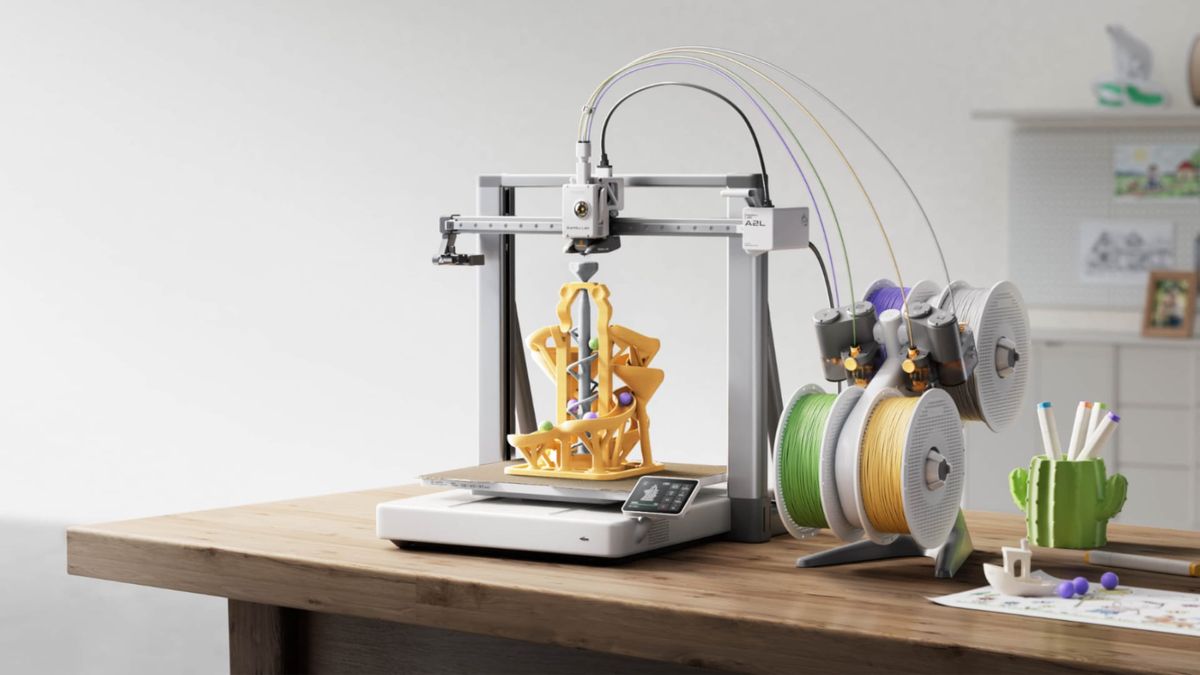
The Bambu Lab A2L is a new large-format printer from the A series, positioned between the classic A1 and the more enclosed, technically versatile P1S. The main question for the customer is not just “how much does it cost”, but mainly “will the larger build area give me more benefit than an enclosed chamber”.
Short answer: The A2L makes the most sense for large decorations, cosplay, organizers, RC parts, prototypes and larger batches of smaller products made from PLA or PETG. If you mainly want to print ABS, ASA or technical materials sensitive to drafts, the P1S is still the safer choice. If you want the cheapest possible entry into the world of Bambu Lab and a 256 mm cube is enough for you, the A1 remains a very strong option.
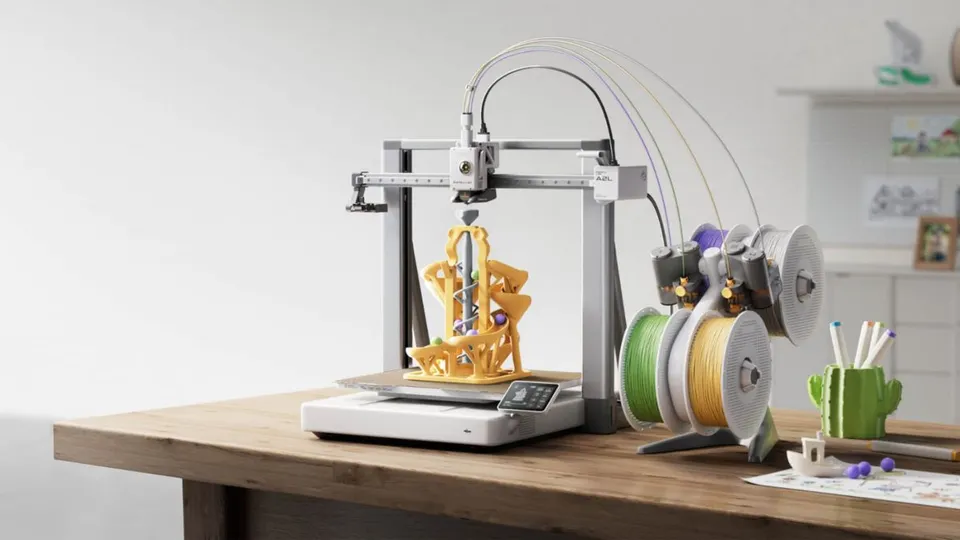
At the time of preparing the article, the Bambu Lab A2L was listed at a European price of 379 EUR for the standalone printer and 489 EUR for the A2L Combo with AMS lite. Global availability began on June 1, 2026, and in Japan and Korea one day later.
This puts the A2L in an interesting position. It is not the cheapest Bambu Lab printer, but for the premium over the A1 it offers a significantly larger build space. Compared to the P1S, on the other hand, it gives up the enclosed construction but offers the user a larger format.
It works out approximately as follows:
| Model | Approximate European price | Build volume | Construction | Main advantage |
|---|---|---|---|---|
| Bambu Lab A1 | from 259 EUR | 256 x 256 x 256 mm | open bed-slinger | lowest price and simple operation |
| Bambu Lab A1 Combo | from 369 EUR | 256 x 256 x 256 mm | open bed-slinger | affordable multicolor printing with AMS lite |
| Bambu Lab A2L | 379 EUR | 330 x 320 x 325 mm | open large-format bed-slinger | large models in one piece |
| Bambu Lab A2L Combo | 489 EUR | 330 x 320 x 325 mm | open large-format bed-slinger | large format plus AMS lite |
| Bambu Lab P1S | from 389 EUR | 256 x 256 x 256 mm | enclosed CoreXY | better choice for ABS and ASA |
| Bambu Lab P1S AMS Combo | from 559 EUR | 256 x 256 x 256 mm | enclosed CoreXY | enclosed printer with multi-material printing |
Bambu Lab prices often change depending on promotions, stock and configuration. When purchasing, therefore, compare the specific variant in particular: standalone printer, Combo with AMS lite, or the P1S version with the classic AMS.
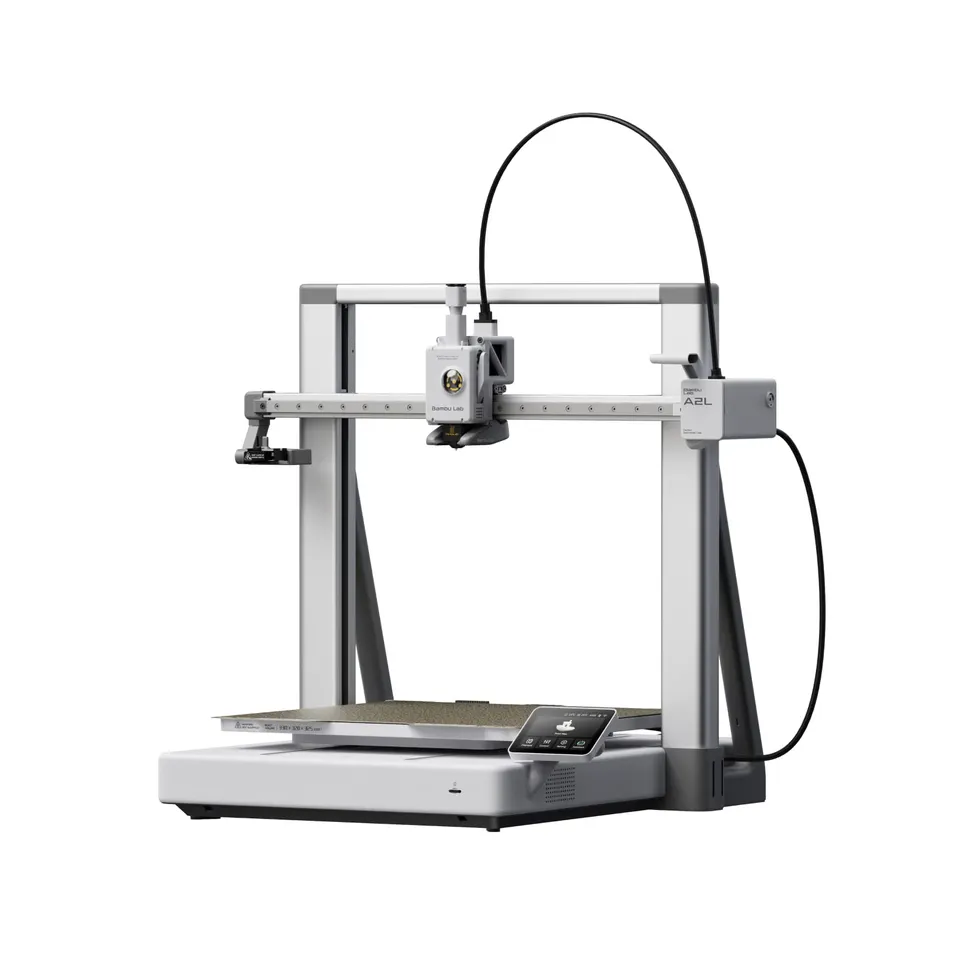
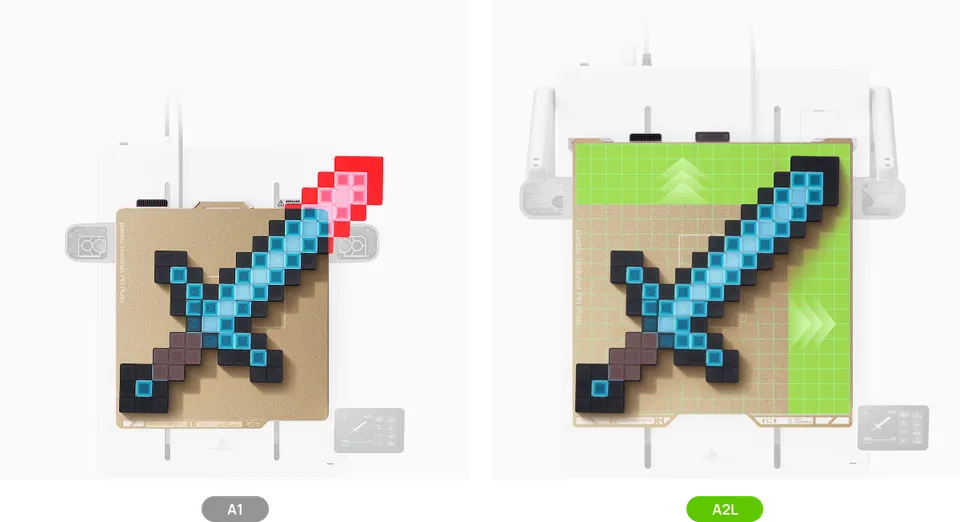
The most important change is the 330 x 320 x 325 mm build volume. Compared to standard 256 mm printers from the A and P series, you get noticeably more space. In practice, this means that a lamp shade, large tool holder, mask, part of a cosplay armor or a larger decoration does not have to be split into several glued-together parts.
The A2L has an open construction, but Bambu Lab addresses the problem of a large moving table using adaptive vibration compensation, multi-point calibration, load adjustment and resonance damping in the frame. This is important because with large bed-slinger printers, the greatest risk is usually the quality of tall and heavy models.
Another change is the enclosed servo extruder with a PMSM motor, which is designed to stabilize filament feeding at higher speeds while also monitoring extrusion anomalies. The printer also features nozzle buildup detection, filament runout detection, nozzle clog detection and tangled filament detection.
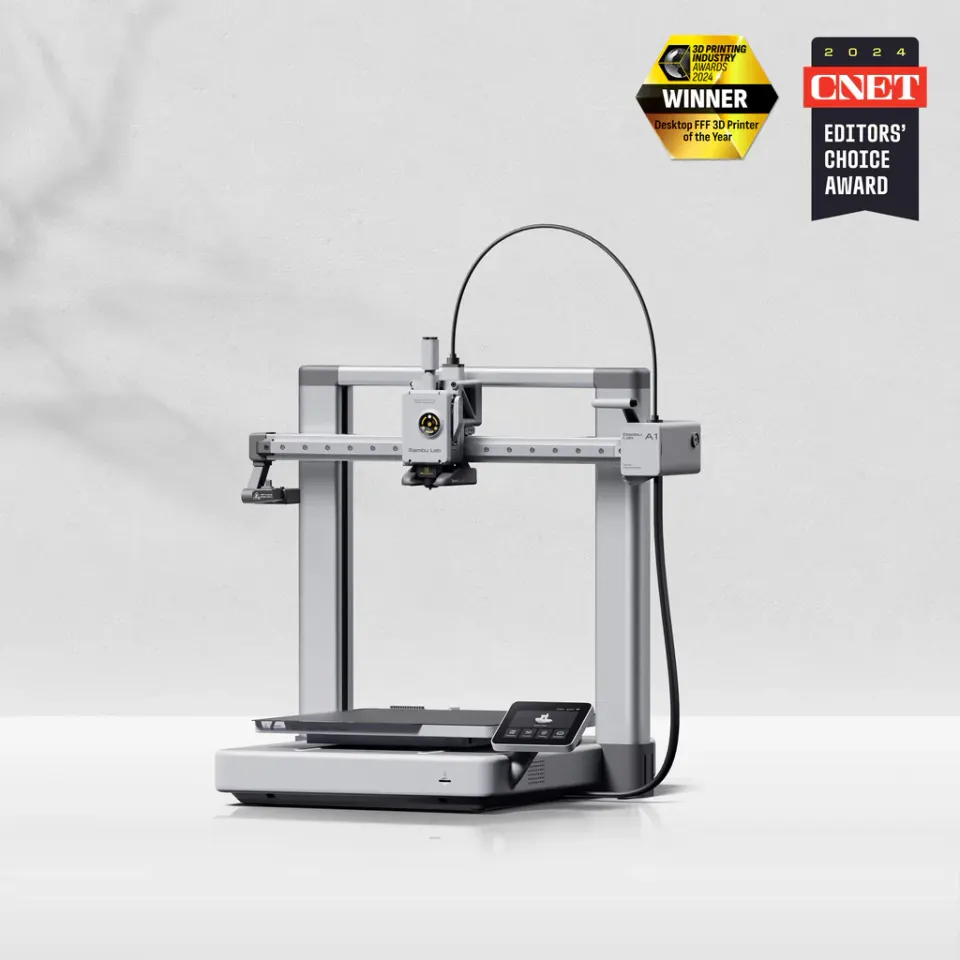
The A1 is still an excellent choice for a first printer. It is cheaper, more compact, easier to place, and its 256 x 256 x 256 mm volume is sufficient for most common products: holders, boxes, models, figurines, replacement parts and smaller decorations.
The A2L makes sense when you regularly run into size limitations. Typical examples:
If you mainly print small practical parts from PLA and PETG, the A1 Combo will often be more economical. But if you are already constantly rotating models in the slicer, cutting them in half or figuring out where to hide the seams, the A2L is significantly more practical.
The P1S is a different type of printer. It has a smaller build volume of 256 x 256 x 256 mm, but it is enclosed and uses CoreXY kinematics. This makes it more suitable for materials such as ABS and ASA, which do not respond well to drafts and sharp temperature changes.
The A2L has a nozzle temperature of up to 300 °C, but its build plate tops out at 80 °C and the construction is open. This naturally makes it mainly suited to PLA, PETG and similar non-technical materials. It is fine for a large PETG organizer, decoration or cosplay part. For repeated printing of functional ABS car covers, I would choose the P1S.
The choice is therefore simple:
The A2L Combo uses AMS lite, just like the A1 Combo. This is good news for users who want colorful lettering, multicolor decorations or simple supports made from a different material. With the A2L, it is also interesting that the larger build plate allows you to print larger multicolor objects or multiple pieces at once.
For the A2L, Bambu Lab states that it can be expanded to a combination of multiple AMS units and AMS lite with a high number of colors. For the average home user, however, the basic Combo is the most practical. Four filament positions cover most decorative prints while keeping the price and setup complexity reasonably low.
The P1S uses the classic enclosed AMS. This is better for storing filament because the spools are protected from dust and moisture. At the same time, it is better suited to an enclosed printer that will more often work with materials requiring more demanding environmental conditions.
The A2L supports expansion modules for blade cutting and pen drawing. This makes it a more interesting machine for a creative workshop, school or home decoration production. You can imagine combining a printed holder, a cut-out sticker and a labeled tag in one working environment.
It is a good idea to keep expectations realistic, however. If you are buying a printer primarily for 3D printing, make your decision based on build volume, materials and price. Treat cutting and plotting as a bonus that can expand the possibilities over time, not as a reason to ignore the difference between the open A2L and the enclosed P1S.
The A2L is most interesting for users who want the simplicity of the A series but need a larger format. The typical buyer no longer wants to deal with building a printer, manual tuning and endless slicer profiles. They want to upload a model, select the filament and print a larger part without unnecessary splitting.
For e-commerce use or a small workshop, the A2L can also make sense as an addition to smaller printers. The A1 or P1S can handle regular orders, while the A2L is suitable for large pieces and batch printing. Thanks to the larger area, more products can be arranged on one build plate, reducing the number of print starts that need to be attended to.
If you are buying your first 3D printer and budget is the main concern, start with the A1 or A1 Combo. You will get a very simple entry into the Bambu Lab ecosystem, and it is better to invest the money you save in filament, spare nozzles and a quality build plate.
If you know you will be printing large things, the A2L is more logical than the A1. The price difference compared to the A1 Combo is not dramatic, and you cannot make up for the larger volume in software later. With large-format printing, every extra centimeter makes a difference.
If you want to print technical parts from ABS, ASA or materials sensitive to temperature stability, choose the P1S. The smaller volume is the price you pay for an enclosed construction, but it is a better compromise for technical materials.
The most versatile choice for creative home printing is the A2L Combo. The most practical choice for technical materials is the P1S Combo. The A1 Combo offers the best balance of price and simplicity.


