Free shipping from 1 999 Kč
Fast shipping
Verified store
Thousands of customers




Free shipping from 1 999 Kč
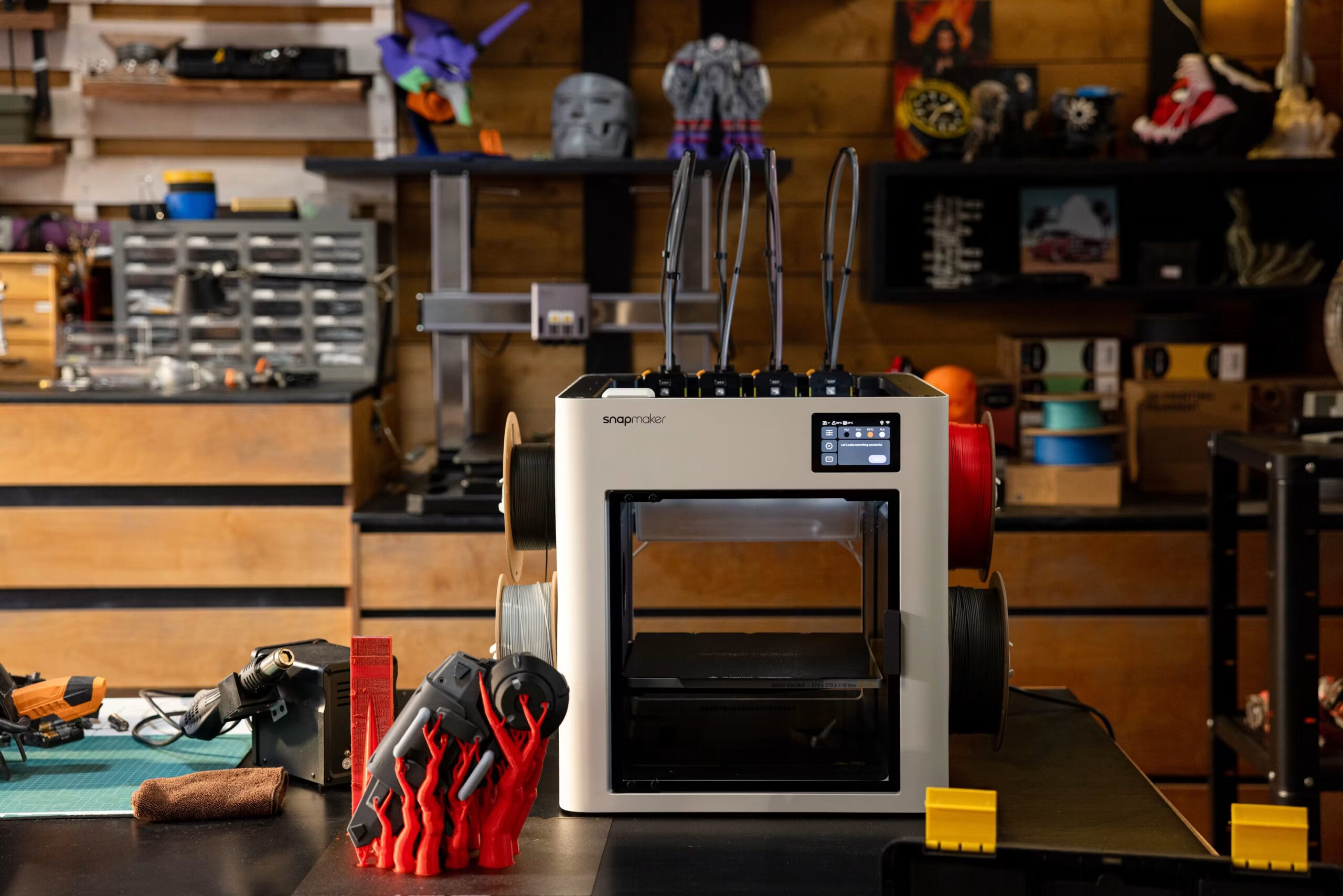
Buying your own 3D printer is tempting. You see a model, download the file, and hold the part in your hand a few hours later. But in addition to the printer’s price, there is also filament, spare parts, time, failed prints, maintenance, and the learning curve. 3D printing on demand costs more per piece, but you do not have to deal with settings, materials, support, quality, or spending your free evenings by the printer.
The short answer is: owning a printer is worthwhile if you print regularly, iterate on designs frequently, and can take advantage of the time savings. Custom printing is better when you need a few parts a year, a special material, a guaranteed result, or do not have the space to deal with the technology.
When calculating the cost of your own printing, people often consider only the price of the filament. That is a mistake. The actual cost of home or business printing consists of several layers:
Electricity is usually not the main expense. A typical FDM printer consumes approximately tens to low hundreds of watts while printing, depending on the bed temperature, material, and design. For a ten-hour print, you are therefore often looking at units to low tens of crowns rather than hundreds. Human time and the failure rate are usually much more expensive.
With custom printing, you pay for a complete service. The price includes more than just plastic: it also covers data preparation, printer operation, inspection, packaging, possible model repairs, and the risk that the print will fail. That is why a small part can seem expensive even if it weighs only a few grams. Someone has to receive, inspect, prepare, print, and ship it.
The most practical approach is to calculate payback based on the savings on specific orders. The formula is simple:
Payback = total investment in the printer / savings compared with custom printing per month
The total investment includes more than just the printer. With a cheaper machine, also include tools, several spools of filament, a spare nozzle, and the time needed to get it up and running. With a more reliable machine, the purchase price is higher, but you often save time on tuning. For regular operation, it makes sense to allow for at least the following starter packages:
Example: you need 20 small PETG brackets every month. Each one weighs 35 g. Depending on the supplier, minimum prices, and preparation, custom printing might cost, for example, CZK 100 to 250 per piece. Your own PETG material might cost approximately CZK 15 to 35 per piece, but you must add the time, failed prints, and operation. If you realistically save CZK 1,500 to 3,000 per month, a printer costing CZK 10,000 to 25,000 may pay for itself in approximately several months to a year.
Another example: once every six months, you need five larger parts for your workshop. Each weighs 250 g and must be strong. In this case, owning a printer often does not make economic sense. You pay for the machine, store filament, deal with material moisture, and the printer sits idle for most of the year. Custom printing will be more expensive per gram, but cheaper overall.
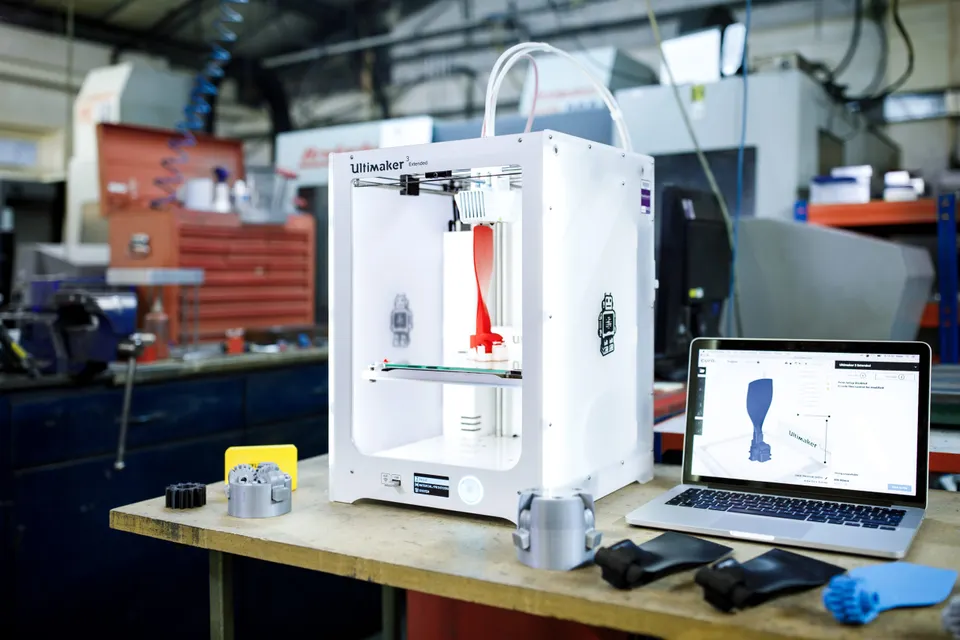
Owning a machine makes the most sense when 3D printing is not a one-off curiosity but a recurring tool.
It pays off if you design prototypes frequently. The first version of a cover does not fit, the second has the wrong opening, and the third finally works. With custom printing, you wait for each iteration. With your own printer, you can modify the model in the morning, test it in the afternoon, and start another version in the evening.
It also pays off for small, repeated parts. Brackets, spacers, caps, templates, assembly fixtures, organizers, and simple replacement parts are exactly the types of products where owning a printer is very strong. They use little material, the risk is low, and speed is decisive.
Another typical case is internal business use. If you regularly need fixtures, gauges, adapters, and holders in manufacturing, service, or shipping, your own printer saves not only money but, above all, waiting time. The value is not just in the price of the part, but in the fact that no one has to improvise for a week.
Consider buying your own printer if most of these points apply to you:
Custom printing is more sensible when the goal is a finished result, not ownership of the technology.
This typically includes one-off gifts, replacement parts, presentation models, small batches for market validation, or products for which you are not sure which material to choose. A supplier will often recognize that the model needs a different orientation, thicker walls, another material, or division into multiple parts.
Ordering is also advantageous for more demanding materials. ASA, ABS, nylon, polycarbonate, or carbon-fiber composites are not simply a matter of using a different spool. They often require an enclosed chamber, drying, a wear-resistant nozzle, the right build plate, ventilation, and experience. If you need such a part twice a year, owning the equipment usually does not pay off.
Custom printing also makes sense when you need an aesthetic finish or manual post-processing. Sanding, filling, gluing, painting, installing threaded inserts, or checking dimensions can take more time than the printing itself. If you want a finished part without having to learn the process, ordering it is a fair choice.
Stick with custom printing if most of these points apply:
The most common misconception is that a 3D printer works like an office printer. Modern machines are much easier to operate than they used to be, but they are still manufacturing equipment.
Filament absorbs moisture. PETG, nylon, and some technical materials print worse over time, popping, stringing, and losing strength. Nozzles wear out, especially with abrasive materials. Build plates become greasy and get scratched over time. Fans, PTFE tubes, and the hotend are not eternal. And even a well-prepared print will occasionally detach, warp, or fail.
Therefore, also include your own hourly rate in the decision. If you print for fun, the time is part of the hobby. If you print in a business, a technician’s hour has a cost. Once someone spends two hours tuning supports for a CZK 180 part, the economics change quickly.
If you are unsure, start with custom printing. Order several different parts and track the price, material, quality, and how often you needed to modify the model. After three to five orders, you can usually see a pattern.
Buy your own printer when custom printing holds you back more often than it costs you money. This is an important distinction. If you are only considering the price of a single part, a printer may not be worthwhile. But if waiting for a part is stopping development, service, or production, the payback can be very fast.
A practical decision rule:
For your first machine, it is better to buy a reliable FDM printer than the cheapest kit, unless tinkering is the main goal. Focus especially on automatic bed leveling, available slicer profiles, spare parts, service support, the community, and safe operation.
An open printer is sufficient for PLA and PETG. For ASA, ABS, and technical materials, an enclosed machine or enclosure is more practical. For multicolor printing, expect more material waste and longer print times. For small technical parts, accuracy, repeatability, and good material are often more important than the number of colors.
Do not buy a printer based solely on the size of its build area. Large prints take a long time, warp more, and reveal the machine’s limitations more often. If you need large parts only occasionally, it is usually cheaper to order them.
First, list the typical parts you want to print: weight, material, dimensions, number of pieces per month, and required quality. Have custom printing quoted for three to five parts. Then put the same part into a slicer and find out the filament consumption and print time.
Put the following in a table:
If the table shows payback within 12 months and you will also use the printer regularly, buying one makes sense. If payback takes two to three years and the technology does not appeal to you, ordering will be the more comfortable option.
Owning a 3D printer is not automatically cheaper. It is most advantageous where printing is repeated, where fast iteration saves work, and where someone has time to look after the machine. 3D printing on demand is better for one-off parts, special materials, aesthetic finishes, and situations where you want the result without learning the technology.
The best decision comes from your own figures. Have several real parts quoted, calculate the material, time, and risk of printing them yourself, and only then choose a machine. If the printer pays for itself through parts you genuinely need, it is a good investment. If it pays for itself only in theory, it is better to continue ordering.


