Doprava zdarma od 1 999 Kč
Rychlá expedice
Ověřený obchod
Tisíce zákazníků




Doprava zdarma od 1 999 Kč
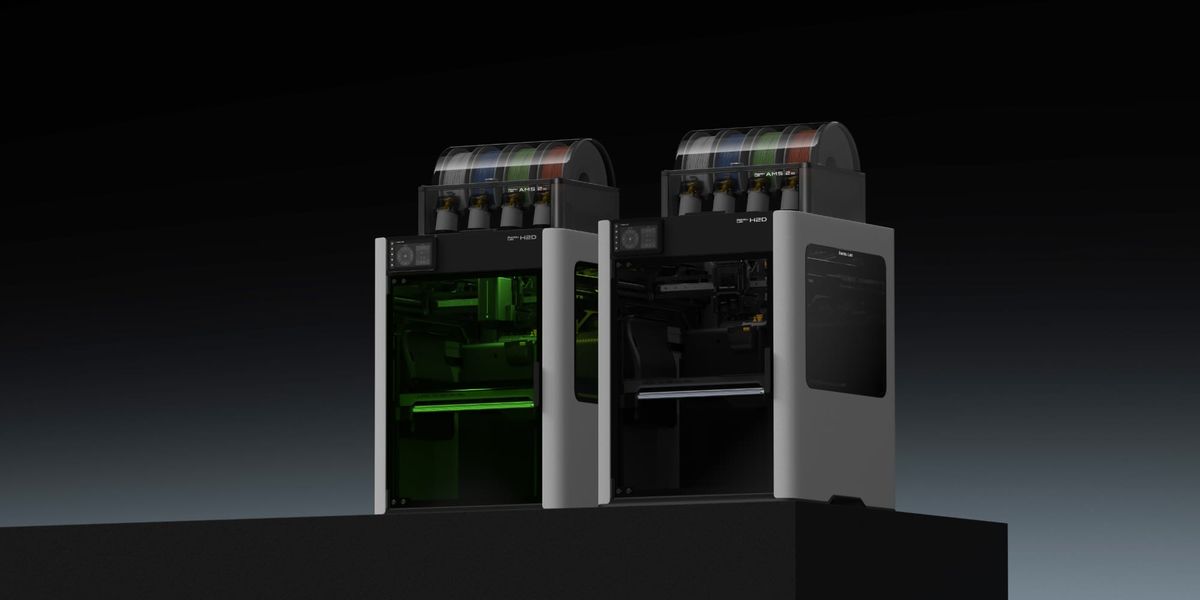
The Bambu Lab H2 range may seem confusing at first glance. All three printers are aimed above standard desktop models, all feature an enclosed design, higher speed, a larger build volume and automation. However, the letters in the name are not just cosmetic. H2S, H2D and H2C are three different answers to three different needs.
The short version is simple: H2S is a large single-color and generally the most straightforward printer, H2D adds a second nozzle and more versatile production options, while H2C specializes in multiple colors and materials with significantly less waste when switching. If you choose based on the name or on which model is “the newest,” you can easily pay for features you will not actually use.
| Model | Main idea | Biggest advantage | Typical compromise |
|---|---|---|---|
| Bambu Lab H2S | One nozzle, large volume | The simplest choice for large and technical prints | Multicolor printing via AMS still means purge waste |
| Bambu Lab H2D | Two nozzles | Two materials or colors without classic switching through one nozzle | Smaller volume when using both nozzles and a higher price |
| Bambu Lab H2C | Vortek hotend exchange | Up to seven hotends for frequent color and material changes with minimal waste | A more complex system that makes the most sense mainly for frequent multicolor or multimaterial printing |
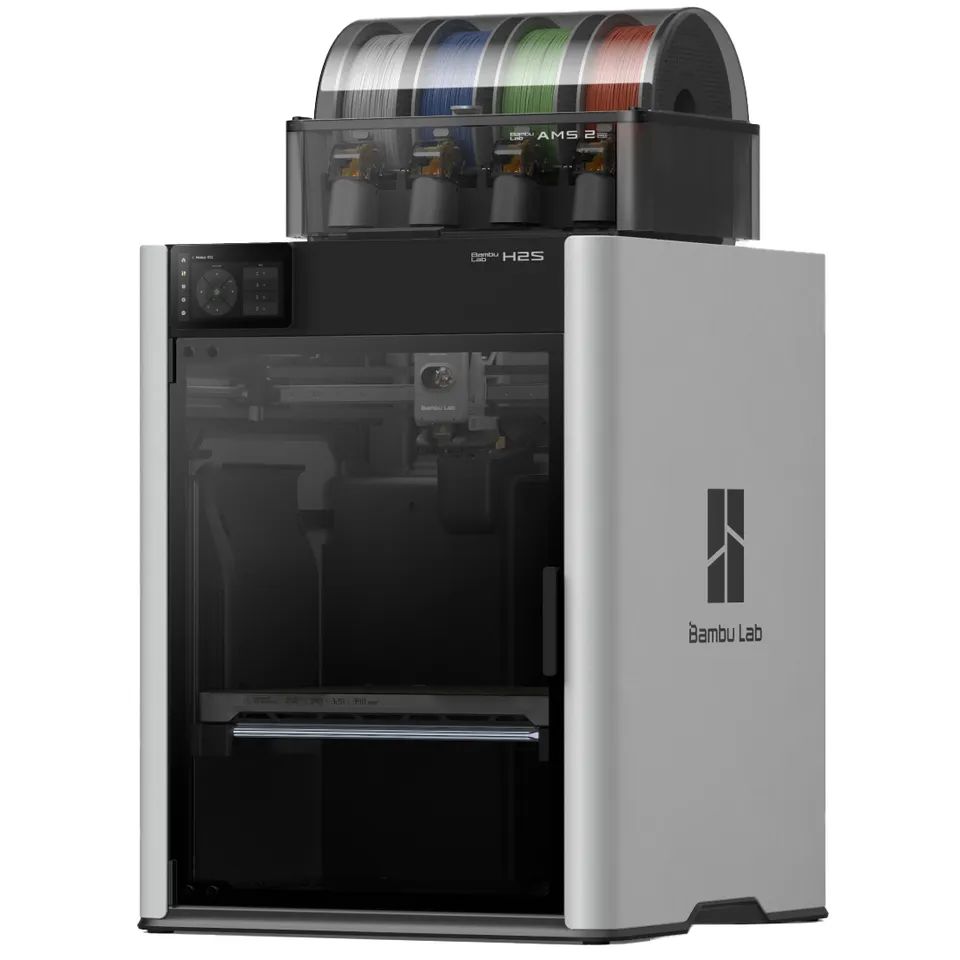
H2S is the easiest model in the entire range to understand. It has one nozzle and a large build volume of approximately 340 x 320 x 340 mm. In practice, this means it is aimed at users who want to print larger parts, technical prototypes, jigs, enclosures, holders, cosplay components or small batches without dealing with the complications of a second nozzle.
One nozzle is not a weakness if you print from a single material most of the time. On the contrary, it is an advantage in terms of simplicity. Less mechanics around the print head means fewer decisions when preparing a model and fewer situations where you have to figure out why a particular multi-material profile behaves differently than expected.
H2S makes a lot of sense for PETG, PLA, ABS, ASA, PC blends and technical applications where the result depends mainly on size, strength, repeatability and good ventilation. With AMS, you can print in multiple colors, but it is still filament switching through a single nozzle. This means a purge tower, purging and waste. That is fine for an occasional colored logo. For everyday five-color models, less so.
I would choose H2S if you want a versatile workhorse and multicolor printing is an add-on for you rather than the main reason for your purchase.
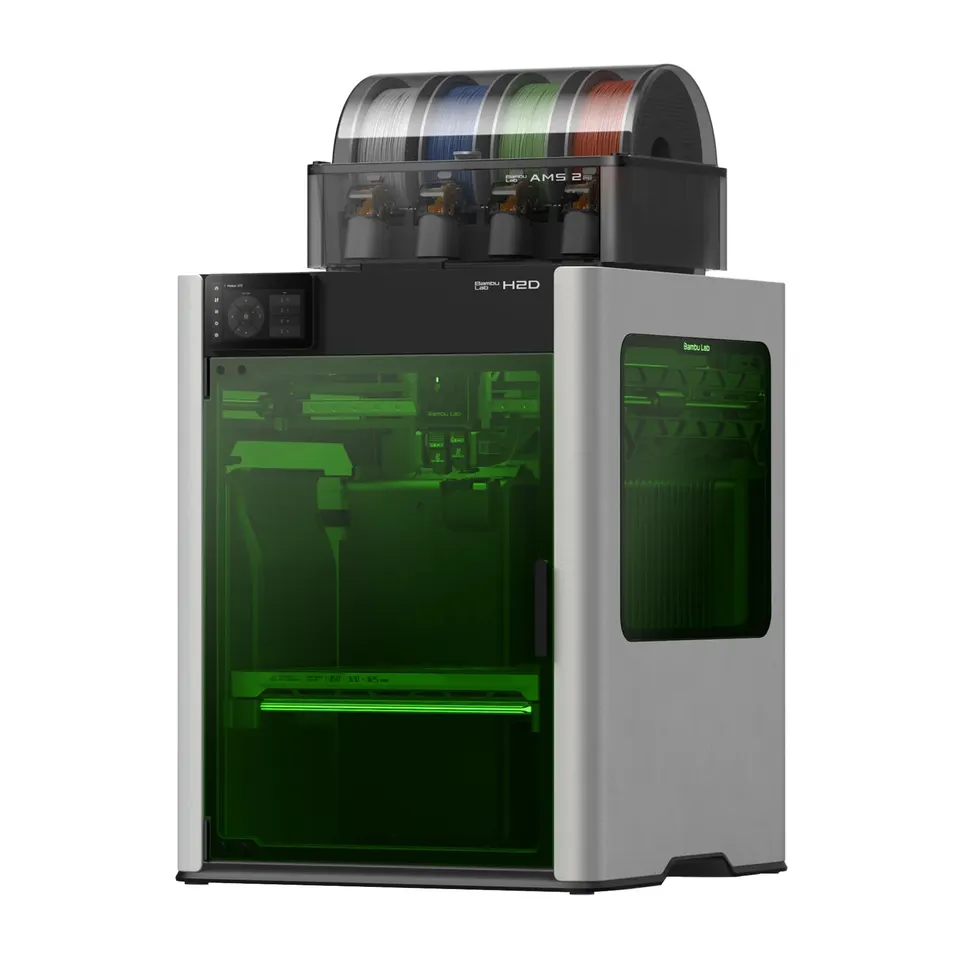
H2D is the model that introduced a pair of nozzles to the H2 range. This is not the same as standard multicolor printing through a single nozzle. The second nozzle is particularly useful when combining two materials or when you want to separate two roles within a single print.
A typical example is a solid PETG part with supports made from another material, a technical print with a ible TPU section, a model with contrasting lettering, or a prototype where you do not want to keep cleaning one nozzle every time you switch materials. Two nozzles also make sense when you do not want to pull one material through the same path as another, for example because of temperature, adhesion or contamination concerns.
The build volume of the H2D is somewhat more complicated than that of the H2S. When printing with one nozzle, expect approximately 325 x 320 x 325 mm; when using both nozzles, the usable space along the X axis decreases to roughly 300 mm. The total reach of both nozzles is greater, but for a real dual-nozzle model, the shared space is what matters.
H2D is also more interesting for users who want to turn their printer into a broader workshop tool. Configurations with a laser, cutting and drawing are available in the H2 range. That sounds appealing, but I recommend being practical: if you are primarily buying a 3D printer, make your decision based on printing. Treat the laser and other tools as a bonus only if you have a specific use, enough space and a willingness to address safety.
I would choose H2D if you frequently print supports, combine two materials, want a second nozzle for technical tasks, or are looking for a more versatile workshop machine than a purely single-nozzle printer.
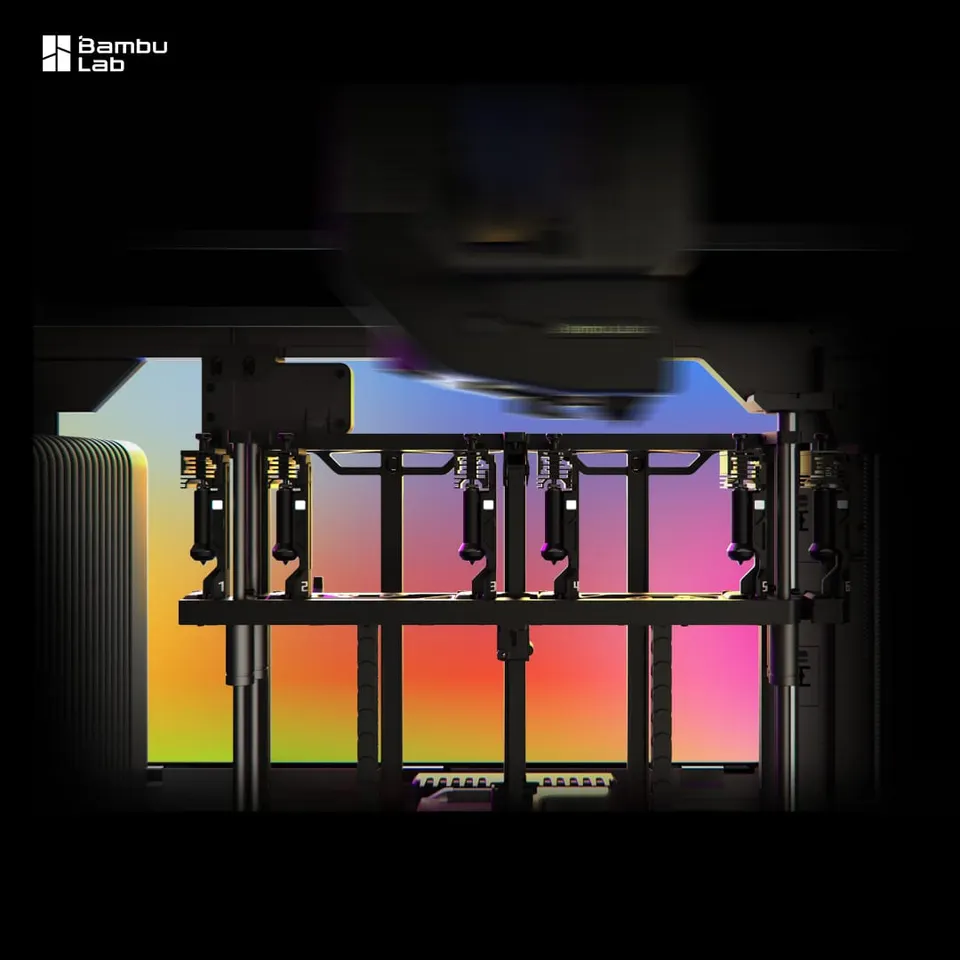
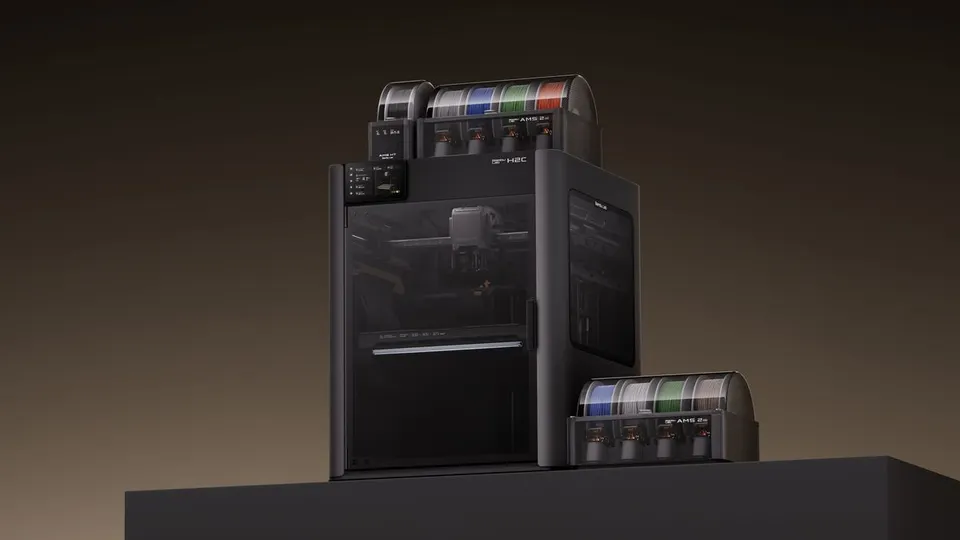
H2C is the most interesting and at the same time the least universally necessary model. It is built around the Vortek system, which does not handle color changes simply by purging one nozzle. Instead, it uses hotend exchange. The idea is clear: when each color or material has its own hotend, you do not have to push as much residual filament out with every change.
This is crucial for models where colors alternate across hundreds or thousands of layers. With conventional AMS printing, waste can be surprisingly high, especially with small objects involving many color changes. H2C aims to move multicolor printing from the “looks nice, but it wastes material” category into one where it makes greater economic sense.
According to the specifications, the H2C offers a build volume of around 305 x 320 x 325 mm with one nozzle, 300 x 320 x 325 mm when printing with two nozzles, and a total reach of approximately 330 x 320 x 325 mm for two nozzles. However, volume is not the main parameter. The key factor is the number of automatically usable hotends and the way the system saves material during changes.
H2C is mainly worthwhile when you regularly print colorful figurines, signs, promotional items, product mockups, educational aids or parts combining materials that would otherwise require extensive purging. If you occasionally print a two-color label, H2C will probably be an unnecessarily complex and expensive route.
The best question is not “which model is best,” but “what will the printer do every week?” If the build plate will mainly hold holders, enclosures, large prototypes and functional parts made from one material, H2S is the clearest choice. You get a large volume, simple operation and do not pay for a system that will remain unused most of the time.
If you regularly deal with supports, combinations of rigid and ible materials, a separate color for text or two technical materials in a single print, H2D is the logical step up. The second nozzle is not just marketing. For the right type of work, it can save time, material and frustration.
If your main product is multicolor or multi-material printing, H2C is the model with the greatest potential to change the economics of operation. However, keep in mind that the more complex mechanics only make sense with a sufficient volume of such jobs. For hobby printing of a few multicolor models per month, the return on investment will be worse.
For an architectural model with one main color and an occasional detail, H2S with AMS is sufficient. Color changes will not be that frequent and waste will remain acceptable.
For an ASA box prototype with a ible TPU seal, H2D is the better choice. Two nozzles help separate materials that have different printing behavior.
For a series of small five-color promotional tags, H2C makes more sense. With small objects, the ratio of waste to finished part is usually most problematic with conventional switching.
For large functional workshop parts, spool holders, templates and assembly jigs, I would go back to H2S. Simplicity will be a greater advantage than the number of nozzles.
Bambu Lab states that an upgrade to H2C is possible, but this is not a minor nozzle replacement. In practice, you need to allow for the fact that such an upgrade requires skill, time and careful adherence to the procedure. It is not an ideal purchasing plan for a beginner.
If you already know that you want H2C because of frequent multicolor operation, it makes little sense to buy H2S with the idea that “I will convert it later.” If you are not sure whether you will really use multicolor printing, it is safer to buy a model based on your current needs rather than on a hypothetical upgrade.
H2S is the best choice for most users who want a large, fast and reliable workhorse. H2D is the best choice for technical users who will genuinely make use of a second nozzle. H2C is the best choice for those who frequently print in multiple colors or materials and want to address waste systematically.
When choosing, do not look only at the number of nozzles. Look at the types of models, the number of color changes, the cost of consumed filament, preparation time and service complexity. The most expensive model is not automatically the best purchase. The best purchase is the one that matches the work the printer will do every day.


