Doprava zdarma od 1 999 Kč
Rychlá expedice
Ověřený obchod
Tisíce zákazníků




Doprava zdarma od 1 999 Kč
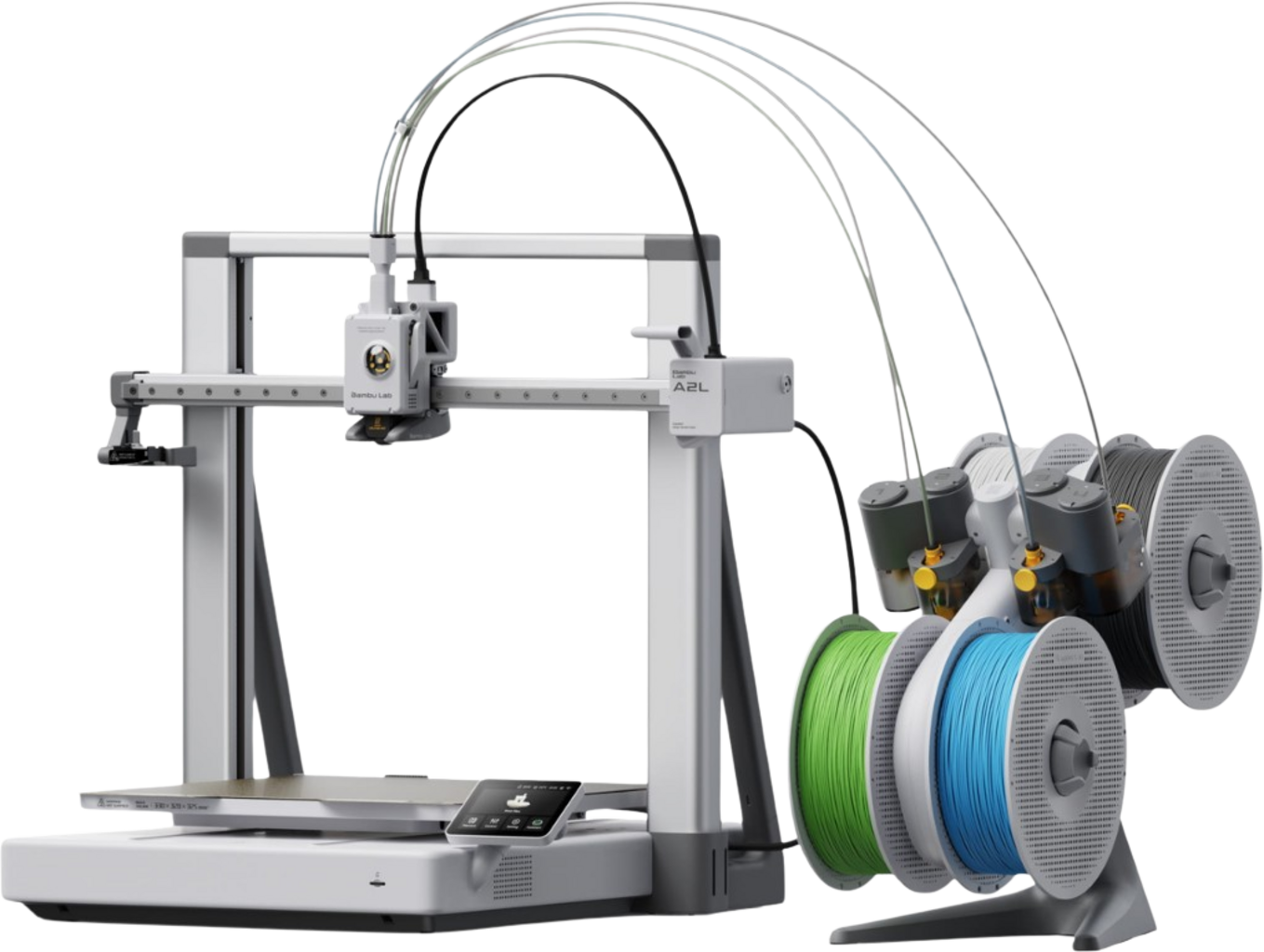
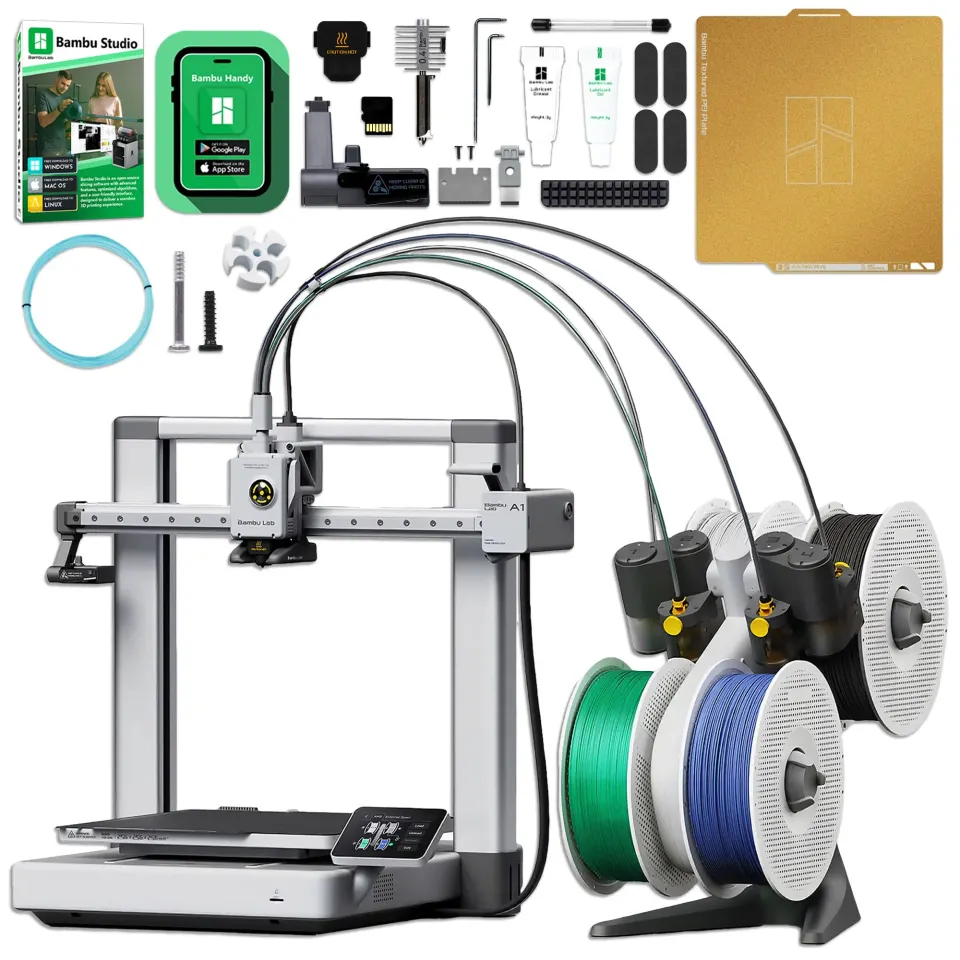
The Bambu Lab A1 Combo is one of the most successful entry-level 3D printers of recent years. It offers automatic calibration, fast printing, a simple slicer, and AMS Lite for four-color printing without extensive fine-tuning. At first glance, the new Bambu Lab A2L Combo looks like a logical step up: a larger build area, sturdier construction, new sensors, and support for additional creative modules.
But the question is not simply whether the A2L is better. More importantly, is it better for your prints? If you print small holders, figurines, drawer organizers, and occasional colorful decorations, the A1 Combo still makes a lot of sense. If you regularly split models into parts just because they do not fit on the build plate, the A2L Combo becomes much more interesting.
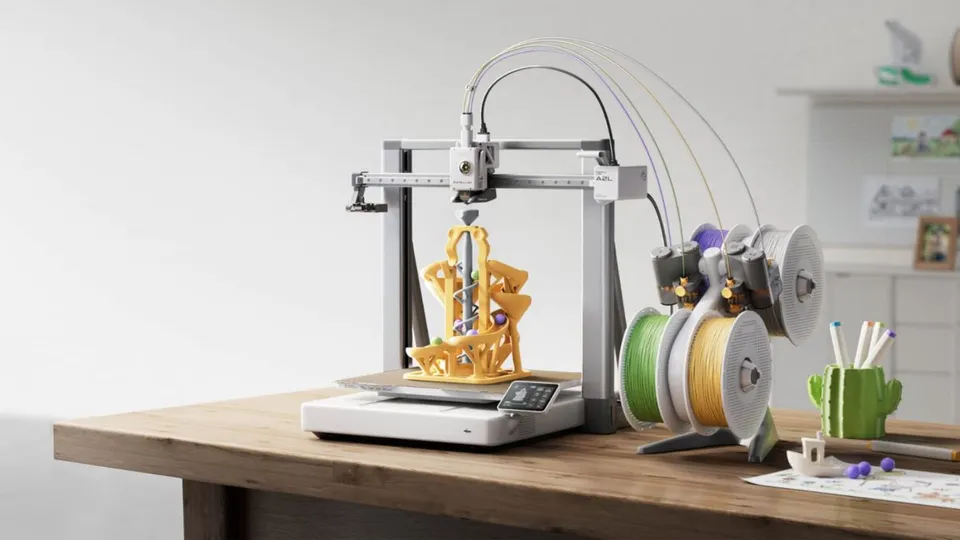
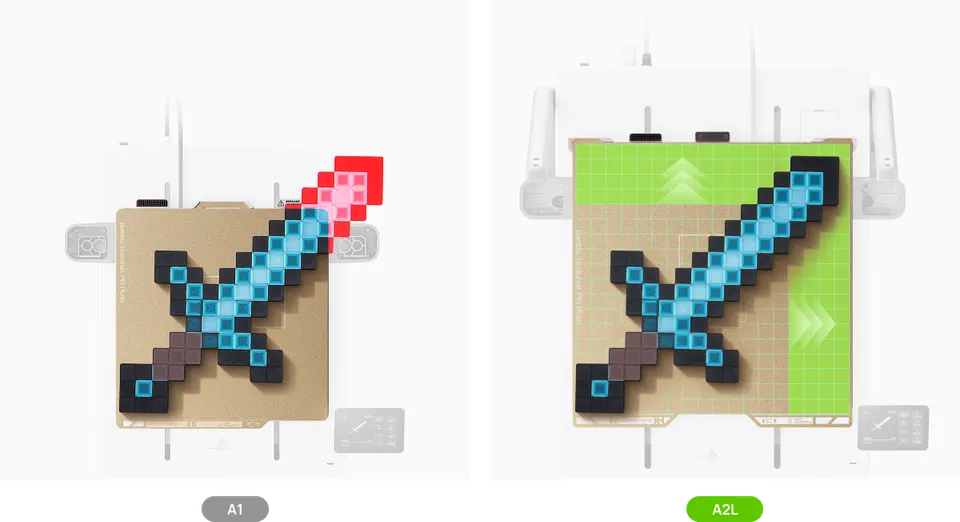
The A2L Combo is mainly worth upgrading to if you want to print larger models in one piece, make cosplay accessories, large decorations, signs, organizers, prototypes, or larger batches of smaller parts at once. The biggest difference is the build volume of 330 × 320 × 325 mm compared to 256 × 256 × 256 mm for the A1. This is not a minor increase. In practice, it means that some models you would have to assemble from two to four parts on the A1 can be printed all at once on the A2L.
On the other hand, keep the A1 Combo if its current size is sufficient for you, you have limited desk space, you want a higher maximum build plate temperature, or you mainly print standard PLA and PETG models up to the size of the classic 256 mm cube. With ordinary small prints, you will not experience such a dramatic leap with the A2L that replacing a functional printer just because of a new model would make sense.
| Feature | Bambu Lab A1 Combo | Bambu Lab A2L Combo |
|---|---|---|
| Build volume | 256 × 256 × 256 mm | 330 × 320 × 325 mm |
| Hotend | up to 300 °C | up to 300 °C |
| Build plate | up to 100 °C | up to 80 °C |
| Speed | up to 500 mm/s | up to 500 mm/s |
| Multimaterial | AMS Lite included | AMS Lite included |
| Construction | smaller open bedslinger | larger open bedslinger |
| Focus | versatile home printing | large-format hobby printing |
On paper, they may seem similar, but in operation they are two slightly different printers. The A1 Combo is a compact, fast, and very convenient printer for most home projects. The A2L Combo is still an open hobby printer, but it is aimed at users who have run into size limitations.
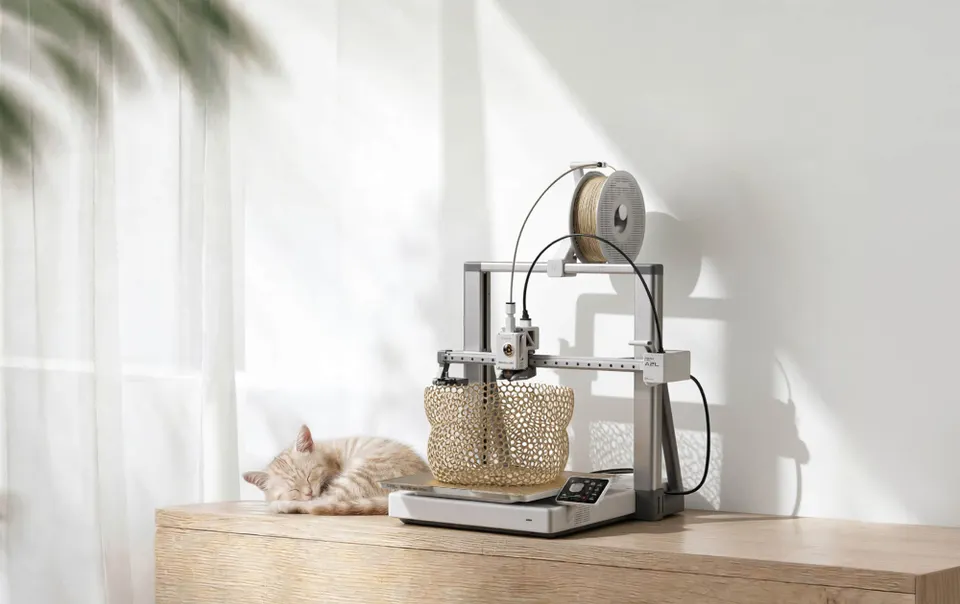
The best reason to choose the A2L is being able to print models without splitting them. Every additional joint means more work: cutting the model, adding pins, printing more parts, gluing, sanding, filling, and possibly repainting. With functional parts, a joint can reduce strength; with decorations, it can spoil the surface.
Typical examples where the A2L makes sense:
On the other hand, the A1 will still be sufficient for ordinary cable holders, boxes, replacement parts, small toys, or practical household accessories. A large build plate is not automatically an advantage for a small model. It only takes up space, and with long prints, a failure can be more costly if something goes wrong after many hours.
Both Combo versions make the most sense mainly because of AMS Lite. It is not just about multicolor printing. In practice, AMS is often more useful as a convenient material storage system. You can have PLA in different colors, PETG for stronger parts, or support material for specific tasks ready to use. The printer can switch filaments automatically, and with supported spools it simplifies material management.
However, it is worth keeping in mind that a single-nozzle system always switches material through purge when using multiple colors. This means extra time and filament waste. With a small four-color figurine, the waste ratio can be unpleasant. With a large sign, where each color covers a larger area, it may make more sense.
If you are mainly interested in multicolor printing, upgrading from the A1 Combo to the A2L Combo will not fundamentally change the quality of color prints on its own. Both printers use a similar single-nozzle and automatic-changeover system. The A2L is more interesting because it can produce larger multicolor models and offers a broader path toward expanding the number of prepared filaments.
The A2L has a maximum nozzle temperature of 300 °C, just like the A1, but the maximum build plate temperature on the A2L is 80 °C, while the A1 specifies 100 °C. This is important mainly for materials that are more demanding in terms of adhesion and thermal stability.
We would not consider either printer an ideal choice for regular ABS, ASA, or technical nylon printing. Both are open bedslingers without a heated chamber. However, they are very suitable for PLA, PETG, and TPU. With its build plate limit, the A2L makes it even clearer that it is primarily intended for large hobby prints made from common materials, not for technical production with high-temperature plastics.
In practice: if you mainly print PLA decorations, PETG holders, organizers, and large visible parts, the A2L will not limit you. If you experiment with materials that require a truly hot build plate and stable ambient temperature, I would look for an enclosed printer instead.
The A2L is significantly larger and heavier. With a bedslinger design, it is also not enough to consider only the footprint. The build plate moves back and forth, so the printer needs free space around it. If you have the A1 on a small desk, on a shelf, or in the corner of a study, the A2L may not be a simple one-for-one replacement.
Before buying, measure not only the width and depth of the desk, but also the space behind the printer, room for the cabling, and the placement of the AMS Lite. Stability of the surface also matters more with larger prints. A lightweight table that was sufficient for the A1 may transmit more vibration with a larger machine than you would like.
The A2L does not just offer a larger build volume. It has a more modern extrusion system with a servo motor, adaptive multi-point vibration compensation, damping elements in the frame, and support for cutting and drawing modules. These are useful features, especially with tall and heavier models, where the bedslinger mechanics are pushed closer to their limits.
The cutting and plotting modules are also interesting. For an e-shop, workshop, or home crafting, they can mean stickers, stencils, labels, or a combination of a printed part with a cut element. This is not a reason for everyone, but if you handle packaging, labeling, or creative products in addition to 3D printing, the A2L is a more versatile work tool than the A1.
I would not recommend upgrading if:
A functional A1 Combo is not an outdated printer just because a larger model has arrived. For many home users, it will still be more sensible to invest in quality filaments, material drying, a better workspace, and well-planned print profiles.
I would choose the A2L Combo as my first Bambu printer if I knew I wanted larger prints and had the space for it. The difference in size is so practical that it can quickly pay for itself in time saved by avoiding splitting and gluing models. For large decorations, props, prototypes, and organizers, the convenience of printing an object in one piece is crucial.
As an upgrade from the A1 Combo, the A2L makes the most sense for users who already know exactly why 256 mm is not enough for them. If you often find yourself thinking that a model would be perfect if only it fit on the build plate, the answer is simple: yes, the upgrade will probably be worthwhile. If you are merely attracted by the newer name and bigger numbers, I would wait.
The Bambu Lab A2L Combo is not a universally better replacement for the A1 Combo. It is a larger, more specialized, and more space-demanding choice for people who want to print on a larger scale without moving to a more expensive enclosed or more professional printer.
For a new user with enough desk space, the A2L Combo is a very appealing choice. For A1 Combo owners, the upgrade makes sense mainly when the build volume is genuinely limiting them. Otherwise, keep the A1, buy good filament, and keep printing. After all, the best 3D printer is not the newest one, but the one that matches the size of your projects.


